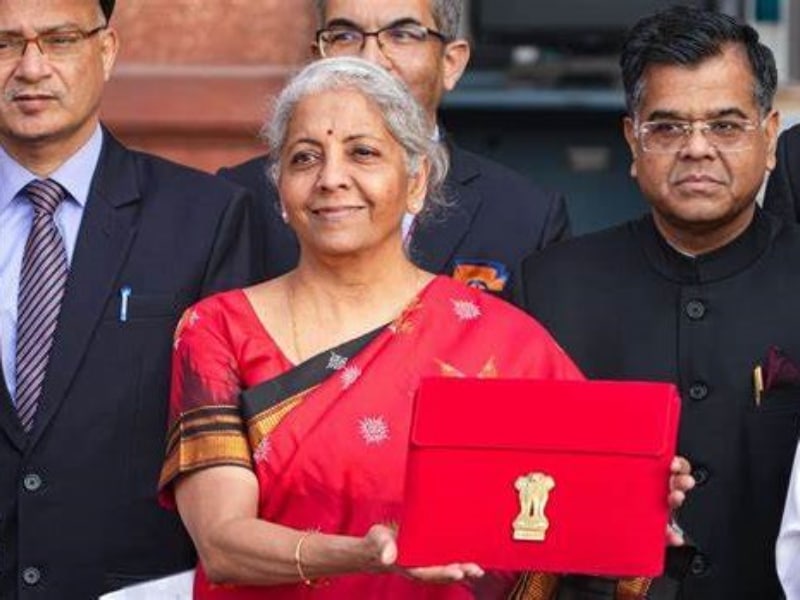
The hospitality industry, like every other industry and citizen of the country, has pinned its hopes on the interim budget for 2024. Hoteliers emphasise that the sector has the potential to increase the GDP by generating employment, driving economic growth, and boosting foreign exchange earnings.
Giving industry status to the hospitality sector, changes in GST structure, incentivising sustainability measures, enhancing skill development infrastructure, and simplifying visa processes are some of the expectations of the hoteliers which will bolster the growth of tourism and in turn, propel the growth of the industry.
Vishal Vincent Tony, Managing Director of Ayatana Hospitality Pvt Ltd, said, “Innovative tourism initiatives must align with sustainability goals through the implementation of incentive schemes, such as investing in renewable energy and developing sector-specific policies to drive business growth. Tax breaks for operational expenses and improved access to credit can further bolster industry innovation. Also, this year’s budget for tourism is highly anticipated, as over the next 12–18 months, an estimated plethora of jobs are expected to be generated in the hotel, restaurant, and tourism sectors. This further adds to the sector’s demands towards gaining ‘Industry’ status.”
Industry experts want hospitality to be given an industry status that will catalyse access to long-term financing at lower interest rates along with a host of other benefits.
Virendra Razdan, General Manager of The Leela Bharatiya City, said, “The recent travel boom presents a golden opportunity, but to truly unlock our potential, we need the government to strategically recognise hospitality as an industry and grant infrastructure status to hotels exceeding a certain bar. This will catalyse access to long-term financing at lower interest rates, streamlined regulations for faster project execution, and potential tax breaks for the industry. This isn’t just about filling rooms; it’s about transforming hospitality into a magnet for investment.”
He added, “Infrastructure status creates a win-win: it incentivizes
developers, lowers the cost of capital for new projects, and ultimately fosters
a more vibrant hospitality sector that contributes even more to our nation’s
GDP, job creation, and foreign exchange earnings.”
Navneet Nagpal, Principal Consultant and Director of Spectra Hospitality Services, said, “Recognising hospitality as an official industry and granting infrastructure status to qualifying hotels would be transformative. This strategic initiative would facilitate access to long-term financing at lower interest rates, streamlining regulatory processes for quicker project execution, and offer potential tax incentives. These measures are not just about increasing occupancy rates; they aim to transform hospitality into a significant investment attraction, driving economic growth, job creation, and boosting foreign exchange earnings.
“Addressing these critical needs will ensure a vibrant and competitive hospitality sector, significantly contributing to the nation’s economic prosperity. We are on the brink of a tremendous opportunity, and with the right support, we can fully unlock the potential of the hospitality industry.”
As the hospitality industry is growing by leaps and bounds, there is a dearth of skilled workforce. The budget is expected to address the issue by increasing skill development funding to bridge the gap, contributing to India’s $5 trillion GDP target.

Navneet Nagpal, Principal Consultant and Director of Spectra Hospitality Services, said, “As we anticipate the 2024 Union Budget, it is crucial for the government to address the pressing needs of the hospitality sector, which has demonstrated extraordinary resilience and growth post-pandemic. The current surge in travel has highlighted a severe talent shortage, with a 55–60% gap in the workforce that risks hindering our progress. We urge the government to boost budget allocations for hospitality training programmes to develop a skilled and sustainable workforce, essential for supporting our industry’s expansion and contributing to India’s $5 trillion GDP target.”

Virendra Razdan, General Manager of The Leela Bharatiya City, said, “The post-pandemic boom in travel is a welcome sight, but it exposes a critical fault line in the hospitality industry—a staggering talent shortage. We’re looking to fill millions of positions in the coming years, yet the applicant pool simply hasn’t kept pace. To bridge this 55–60% gap, we urge the government to invest in hospitality training programmes and create a more attractive work environment for young minds. By fostering a skilled workforce, we can ensure a sustainable future for Indian hospitality, capitalise on this exciting growth opportunity, and, of course, support India in entering the $5 trillion GDP club. Hence, an increased budgetary allocation for hospitality skill development programmes is crucial to bridge the talent gap.”

Mona Cheriyan, President and Group Head of Human Resources of Thomas Cook India Limited, highlights women-centric initiatives taken by the government, saying, “The interim budget made special mention of women-centric initiatives, thus serving to empower the segment across demographics. What is noteworthy is the Finance Minister’s acknowledgement of the increasing participation of women in the workforce – again a strong vote of confidence.
“The FM also highlighted the increased higher education enrolment by 28% in a decade and that girls/women comprise 43% of enrolment in STEM courses, one of
the highest globally. Further, focus via the reservation of one-third of seats for women in both Parliament and state assemblies and over 70% housing under the PM Awas Yojana has benefited inclusion and increased the dignity of Indian women.
“We also commend the attention given to the financial independence of women
and that 30 crore Mudra Yojana loans have already been provided to women.
Additionally, the 83 lakh SHGs (self-help groups that provide socio-economic support to over nine crore rural women currently) have created a significant one crore lakhpati didi’s already, the government aims at increasing the target to three crore.
“The industry also needs a streamlined regulatory framework and a reduction in GST. It can foster economic growth and capitalise on India’s potential to become a global leader in tourism.”

Vishal Vincent Tony, Managing Director of Ayatana Hospitality Pvt Ltd, said, “The government’s substantial investments in tourism infrastructure and resources, including airports, underscore India’s potential as a pivotal market. In such a scenario, it becomes interesting to see what the budget has to offer to the tourism industry this fiscal year. India’s burgeoning domestic travel sector presents a compelling case for increased budgetary allocations. With robust growth expected in both travel expenditure and air passenger traffic, strategic investments in infrastructure, connectivity, and tourism initiatives are imperative. Adequate budget provisions such as a reduction in the GST imposed on the sector and the introduction of a more streamlined regulatory framework can not only foster economic growth but also bolster job creation, enhance tourism infrastructure, and capitalise on India’s potential to become a global leader in domestic travel markets.”

Emphasising the necessity of a streamlined GST structure for the hospitality
industry, Tushar Parihar, Founder of Kaner Bagh, A Heritage Boutique Hotel, said, “I am eagerly anticipating this year’s Union Budget, hoping it addresses the critical needs of the hospitality sector. Our industry has faced unprecedented challenges, and we expect measures that will facilitate recovery and growth. I expect the ministry to decrease the GST rates across all hotels and also prevent confusion among the public by delinking restaurant tariffs from room tariffs. We look forward to the government’s continued support for the hospitality sector in this year’s budget.”

Abhishek Sinha, Co-founder of GoodDot, insisted on a rationalised GST framework for plant-based foods to boost the growth of the industry. He said, “As a representative of the food sector, particularly in the plant-based proteins and alternatives space, I have high expectations from the upcoming budget. The government must rationalise the GST on plant-based foods, reducing it from the current 18% to align more closely with the 0-5% rates applied to most meat products.
“Furthermore, promoting the export of plant-based products from India should be
a priority. This will enable Indian agricultural products to reach global markets in a value-added form, boosting our export potential.
“The plant-based sector holds significant promise for both sustainability and health. Therefore, I urge the government to consider a separate Production-Linked Incentive (PLI) scheme for this industry. Such measures will not only support the growth of plant-based alternatives but also contribute to a healthier and more sustainable future for India.”

Expecting revision in GST rates and tax incentives, Pranav Dangi, Founder and CEO of The Hosteller, said, “As an Indian hostel chain owner, I am hopeful that the upcoming Union Budget will provide much-needed support and relief to the hospitality sector. Key expectations include:
- Tax incentives, such as reduced GST rates and investment-linked deductions, help the industry recover from pandemic-induced losses.
- Easier access to affordable credit to facilitate infrastructure upgrades, expansion, and working capital requirements.
- Policies that boost domestic tourism, including incentives for young travellers and students to explore India, can significantly benefit the hostel industry.
- Improved connectivity through investments in transportation infrastructure enhances accessibility to tourist destinations.
- Subsidies and incentives to encourage the adoption of sustainable practices, such as renewable energy and eco-friendly operations, in the hospitality sector.
“A favourable budget addressing these concerns will enable the Indian hostel industry to contribute to the country’s economic growth and development.”

Jurgen Bailom, President and CEO of Cordelia Cruises, also looks forward to changes in the GST framework. “As we approach the 2024 budget, we at Cordelia Cruises are optimistic about the positive changes it could bring to our industry. The government’s support has been instrumental in fostering growth and development within the cruise sector. We believe a reduction in the GST rate for cruise ticket sales and onboard services would not only make cruising more accessible to a broader audience but also boost the overall travel and tourism sector.
“Continued investment in port infrastructure development is crucial to supporting the growth of the cruise industry and improving connectivity. We believe these measures will significantly contribute to positioning India as a premier cruising destination, benefiting both the economy and tourism. We are confident that the government’s continued support will drive the industry forward.
“Furthermore, we request that cruise services should not qualify as providers of Overseas Tour Program Packages (OTPP), which mandates the collection of TCS from customers purchasing cruise packages. This change will significantly increase bookings and contribute to the growth of the cruise industry in India.”

Yogesh Mudras, Managing Director of Informa Markets in India, which organises SATTE—South Asia’s Biggest Travel and Tourism Expo, highlights the need for simplified visas and tax relief to propel the growth of the industry. “The upcoming budget is likely to act as a transformative catalyst for India’s travel and tourism industry,” he states. “We are looking for continued government investment in
infrastructure to boost both domestic and international tourism, particularly in high-potential areas like religious tourism, MICE, and wellness.”
Key expectations include simplified visa processes and promoting visa-free entry for tourists, which could significantly enhance the visitor experience. Furthermore, the rationalisation of GST rates and credits is seen as crucial for making travel more affordable and attractive. Mudras also highlights the importance of the UDAN scheme, advocating for its continued expansion to improve regional connectivity and make air travel more accessible and affordable for a wider population.

Laying importance to strengthening the Dekho Apna Desh campaign to boost tourism, Rama Mahendru, Country General Manager, India, Intrepid Travel, says, “Inbound international travel has grown in the last decade in India and still has huge potential. It will get a further boost with the support of the upcoming budget that prioritises the necessities, such as hygienic public spaces and increased security awareness, to guarantee that foreign guests have a great time.
“The government must undertake a pan-India campaign like Dekho Apna Desh to
educate the people to respect and care for our tourist places and destinations. Also, the government must create awareness about less-visited places for tourism purposes to reduce the excess burden of tourists at already popular places.
“The Union Budget 2024–25 must re-emphasise the transformative power of tourism and the pivotal role infrastructure plays in shaping our global appeal. The government must encourage initiatives like rewarding businesses that are bringing in foreign money for the country and including incentives for the inbound tour operators under foreign trade policy demonstrating our dedication to international collaboration. The government must aim to make our country the first choice for global travellers for adventure tourism which could boost our economy and assist in job creation and employment in local regions and destinations.”

Ambika Saxena from TWH Hospitality echoes these sentiments, noting that the Union Budget 2024 should further strengthen domestic tourism initiatives, particularly through the ‘Dekho Apna Desh’ campaign. “We would also request the government to consider a reduction in income tax to increase disposable income, thereby boosting spending on travel and tourism,” she says. “These measures will not only promote tourism infrastructure development but also enhance opportunities for job creation and entrepreneurship.”
As stakeholders await the budget announcements, the overarching hope is for
policies that will enhance India’s appeal as a premier global travel destination,
positioning the country to benefit from the growing international tourism
market.

Vandita Purohit, Founder of Mauji Cafe and TraWorks, feels that understanding the
benefits of the budget and how to access them is of prime importance. She says,
“Regardless of the final budget, I expect that it should provide clear and accessible information for the general public, women entrepreneurs, startups, MSMEs, and all other sectors. It’s crucial that they understand how the budget can benefit them and how they can access these benefits.”

Davinder Juj, General Manager of Eros Hotel New Delhi, sums up by saying, “The hospitality sector, one of the most crucial industries for generating employment and one of the biggest contributors to the country’s GDP has been showcasing substantial growth prospects for the last two-three years. In order to ensure the continued development of the sector, we expect the government to allocate funds for essential infrastructure development, reassess the current tax structure to boost the demand coming from both domestic and international markets, increase budgetary support for tourism promotion, enhance digital infrastructure, and encourage sustainability initiatives.
We also hope the finance minister to earmark resources for skill development and establish robust training infrastructure for the sector. By empowering the workforce, stimulating job creation, and building a skilled talent pool, the government can strengthen the foundation of the hospitality sector. This strategic focus on human resource development will not only support the industry’s expansion but also positively impact India’s economic landscape by fostering innovation, excellence, and long-term sustainability. Moreover, there is a longstanding recommendation from the industry to grant infrastructure status to the sector, and we hope the Finance Minister will take steps in this direction to further enhance the sector’s growth. Additionally, there is an expectation to implement a uniform GST rate for the hospitality industry to streamline the GST chain and boost inter-state corporate demand.”