
A group of friends decided to come together to make the world a more humane place for animals. They understood that the main reason most people eat meat is for its taste. They decided to create a product that not only tasted like meat but was an ethical, healthier, and environmentally sustainable alternative to animal meat. Thus, GoodDot was formed.
What is the story of GoodDot? What motivated you to start it?
GoodDot was born out of the vision and efforts of Abhishek Sinha (ex-IRS officer, Deputy Commissioner, Income Tax) and Deepak Parihar (serial entrepreneur, CFO of a major RJ-based conglomerate). They were deeply affected by the unbelievable cruelty involved in animal agriculture and decided to create plant protein-based products with meat-like texture and taste. GoodDot was born in 2016 in Udaipur, RJ, and began its commercial operations in 2017. Having established itself as one of India’s leading plant protein companies, the company has a wide presence across India in B2C, B2B, and B2G segments, with exports to seven countries (and growing).

Tell us about the different products you have. And what goes into the making of them?
GoodDot is known for highly innovative products that are delicious, fun, convenient, nutritious, sustainable, and very affordable. We have created products using pea, soy, and wheat proteins, along with other ingredients like oats flour, gram flour, quinoa flour, and more. These products have excellent fibration, layers, and textures and can be relevant to vegetarians, vegans, and non-vegetarians alike.
Some of the key B2C SKUs for GoodDot serve as base products, such as Vegetarian Bytz (hydrated, retort), Proteiz (dry chunks), and Vegicken in Brine (soft chunks in a can), while others are easy-to-cook kits, including Eggless Bhurji, Veg Biryani, UnMutton Dhaaba Curry, and more. In the B2B segment, our product Pro Chaap (dry slabs of textured plant protein) has been very successful with major brands such as BBQ Nation, Tibbs Frankie, and AB’s Absolute BBQ, to name a few. GoodDot products can be and have been used across product formats (keema/mince, tikkas, curries, toppings, fillings, biryani, and more) and across cuisines (Indian, Chinese, Thai, American, Italian, Mexican, and more).
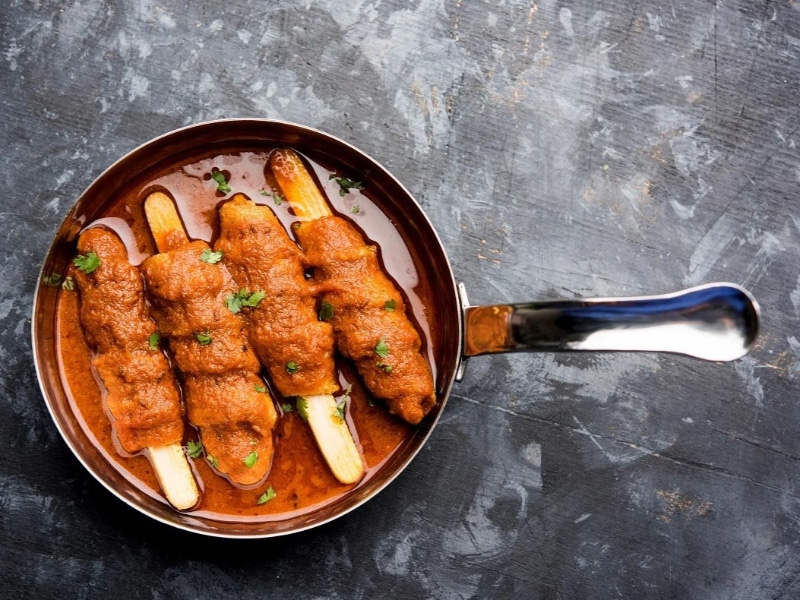
Recently, GoodDot has forayed into the ‘traditional, soya chaap (on a stick) space, which is plagued with concerns about unhygienic and poor-quality products with low nutritional value and high maida content. This preservative-free soya chaap has very low maida content and high protein while retaining a better texture and mouthfeel, packed in an innovative retort pouch enabling easy transport and storage.

How do you ensure the texture of the plant-based products remains meat-like? Tell us more about the food technology behind it.
The basic idea behind textured plant proteins and plant-based meats is the fact that both animal meat and plants have proteins that are made of the same twenty amino acids. With cutting-edge extrusion technology, plant proteins are broken (denatured) and reformed into layers that help provide the ‘bite’ and mouthfeel similar to animal meats. GoodDot has a large team of food scientists and food technologists who have developed unique products with amazing textures using both low- and high-moisture extrusion, used in conjunction with world-class retort, canning, and/or dehydration processes.
However, there is another bigger idea/agenda here. We also need to start looking at plant-based proteins in a category of their own and not compare them to simply becoming substitutes for chicken or meat. Plant proteins are more environment-friendly, cholesterol-free, and healthy protein options, and on their merit, offer a fun and exciting texture and bite for consumers looking for vegetarian protein options beyond paneer. In fact, on account of the range of sustainable protein options, GoodDot was shortlisted by The Economist (EIU) as one of the three global best practices of businesses working towards a sustainable food future.

What was the biggest challenge you faced while setting up your business?
The biggest challenge was to understand the texturization potential of different plant protein ingredients and then use that knowledge at scale to get the right textures while maintaining nutritional balance, affordability, and process robustness. In addition, creating products that are shelf stable for a useful duration (9–18 months) at room temperature without any preservatives was a significant challenge, as both retort and canning affect the textures and flavours significantly.
What kind of initial investment went into it? And when did you break even?
From the outset, GoodDot was supported by incredible investors who bought wholeheartedly into the mission and vision of the company to promote Ahimsa and compassionate food choices. With an initial investment that would be akin to a pre-series A from various HNIs and friends and family, GoodDot started at scale with a large R&D and production capability. The company had also partnered with RCM, another Rajasthan-based company with a massive distribution network of over 12,000 physical stores and over two million sales agents. This amazing partnership was instrumental in the scale and growth of GoodDot early on and continues to be strong to this day. As a result of such solid partnerships, we had broken even within about a year of commencing commercial operations, which is quite unheard of in a new category like this.

What does the future hold for GoodDot?
GoodDot aims to become the largest plant protein company in the world. The company has a committed team of over 250 professionals who believe in the mission and stated goal of the company. GoodDot plans to add more SKUs in both B2B and B2C segments while building broader international partnerships. For instance, the company will soon launch its products in the US in partnership with Walmart and expand its base in Australia. In India, too, several exciting partnerships are in the advanced stages of discussion and will be announced in due course.
In all, GoodDot is committed to mainstreaming plant proteins in India as well as to manufacturing in India for the world.