
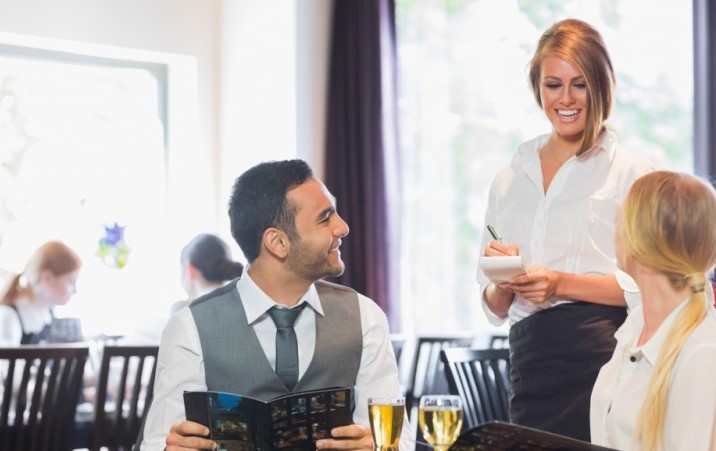
The F&B service can be easily called the backbone of the hospitality industry.
Stefan Breg & Tina Blackmon of KEANE, a leading global F&B consulting firm, speak to Hotelier India about their recent research on the F&B scene in India, and what they feel can be done to up the F&B game…
Outsourcing of F&B was a major topic at HICSA. Stefan, you have been a specialist in this area for over 30 years, what are your thoughts on where outsourcing is headed?
Stefan: Outsourcing can be highly effective but also highly expensive and risky. After all, you don’t hear about the ones that don’t work out. You have to put it in perspective; when I ran large groups of restaurants under management contracts for IHG, Hilton and Starwood across Asia, ME & Africa, less than 3% of my overall portfolio was outsourced. I don’t see this changing; outsourcing can only really apply to premium/ corner sites that merit the investment in a franchise and additional capex. For this reason, I don’t see outsourcing as a major tool in driving the maximum return from an F&B portfolio under management contracts.

So where does the solution lie to make F&B perform better in hotels?
Stefan: At Keane, we believe that the root of successful F&B lies in careful thinking i.e. choosing the right concept based on a projection of future market needs and sourcing the all-important talent to deliver it. You don’t always have to use third parties to achieve this although; an experienced F&B consulting firm can facilitate this and improve the chances of success.
Tina: There was a lot of discussion at HICSA around hotel owners investing in third parties to bring about change in their F&B businesses. At KEANE, we advocate a more broad-based approach identifying incremental profit opportunities and investing accordingly. This not only maximizes the return on investment and the value of the asset but also delivers a very happy group of customers that keep coming back.
Tell us about your recent research study on hotel F&B in India
Tina: We polled responses from 500 mid income regular diners; a 50-50 gender mix in four of the major cities. What surprised us is that F&B comes out very well. F&B is well perceived by guests; for example, quality of food and service were all viewed as better in a hotel by at least 82% of the respondents versus free-standing.

So, why was this growing concern about F&B performance?
Tina: Our data suggests that pricing could well be an area for review. Our overall conclusion was that F&B is perceived as at a higher standard in hotels versus free-standing restaurants, but operators needed to work harder on their pricing strategies.
Was there anything in the research that stood out to you and can help Indian hotel F&B perform better?
Stefan: Yes, we believe our early research suggests a gap in the market which we’re calling the X Factor. For example, we were surprised to see safety and security score in the top four rankings for dining needs from women respondents. The feedback from the women in the poll suggested that they would use hotel F&B if hotels leveraged and built-on the advantage they have in terms of parking and valet services and the preference to be served by a female server rather than males which, they described as being more likely in a hotel restaurant.
In your opinion, what steps can Indian hotel operators take to benefit from the X Factor?
Tina: The female influence on the Indian hospitality sector is on the rise, with a greater proportion of women domestic business and international travellers using hotels in India. Despite this, the hotel sector doesn’t appear to have adjusted its game plan. We believe that more women will use hotel F&B if owners and operators give more careful thought to the concepts that are being offered. Historically, there has been an over-emphasis on male-oriented concepts such as steakhouses, cigar and whiskey bars. I hesitate to use this phrase but the concepts need to be more ‘women-friendly’ and there needs to be a shift in focus in future F&B concept developments in India.
A great international example of this is All Bar One in the UK, which Keane worked on. All Bar One was the first high street ‘pub’ to have fully transparent windows, an extensive wine range and no football shirts or gaming machines and grew to be one of the UK’s most successful chains. We believe there’s a real gap in the market in India for concepts that appeal to both genres but it will need buy-in from all the hotel stakeholders, owners, architects, designers, consultants and operators.
Stefan Breg is a globally recognised F&B strategist, masterplanner and serial concept creator. He is Managing Partner-Consulting at KEANE, providing the lead on strategic F&B consulting for KEANE’s studios in UK, Dubai and Riyadh. KEANE has established itself as one of the region’s leading F&B consulting firms and working on the largest projects on the planet. He has previously held regional leadership roles at Starwood/Marriott for EMEA, IHG (SE Asia) Hilton (Europe) and E&Y Consulting.
Tina Blackmon is a specialist in strategic/digital marketing and F&B development. She has 10 years experience chiefly, in Bangkok, winning international recognition and awards working with some of the city’s leading restaurant and bar venues. She is now based in Dubai working on some of the region’s leading mixed-use and leisure projects and playing a key part on the consulting team at KEANE.


