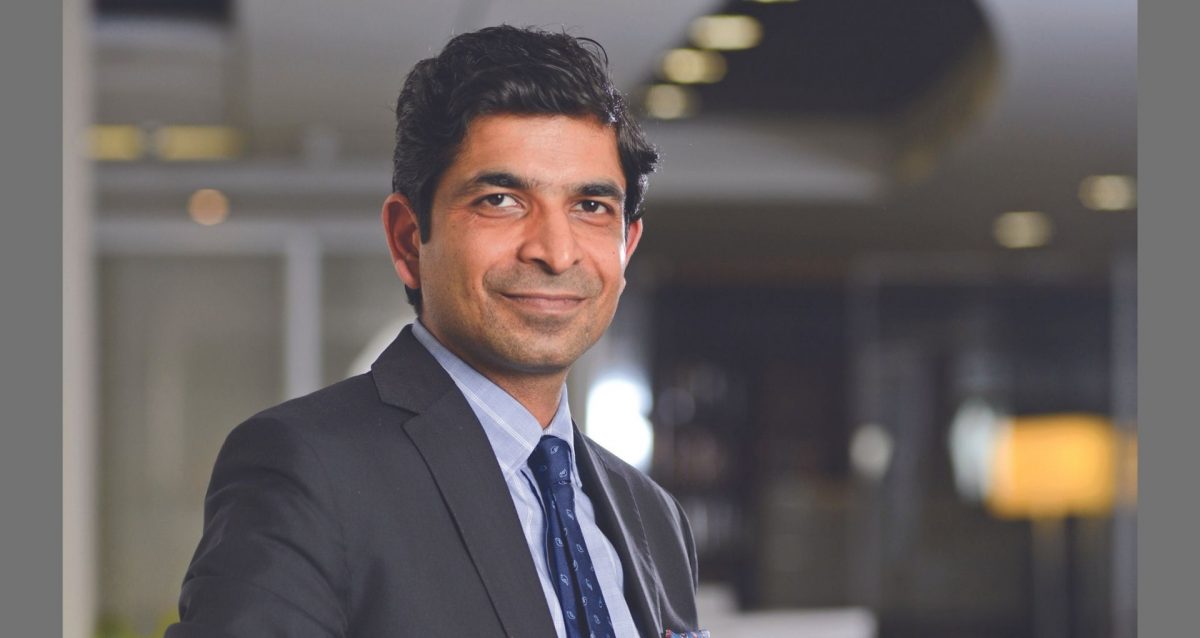
Kavinder Singh
Whether it was building new resorts, leasing properties or managing existing projects, we did not slow down, barring the couple of months of lockdown


When the WHO announced the pandemic in March 2020, Kavinder Singh, MD and CEO, Mahindra Holidays & Resorts India Ltd (MHRIL) decided the company needed to rely on alternative thinking to drive positive change. The team came up with the ‘5 C’s’ framework, with compassion as its central theme.
Guided by these principles, it opened up its resorts to healthcare workers and provided food and ration to affected people. It also encouraged its team to be creatively restless, by embarking on digital mode of working, which is now omniscient.
Moreover, it decided to virtually connect with its over 2.5 lakh members spread all over the world, informing them about the safety and hygiene practices rigorously followed at its resorts, keeping them posted about the latest travel advisories, and answering their numerous queries promptly.
“The fourth C focused on conserving our resources because we didn’t know how long this situation would last,” Singh recalled. Thismove helped the company grow its cash position from INR 781 crore at the start of the year to INR 950 crore in June 2021. “Then we decided to parallelly build capability in terms of hospitality, multitasking, digitisation and contactless service to provide safety and build trust amongst our guests.”
CAUTIOUS APPROACH
Rethinking its business models helped the company remain financially stable and become more resilient. “We realised that investing in marketing, especially below-the-line activities, wouldn’t yield much value. We also decided to control our acquisition marketing budgets and costs,” Singh explained.
Hence, MHRIL concentrated on GoZest, its 3-year product, rather than the traditional 25-year membership. Given the ongoing unpredictability, it rightly figured that customers were likelier to opt for a low-transaction value and short-duration product.
Introspection helped the company find another indirect opportunity. Since most of its resorts were lease rentals, it translated into a significant fixed cost, which became a huge fiscal outflow when the properties were closed. Instead of reducing rentals or exiting the contracts, Singh worked out a lease waiver programme with most owners, to buttress MHRIL’s financial footing.
Moreover, unwilling to slow down its inventory additions even during the pandemic, Singh stayed in touch with owners with whom MHRIL was talking to pre-pandemic to lease their resorts. “There were some delays because we didn’t see any merit in opening some properties. However, we added about 10 resorts in nine locations, and an additional inventory of 465 rooms,” he added.
MHRIL also acquired land banks during the pandemic and is moving towards breaking ground on the new projects. “So, whether it was building new resorts, leasing properties or managing existing projects, we did not slow down, barring the couple of months of lockdown,” Singh explained.