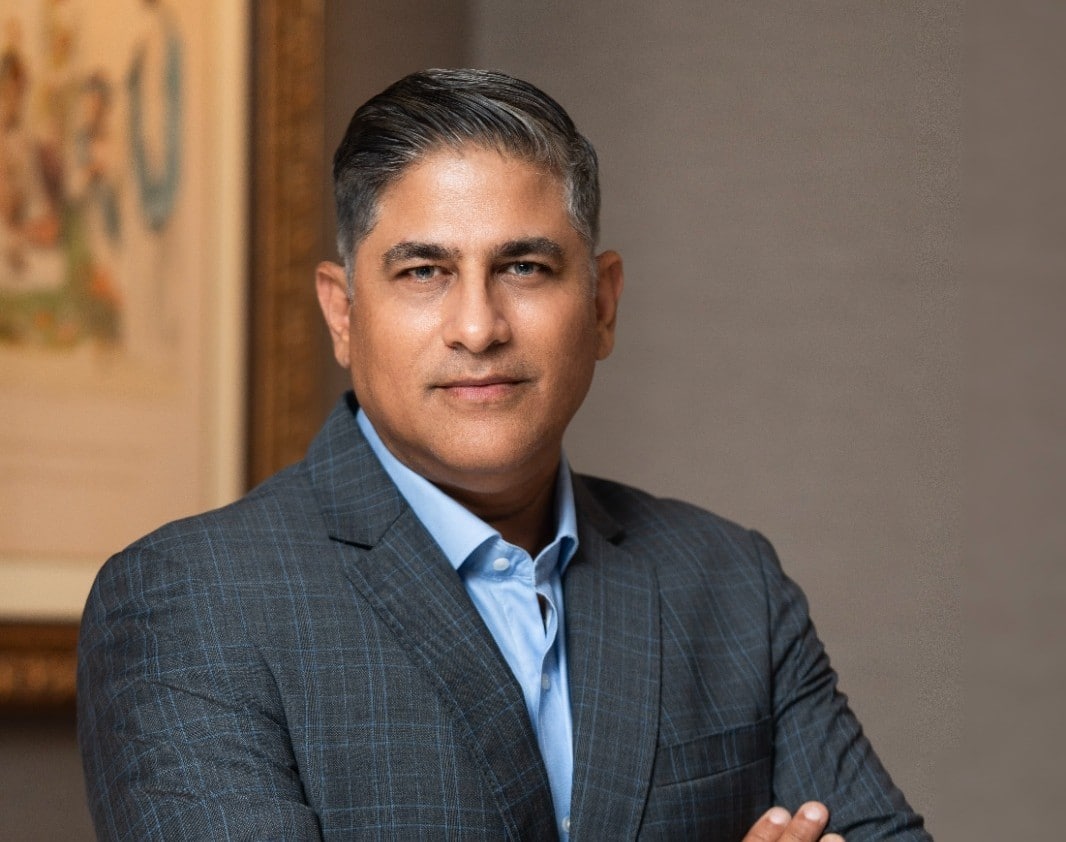

In less than a decade, Aanal Kotak has transformed The Secret Kitchen (TSK) into a trailblazing culinary brand, with a presence spanning India and international markets. From humble beginnings in 2017, her vision of serving authentic Indian cuisine with uncompromised quality has grown into a multi-outlet empire, catering to thousands of diners daily and expanding into packaged foods that bring the TSK experience to homes abroad.
In this exclusive interview, Kotak shares insights on her journey; from scaling restaurants and ready-to-cook products to navigating global palates, leveraging data-driven decisions, and empowering women in the workforce. She offers a rare look at how innovation, authenticity, and a strong value system have driven both business growth and community impact, proving that passion and strategy can go hand in hand in the world of food and hospitality.
In less than a decade, The Secret Kitchen and TSK brands have expanded across India and internationally. Can you share specific numbers; such as annual covers, growth rate, or current outlets; that chart this journey?
We started this brand in 2017, and today we are proudly operating more than 12 outlets. When it comes to daily covers, across all our locations we have the capacity to serve over 1,200 people every single day. For catering, especially in Australia where we also run a full-fledged catering service, our capacity increases significantly; we can cater to anywhere between 7,000 to 10,000 people.
In fact, we’ve successfully handled multiple large-scale events there, including functions serving around 5,000 guests. So, excluding catering, our daily in-store service capacity stands at over 1,200 covers. Speaking of growth, from one outlet in 2017 to more than 12 outlets in 2025, we’ve achieved a strong growth rate of up to 36%.
When launching in new markets like Sydney or Dubai, how do you adapt traditional Gujarati and Indian cuisine to suit global palates while retaining authenticity? What’s been the most surprising learning from international diners?
Whenever we launch any of our outlets in international markets; whether in Australia, Canada, the US, or elsewhere; we invest a lot of time in understanding the local palate. For example, in Australia, people generally prefer milder flavours. Even the Indian community there avoids very spicy food because of the climate and lifestyle. Canada, on the other hand, is completely different. The weather is extremely cold, the winters are harsh, and people naturally gravitate towards stronger, spicier flavours. Both local Canadians and Indian Canadians enjoy food with an extra kick to match their palate.
As a team, we conduct extensive research on regional taste preferences before developing our recipes. We ensure that most of our spice mixtures, gravies, and key bases are prepared in our central factory in India and exported to our international outlets. This allows us to maintain consistency in flavour across countries. We do not rely solely on local chefs to recreate our taste, because water and spices can vary greatly from place to place and can change the authenticity of the dish. By exporting our core bases and maintaining strict recipe standards, we ensure that our signature flavours remain the same; no matter which country we serve in.

For example, if I make a ladi pav in Mumbai and prepare the same ladi pav in Ahmedabad or Vadodara, the taste will still differ even though the ingredients are the same. That’s because the water in Mumbai has a naturally salty profile, while the water in Ahmedabad and central Gujarat does not. This alone changes the final taste of the product.
In the same way, if we start using local spices or masalas in Australia, the flavour will be completely different from what we serve at our other outlets. To avoid these inconsistencies, we export all our spices and gravy bases directly from India. This ensures that the authentic taste remains the same, no matter which country we are operating in.
Many celebrated chefs venture into packaged foods, but scaling a product line like TSK’s ready-to-cook mixes and bakery premixes comes with supply chain and quality challenges. What KPIs guide your expansion, and what benchmarks or failures have you learned the most from?
You’re absolutely right, moving from a restaurant kitchen to a retail shelf is never a straight line. When we decided to scale TSK’s ready-to-cook mixes, gravies, and bakery premixes, the intention wasn’t just to commercialize recipes. It was to bottle consistency, convenience, and credibility, the three pillars that define The Secret Kitchen experience.
To make that possible, we monitor very specific KPIs across three core areas: Product, Process, and People.
1. Product Consistency & Quality KPIs
Batch-to-Batch Taste Deviation:
We run blind sensory panels every quarter, and the allowable variance in taste and texture from the chef’s master recipe is strictly below 5%.
Shelf-Life Stability:
Every SKU undergoes accelerated stability testing. We benchmark a minimum 12-month shelf life for dry mixes and 6 months for wet pastes before any pilot launch.
Customer Feedback Ratio:
Our red-zone limit is less than 1 complaint per 5,000 units sold.
Learning:
A retail partner once suggested lowering ingredient quality to increase margins. We refused, knowing it would hurt long-term trust. That moment made it clear that scaling isn’t about doing more; it’s about doing more of what’s right.
2. Supply Chain & Scalability KPIs
Vendor Certification Rate:
Every raw-material supplier must clear our 3-tier audit; hygiene, sourcing ethics, and consistency; before onboarding.
Yield Efficiency:
We track output per kg of spice blend and measure wastage. Our benchmark is over 92% yield in all spice grinding and blending units.
Dispatch TAT (Turnaround Time):
Orders must leave the plant within 48 hours of confirmation, a crucial factor during our pan-India expansion.
Logistics Damage Rate:
We keep damage rates below 0.3% for domestic shipments and 0.5% for exports.
Learning:
One setback came from underestimating Gujarat’s monsoon humidity; it caused powder clumping and density changes. Our solution: fully dehumidified blending units and food-grade liners for all transport.
3. Market & Brand KPIs
Repeat Purchase Ratio:
This is our biggest indicator of trust. We aim for 35–40% repeat orders within 90 days on online marketplaces.
New SKU Success Rate:
At least 70% of pilot SKUs must hit their first-quarter reorder target before they move into permanent production.
Gross Margin & Contribution:
We benchmark ourselves at industry average + 5%, because our USP is premium quality, not price competition.
Retail Velocity:
Units sold per store per month; this helps us measure whether our narratives, sampling, and consumer education are converting into actual sales.
At the end of the day, our biggest learning in this FMCG journey is simple: Systems create scalability, but soul creates sustainability. If a ready-mix doesn’t taste like the chef made it himself, it doesn’t belong to The Secret Kitchen.
As a leader, how do you measure the impact of innovation; whether in menu engineering, technology adoption in your kitchens, or guest experience enhancements? Could you share a data point that exemplifies meaningful change?
For me, innovation is meaningful only when it translates into measurable guest delight and operational efficiency. It’s never about doing something “new” for the sake of novelty; it’s about doing something better, smarter, and more heartfelt than before. At TSK, we measure the real impact of innovation through three lenses: Menu, Mechanism, and Mindset.
Menu Engineering – Innovation That Sells Itself
Every new menu or dish idea is evaluated through our internal “30-30-30 Formula.” It must deliver:
- 30% repeat orders within the first month,
- 30% contribution margin, and
- 30% guest recall in post-dining surveys.
When we introduced “Natyam,” our rhythmic South Indian-inspired menu at Southak, it surpassed these benchmarks in just 17 days. For us, this proved that when creative storytelling, culinary craft, and flavor innovation align, they don’t just elevate the dining experience; they directly drive bottom-line performance.
With increasing competition from delivery aggregators and cloud kitchens, how have your brick-and-mortar restaurants sustained loyalty and profitability? What percentage of your revenue is now digital versus dine-in?
When it comes to delivery aggregators and cloud kitchens, our philosophy at The Secret Kitchen is very simple. We are fundamentally a dine-in, driven brand. We want guests to walk into our space and experience everything we’ve crafted for them; the ambience, the hospitality, and of course, the food served exactly the way it’s meant to be enjoyed. That experience is at the heart of who we are.
Because of that, we never positioned delivery as a major revenue source. In fact, our revenue share from delivery aggregators is barely 5–8%, which is quite low. But we still stay active on these platforms because the customer demand is undeniable. People want The Secret Kitchen’s food at their house parties, intimate gatherings, or simply when there’s a long waiting line at the restaurant; so they choose to order in.
Now, keeping this demand in mind, we’re working on expanding The Secret Kitchen into a cloud-kitchen format, operating from the same kitchen. The idea is to introduce party packs, sliders, combo boxes, and other delivery-friendly formats that allow guests to enjoy our flavours conveniently at home without compromising on quality.
This approach doesn’t replace our dine-in identity; it enhances it by giving customers two ways to experience the brand: inside the restaurant and inside their homes.

Your brands employ hundreds and create significant local jobs, including women’s empowerment initiatives. Could you quantify this impact, and what next steps do you envision to grow your contribution to community development?
As a woman entrepreneur, I’m personally very committed to building a workplace where women feel empowered, visible, and valued. At our central kitchen and factory, about 30% of our workforce is female and 70% is male. In our restaurants, the numbers are smaller; if an outlet has 35–40 team members, around 5–6 are women. This is where I see a huge opportunity for change.
My aim is to significantly increase the number of women working across all departments; especially in front-of-house roles, service teams, and even in the kitchen, which is often considered a male-dominated space. We are actively encouraging more women to join us, because as a woman and the face of my brand, I strongly believe representation matters.
My long-term vision is very clear: a 50:50 workforce; 50% women and 50% men across the company. We’re not there yet, but we are taking steady, thoughtful steps toward this goal. Every new hire, every policy, and every team decision is moving us closer to this more balanced, inclusive future.
Looking at 2023–25, the F&B sector has faced inflation, supply chain volatility, and shifting customer expectations. What numbers from your business reflect resilience or adaptation, and how have your cost-saving initiatives directly shifted margins?
In the last two years of resilience and cost optimisation (2023–25), every operator has felt the pressure of rising dairy and edible oil prices, along with major shifts in post-pandemic diner behaviour. At The Secret Kitchen Group, our approach was clear: we refused to cut corners. Instead, we focused on building efficiencies that protect experience rather than dilute it.
Our key resilience metrics for FY 2023–25 reflect that philosophy:
- 15% improvement in overall gross margin across outlets, driven by strategic menu re-engineering and intelligent portion control.
- 17% reduction in vendors, supported by a fully centralised procurement system that tightened quality and boosted negotiation power.
- And most importantly, employee retention above 80% even during volatile periods; to me, that’s the most authentic marker of resilience. When your team remains steady, motivated, and aligned, everything else can be recalibrated around them.
Resilience isn’t about survival; it’s about holding onto your values while the industry shifts around you; and that’s exactly what we’ve done.
Big restaurant groups use advanced analytics to optimize menus and forecast demand. Can you share how data-driven decisions; perhaps a concrete example; shaped your menu or product portfolio in the last year?
We’ve invested in data not for dashboards, but for decisions. Today, every menu change at TSK or Southak is backed by analytics drawn from our integrated POS and feedback ecosystem. This system tracks item-wise profitability, guest sentiment, and repeat-order patterns, giving us a 360° view of what truly works.
One insight in particular transformed our strategy: Our analytics revealed that while Dal Makhani enjoyed an 88% order frequency, it was Dal Tadka that delivered higher repeat orders; but with significantly lower margins. By refining portion size and repositioning Dal Tadka as a comfort signature with a premium ghee tempering finish, we improved its contribution margin by 11% in just one quarter. For us, this was a clear reminder that data doesn’t replace intuition; it sharpens it.
As a role model for female entrepreneurs in India’s F&B industry, what gaps remain in funding or mentorship for women, and what is your call to action for financiers or policymakers? Could you cite a number to help quantify this opportunity or challenge?
Women make up 33% of India’s F&B workforce, yet less than 8% become founders. And in 2024, only 2% of venture funding in the F&B sector went to women-led startups. That’s not a capability gap; it’s an access gap.
What we need now is structural support, not sympathy:
- Dedicated microfunds for women-led food enterprises.
- Mentorship clusters that pair chefs with business strategists, helping women move from passion to scalable business models.
- Policy frameworks that enable work-life flexibility and encourage maternity-linked entrepreneurship instead of penalising it.
My message is simple and non-negotiable: “Don’t just fund a restaurant – fund a revolution.”