
As India’s culinary landscape expands beyond traditional kitchens into cloud kitchens, food trucks and digital content, the need for entrepreneurship in culinary education has never been greater.
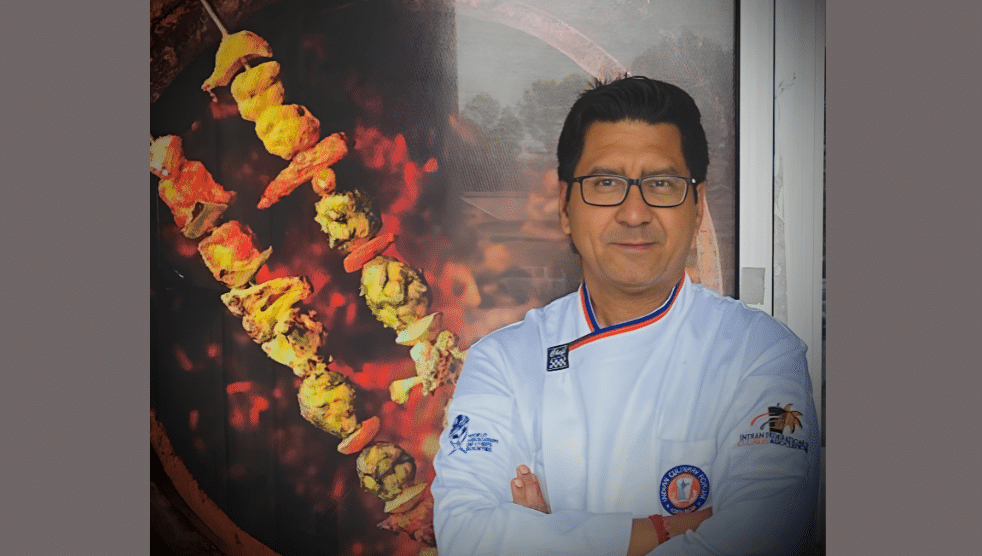
In this article, Parixit Pai Fondekar, Founder of the Kamaxi Group, argues that India’s culinary schools must evolve into launchpads for foodpreneurs, equipping students with not just kitchen skills but the business acumen to thrive in a rapidly changing industry.
A Shift in Culinary Aspirations
In recent years, there’s been a quiet shift in the way young Indians are approaching careers in food. The focus is no longer solely on perfecting classical recipes or mastering knife skills.
Increasingly, students and professionals alike are looking beyond the plate: towards the mechanics of running a food business, understanding brand positioning and navigating the practicalities of the hospitality industry. And that’s exactly the direction towards which modern culinary education needs to evolve.
Entrepreneurship as a Core Ingredient
As someone who has been closely involved in culinary skilling over the past decade, I’ve come to believe that teaching culinary techniques without entrepreneurship is like handing a chef a knife without showing them where to source ingredients or how to assess the cost implications of curating a menu.
In India, where self-employment and micro-entrepreneurship are rapidly emerging as viable career paths, especially in the food sector, we need to start thinking of culinary schools as entrepreneurship launchpads; not just grounds for basic training.
Real-Time Learning at KCCA
At Kamaxi College of Culinary Arts (KCCA) in Goa, we’ve seen this transition play out in real time. Increasingly, the students walking through our doors don’t fit the stereotype of fresh-out-of-school hospitality aspirants. Some are career shifters, some are home chefs looking to formalise their skills, and some, like one of Goa‘s most popular food influencers @mr.kurkurit aka Ruben Rodrigues, come with real-world experience in food storytelling, but are now seeking to build their capabilities in execution and business.
Hands-On Incubation Through Fierce Kitchens
Our answer to this evolving need is simple: learning by doing. At KCCA, entrepreneurship isn’t taught as a one-off module or a guest lecture tucked into a theory paper. It is built into the DNA of the programme. Through our culinary incubator, Fierce Kitchens, students don’t just learn how to prepare food—they run live operations.
This includes managing a working café and a food truck, planning menus, costing, inventory management, and handling customer feedback in real time. It’s a holistic, ground-up understanding of how a food business runs, anchored by mentorship and regular performance reviews.
Making Skill India Future-Ready
India’s skilling mission, which has gained traction through national campaigns like Skill India, places heavy emphasis on vocational training. But to truly make this training future-ready, especially in sectors like hospitality, we must integrate business thinking into our pedagogy.
The food service sector in India is expected to grow exponentially, with increasing opportunities not just in urban centres, but in smaller towns and even rural areas. This fanning out of food culture across India brings with it a need for agile, entrepreneurial professionals who can adapt to diverse market realities, which are reflective of India’s diversity.
Building Decision-Makers, Not Just Chefs
Real-world exposure is key. Internships in restaurants are valuable, but they often slot young chefs into repetitive tasks. What many lack is the experience of decision-making. This is where hands-on, entrepreneurship-focused training offers a critical edge. Running a food truck, for instance, requires more than culinary flair. It demands problem-solving, budgeting, teamwork and the ability to think on your feet—all within the constraints of a small, mobile kitchen.
Mentorship and Multi-Disciplinary Growth
Mentorship plays a big role in this model. Across leading culinary institutions, industry professionals are guiding students not just on operational best practices, but also on branding, pricing strategies, legal frameworks and more. The objective is no longer limited to preparing job-ready graduates, but to developing job creators. For that to happen, students must first be equipped with the mindset and tools to think like entrepreneurs.
Interestingly, the appeal of such an approach is not restricted to Goa or to the hospitality sector. Culinary schools across India are seeing enrolments from individuals with backgrounds in engineering, retail and even digital content creation, many of whom are seeking to realign their careers around their passion for food.
Some already run small food ventures or conduct baking classes, joining such programs not to begin from scratch but to grow strategically. A structured learning environment, combined with exposure to functioning business units, allows participants to experiment with ideas, learn from challenges, and develop a grounded, realistic business perspective.
Evolving Vocational Education
There is a growing realisation across India that vocational education can’t remain rigid or one-dimensional. As the boundaries between industries blur, and as technology continues to influence food delivery, supply chains and consumer behaviour, culinary education too must broaden its scope.
Beyond the Kitchen: The New Graduate Profile
Today’s culinary graduates need a well-rounded skill set; one that goes beyond the confines of the kitchen. They should not only train themselves to perfect techniques, whether it’s mastering international or regional Indian cuisines, but also learn to calculate profit margins, use digital platforms strategically and lead teams effectively.
Some take up roles on cruise liners or in global hospitality chains, while others launch cloud kitchens, cafés or boutique food ventures. A growing number are keen on blending content creation with culinary expertise to build credible personal brands in the food space.
Conclusion: From Chefs to Changemakers
And this brings me back to the larger point: equipping culinary students with entrepreneurial skills is no longer optional. It is essential. The Indian food industry is wide open with opportunities—but to truly make the most of it, our chefs need more than recipes. They need a roadmap.
What we need across India is a recalibration of culinary education, from focusing solely on craft to embracing creativity, business thinking and adaptability. Only then will we truly empower the next generation of culinary professionals: not just to cook, but to lead.