

With a doctorate in Industrial Management and Controlling at the Justus-Liebig-University of Giessen in 1998, Dr Andreas Buske joined Schott Zwiesel AG, German-based manufacturer of crystal glass, as Commercial manager. Two years later, in May 2001, he was promoted Commercial Board Director, and a few months later, he took over 50% of the shares through a management buy-out with his fellow Board member Dr Robert Hartel. After his colleague Dr Hartel retired in 2015, Dr Buske took over Zwiesel Kristallglas AG as the 100% sole owner.
In 2002, the invention and production of Tritan®crystal glass marked a qualitative quantum leap forward in the manufacturing of crystal glassware. Three years later, in 2005, based on the deep connection to the Zwiesel region, the company renamed itself from Schott Zwiesel AG to Zwiesel Kristallglas AG. In addition to his function as owner and Board Director, Dr Buske is member of the working group for ‘Integrated Strategic Business Planning’ and national advisor for Commerzbank AG. He is also Honorary Professor at the Deggendorf Institute of Technology for business economics, controlling and finance.
In an interview with Hotelier India, Prof Dr Buske shares what makes Zwiesel Glas a cut above the rest, his strategies for the Indian market and his vision for the brand.

I want us to become the world market leader for tableware. This vision unites Zwiesel Glas and Fortessa Tableware Solutions. Our merger in October 2022 was therefore a logical consequence. Especially in such challenging times as we are currently facing, we are glad to have such a strong partner on board with Fortessa.”
Prof Dr Andreas Buske.
- Zwiesel Glas has succeeded in being one of the leaders in the glassware industry for the longest time. What, according to you, is the secret of this success?
We have recently been named ‘World Market Leader for the Upscale Hotel and Catering Industry’ (2023) for the sixth time in a row. Zwiesel Glas has never just been about glass, but has always echoed the possibilities inherent in glass. Products that lend a special touch to every table setting and are simply part of refined taste worldwide.
Zwiesel Glas still sees itself as a manufacturer that produces value and quality – and builds on experience. When I look back at the 150-year history, I see ‘exquisite glassmaking art’ as the company’s historical constant, the core of the Zwiesel Glas brand. It is associated with emotional values such as history, tradition and authenticity. In addition to machine-manufactured premium products, we will continue to offer a diverse range of manufactory products for high-end customers in the hotel and catering industry as well as in the private end-consumer sector. In order to be able to offer the best quality required there, we continue to invest consistently in our manufactory location in Halimba, Hungary – one of the world’s largest and best glass manufactories.
One of our recipes for success is our focus on class instead of mass and the production of relevant assortments for the upscale hotel and gastronomy sector, coupled with excellent service. Our great trump card is that we are constantly developing as a company and consistently pushing our themes – brand and market development as well as manufacture and machine production. We are constantly adapting to the needs of the market. We want our customers to come back as enthusiastic buyers.
- Tell us something about yourself. What triggered your interest in the glassware industry?
I can tell you what triggered my interest in the former Schott Zwiesel AG. I was already convinced back then that we produce the best crystal glass in the world. This quality must and will prevail and if brand, market and marketing strategy adapt to the logic of better products – then nothing stands in our way of becoming the world market leader. I am a rationalist and a numbers person and had a clear plan. I was convinced: If we give the quality produced in Zwiesel a new face, if we put brand before mass, then we will succeed and achieve our goals.
I still remember when we stood in the so-called Relax Room for the production staff in the course of the takeover on 12 March 2001. About 250 production workers, Dr Robert Hartel, the management from Mainz and I came together. We announced our vision. The incredulity that met us could not have been greater. But together we made it. In 2010, we were awarded as global market leader; today, we´re still on the top. Recently, we were awarded again by the leading business magazine ‘Wirtschaftswoche’, along with the Swiss Business University St Gallen, with a new award as world market leader with crystal glasses for the upscale gastronomy and hotel industry (and this now for six years in a row).
- What have been the most significant changes to Zwiesel Glas in your tenure with the organization? What has been your personal contribution to the legacy of the company?
In the 1990s, the Zwiesel Glas workforce shrank from over 2,000 employees to just over 400 within 10 years. The company was only a fragment of itself. To give it pride and backbone again was my real task after the takeover. The strength of no longer having to chase orders, but receiving recognition for our skills, should carry us forward.
Therefore, we made a hard cut in 2001 to reduce capacity to what we saw as a marketable volume of quality products. In the same year, we went to market with the then patented Tritan® technology. We gave our competence a name: We can do brilliance, we can do transparency, dishwasher resistance, scratch resistance and design – we live glass.
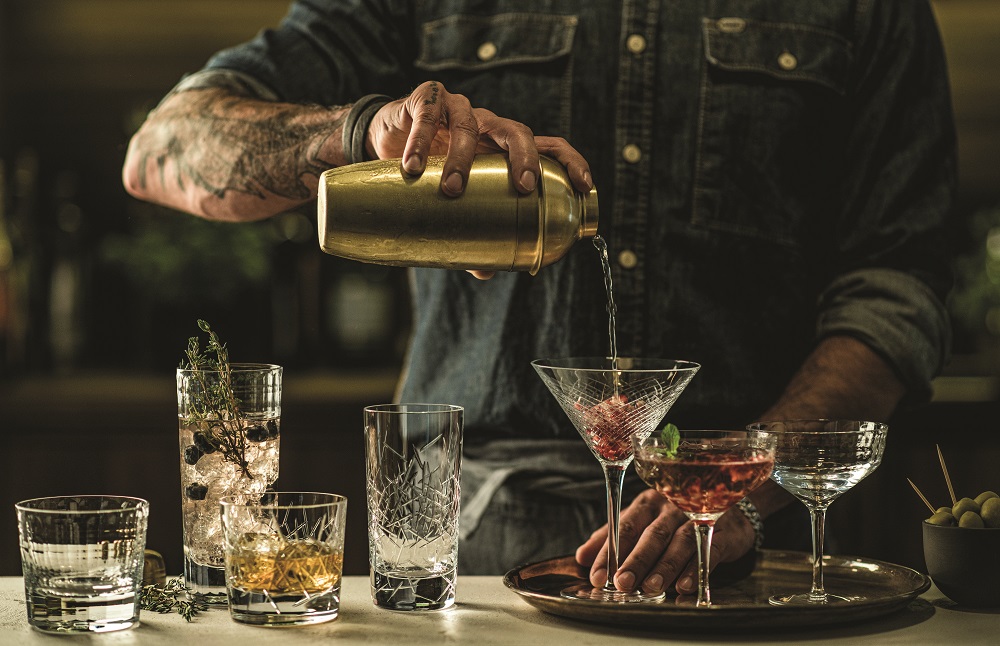
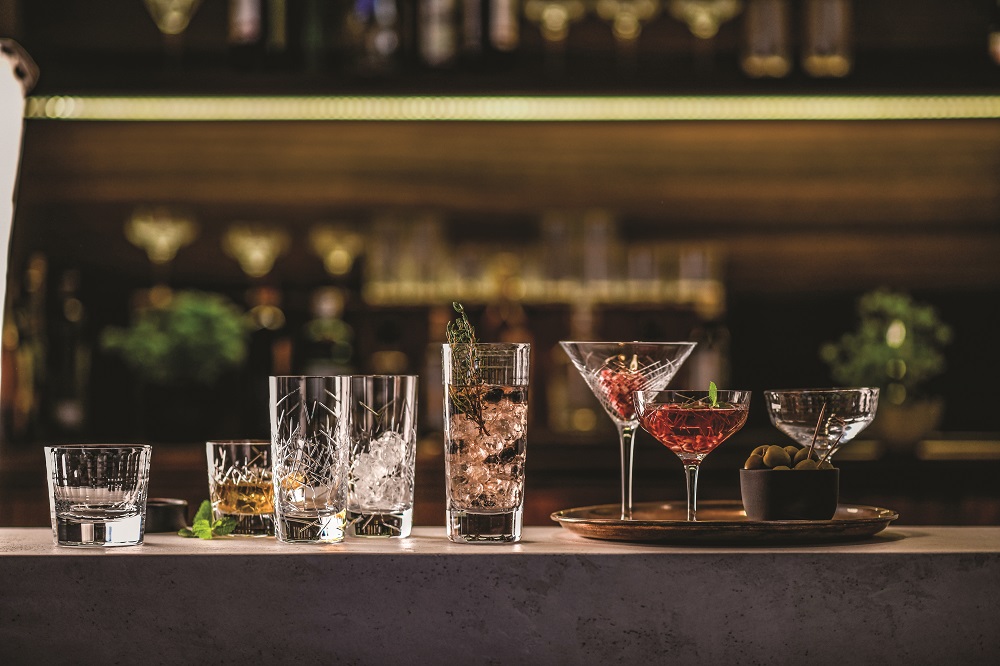
We carried this proudly to the outside world and it was well received in the market. Of course, we were also lucky. But the courage to reduce the whole thing to a qualitatively feasible level was the key to success. From my point of view, this was the necessary ‘turnaround’ and certainly an important step under my aegis. An excerpt of other important milestones in the development of the company since the MBO in 2001 were:
Extensive internationalisation at the beginning of the new millennium.
2002: Development of Tritan glass with the University of Erlangen.
2010: The first award as world market leader for crystal glass in the upscale hotel and catering industry.
2017: Renewed recognition as world market leader for crystal glass in the upscale hotel and catering industry with a newly created award by the leading business magazine ‘Wirtschaftswoche’ together with the Swiss Business University St Gallen.
2020: Brand relaunch with a strong own umbrella brand Zwiesel Glas – another important return to our roots
2022: Celebration of 150 years of Zwiesel Glas including design cooperation and merger with US market leader and partner Fortessa Tableware Solutions.
2022: Exclusive cooperation with Gault & Millau with the handmade Zwiesel Glas collection Simplify.
2022: Setting the whole table: Launch of United Tables by Zwiesel (a unique concept provider for the whole table for the professional market). Our vision: market leader for the whole tabletop segment.

- Zwiesel Glas is known for being a FIne blend of elegance and perfection. Tell us something about the design philosophy the brand employs for its varied range of glassware.
Our goal is to create unique shapes and designs for the most discerning guests and hosts, not only following the market but also setting trends ourselves. We want to offer the perfect glass for every drink. This is ensured by sensory tests, the ideal matching of glass shapes to contents and, last but not least, the incredibly high level of expertise of our production staff – both machine and handmade. Together with our experienced in-house design department, headed by our chief designer Irmgard Braun-Ditzen, cooperation with external designers are important in order to capture new trends outside the glass sector, to serve cross-industry trends and to tap new sources of inspiration. How important and right this is, is shown by the numerous awards we have received in the design sector.

“Zwiesel Glas still sees itself as a manufacturer that produces value and quality – and builds on experience. When I look back at the 150-year history, I see ‘exquisite glassmaking art’ as the company’s historical constant, the core of the Zwiesel Glas brand. It is associated with emotional values such as history, tradition and authenticity.”
Prof Dr Andreas Buske.
- What has been your approach to sustainability, both in the product and the packaging?
Sustainability means viability for our future. We have implemented an environmental management system certified according to ISO 14000:01 to ensure a sustainable corporate concept with consistent product quality.
Our detailed analysis of all raw materials associated with production aims to avoid contaminants from the onset and to use recyclable materials wherever possible. We rely on regional raw materials (particularly quartz sand, a key ingredient) and recycled glass from our own production to guarantee short transport paths. We also give preference to regional energy sources for our production plants.
Tritan® crystal glasses not only are especially brilliant, break resistant and dishwasher safe, but also stand out for their sustainability. Our consistent selection of low-emission, recyclable raw materials for production makes our products especially durable and environmentally friendly. Approximately 50% of each individual glass consists of recycled Tritan® crystal glass.
Based on our detailed analysis of all raw materials, we can produce high-quality glasses that are 100% food-safe and 100% BPA-free.
We are committed to continued process innovation to minimise our energy use in glass melting. A closed cooling water circuit, heat recovery technology, filter systems as well as UV and laser technologies reduce our energy consumption and make sure that water is returned to the environment in clean condition.
We are particularly proud of our oxyfuel technology, which significantly reduces our carbon dioxide and nitrogen oxide emissions. This technology enables us to use 30% less energy in production compared to conventional gas-heated glass melting furnaces.
Our packaging is mainly FSC® (Forest Stewardship Council) certified and marked with the green dot to show it is made from environmentally-friendly, recyclable materials. Our filling pellets are biodegradable as well. Boxes can be reused, e.g. for storage or moving. Thanks to the unique design, the product boxes also make ideal gift packaging to give your loved ones a special treat.

- How do you think is the brand perceived in India? How would you describe your target audience here?
Zwiesel Glas is perceived as a traditional German brand with historical innovations coupled with cutting edge technological craftsmanship. The value proposition of our products as well as our well rounded assortment portfolio have resonated well with Indian customers. More importantly, our local presence and management for more than 12 years has clearly set us apart from competition demonstrating our long-term commitment in India.
One of the USPs of Zwiesel Glas is that we have a wide range of products with a wider spectrum of price points which allows us to equip different target consumer profiles – right from trendy users with younger demographics to a serious Connoisseur or to a person who is simply a lover of the grape. This is made possible by our dual-brand strategy: With the Schott Zwiesel brand, we offer attractive entry-level ranges for the upper medium market, and with Zwiesel Glas, we serve the needs of the upscale to high-end (manufactory) segment. Our target audience in India is the upper medium market to luxury market (inc. handmade products).
Our efforts continue to ensure a good quality product and memorable experience in the hands of all.

“We are particularly proud of our oxyfuel technology, which significantly reduces our carbon dioxide and nitrogen oxide emissions. This technology enables us to use 30% less energy in production compared to conventional gas-heated glass melting furnaces.”
Prof Dr Andreas Buske.
- Cue us into some of your strategies for the Indian market.
Our goal is to achieve a closer engagement with our Indian customers, understanding their expectation on product lines and growing Indian trends. In the upcoming months, the Zwiesel Glas India team will be implementing a strategic plan. Future will also hold: Partnering with organised retailing, developing online presence and a stronger shipping and distribution strategy.
We also aim to further implement our Dual-Brand-Strategy (Schott Zwiesel and Zwiesel Glas) in Consumer and Professional Business and to focus on D2C and branding activities in consumer business by building a strong online brand presence.
Another important strategic step is the expansion of the product range in the professional segment (hospitality/ catering segment): Under the new corporate brand United Tables by Zwiesel (subsidiary of Zwiesel Kristallglas AG), we will be able to set the complete table for our professional customers with high-quality glassware (Zwiesel Glas and Schott Zwiesel) and high-quality dinnerware and cutlery with our brand Fortessa (from our market-leading US partner Fortessa Tableware Solutions) in the future.
Also very important for us is to strengthen our local presence in the Indian market.

- What is your vision for the brand for the coming decade?
We have developed a clear vision and strategy. Our goal is to consolidate and further expand our market position in both segments – Professional and Consumer – and to increase our brand value. I still believe in the guiding principle of ‘class not mass’ and also in the economic success behind it.
But I also have another vision: I want us to become the world market leader for tableware. This vision unites Zwiesel Glas and Fortessa Tableware Solutions. Our merger in October 2022 was therefore a logical consequence. Especially in such challenging times as we are currently facing, we are glad to have such a strong partner on board with Fortessa. Together, we have much greater clout and broader resources at our disposal. Together, we are much more efficient: We are a globally active company with offerings that complement each other perfectly, but do not overlap. This opens up a completely new world for our customers. We offer precisely fitting and reliable service from a single source, a perfect ‘all-round carefree package’, so to speak.
This makes us an even more attractive contact partner. The merger also allows us to be even more diversified – this applies both to the markets and to our product portfolio. At the same time, we can also increase our efficiency as a company.
Through the merger, around 900 people are working to become the world market leader for tableware..


