
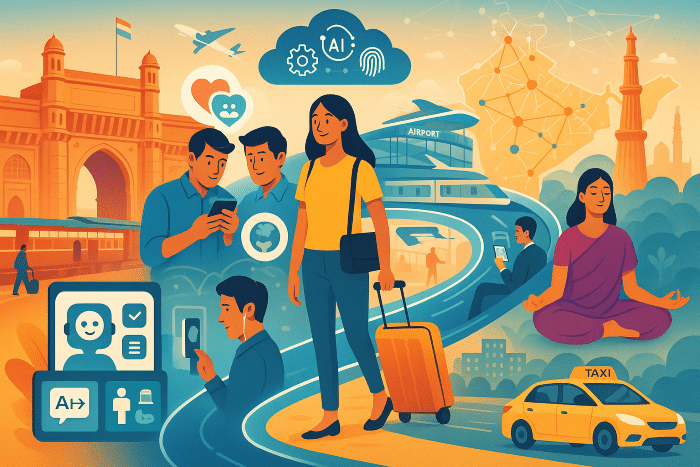
For many, travel is a source of excitement and anticipation. New global research from Amadeus reveals how travelers are increasingly looking to technology, especially AI, to enhance their journeys, seeking to eliminate pain points and friction throughout the process.
The study, Connected Journeys: How Technology Will Transform Travel in the Next Decade, collected insights from 9,500 global travelers across China, France, India, Singapore, Spain, UK, and the USA, highlighting the role emerging technologies play in transforming the travel and hospitality industries.
Rapid Adoption of Generative AI in India
Indian travelers are rapidly embracing GenAI for trip planning, with usage increasing from 17% last year to 26% this year, and 33% having used it for leisure trips abroad. Among those who tried GenAI:
- 97% reported positive outcomes
- 49% saved time
- 45% discovered hidden gems
- 44% enjoyed a more creative and unexpected travel experience
Loyalty Programs Influence Travel Behavior
The study found that 92% of Indian travelers are subscribed to at least one loyalty program.
- 37% for leisure trips are most popular
- 34% use online travel agency programs
These memberships influence traveler behavior significantly:
- 49% book additional activities offered through loyalty schemes
- 47% travel for leisure more frequently
- 46% opt for premium and upgraded experiences
Global Trends in AI Adoption
Globally, Generative AI usage is up 64% compared to last year. Benefits highlighted by travelers include:
- 42% time savings
- 37% highly personalized recommendations
- 36% discovery of new destinations
- 35% feel more confident in travel decisions
Furthermore, 64% of travelers are willing to pay for an AI travel assistant, with 17% ready to pay up to 5% of the trip value for such services.
Challenges in AI Travel Solutions
Despite rapid adoption, AI still has limitations:
- 25% experienced outdated or inaccurate information
- 25% felt AI could not fully capture personal preferences
Decius Valmorbida, President of Travel, Amadeus, commented, “Expectations are high, and the industry must work together to ensure AI delivers real value—reducing friction, enhancing confidence, and making every journey more intuitive and enjoyable.”
India Leads in Digital Travel Innovation
Mani Ganeshan, Senior VP, Head of APAC Engineering and Amadeus India, said: “In a digital-first country like India, travelers are ready for AI innovation. Intelligent itinerary recommendations, real-time rebooking, and hyper-personalized planning make travel seamless from planning to biometric boarding.”
With DigiYatra live across major airports, entry-to-boarding times are down to minutes, creating expectations for scalable, secure, and intuitive travel experiences.
Traveler Aspirations and Anxiety
The report revealed 90% of air travelers experience some level of anxiety during travel. Yet top travel hopes focus on experiences, not material objects:
- 27% quality time with loved ones
- 25% discovering great food and drink
- 24% creating lasting memories
- 22% smooth travel without delays
Technology Reduces Travel Anxiety
Worries occur at multiple stages: packing (26%), security (27%), travel to the airport (26%), and the flight (24%). Technology solutions addressing these concerns include:
- 66% global interest in remote baggage check-in
- 74% of Indian travelers open to biometric gateways
- Real-time travel updates via apps (29%)
- Digital wallets for document storage (27%)
- Smart baggage tracking systems (26%)
- Integrated travel management super apps (26%)
India’s digital payments landscape, supported by UPI and mobile wallets, positions it as a prime market for biometric and contactless travel innovations.