
What were the initial challenges you faced when taking over Himalayan Hotels, and how did you transform a struggling asset into a thriving business?
When I took over majority ownership of Himalayan Hotels in 2012, it was a small company with just one struggling asset—Ganga Kinare. The hotel required major renovations, was not operationally profitable, and suffered from poor reviews, causing it to lose both clients and travel agents. Additionally, the company’s shareholding structure was disorganised, existing loans needed repayment, and professional management was lacking. On top of that, I had no prior experience in hospitality or running a business—I was only 28 and had been a working professional until then.
In the initial years, my focus was razor-sharp on guest feedback, resolving even the smallest operational bottlenecks, and improving service standards at the ground level daily. I also made it a point to personally meet over 100 of India’s top inbound tour operators, as Rishikesh at the time was primarily sold through them—online travel agencies were not yet significant. Slowly, we started seeing early signs of growth.
It took three years to streamline and organise the company’s shareholding structure, repay old loans, bring in fresh equity, secure better loan financing, and revamp our marketing approach. During this time, we also built a strong team and, by the third year, we began seeing consistent profitability and a solid return on our investments.
With financial stability in place, we shifted our focus to expansion. While evaluating opportunities across various regions, we realised that the greater Rishikesh area had occupancy rates and average room revenues (ARRs) that were among the best in the country. It was a micro-market we understood well, and surplus demand at Ganga Kinare reinforced our belief that we needed more assets in the region. This led to a strategic phase of growth, involving land acquisitions to build new properties and taking over well-performing assets on lease or revenue-share agreements.
Today, Himalayan Hotels has grown 25x in revenue since 2012 and has expanded into a group of four thriving hotels.
Your recently launched projects in Rishikesh, VILEEN and ONENESS, sound fascinating. Can you tell us more about the concepts behind these properties?
As Rishikesh gained popularity and footfall increased, we noticed a shift in the way travellers engaged with the city. The urban properties were naturally becoming a hub for families on holiday, while spiritual seekers, yoga enthusiasts, and meditation practitioners began seeking more secluded retreats in quieter parts of the region.
Over time, Ganga Kinare evolved into a destination primarily catering to families and senior travellers, drawn to its comfort and accessibility. However, many of our long-time guests—who once came to Rishikesh for its peaceful, natural setting or meditation retreats—began expressing the need for more immersive experiences away from the growing bustle of the city.

To address this, we identified two distinct locations to develop properties that would cater specifically to these evolving needs:
ONENESS was conceptualised as a wilderness retreat, offering a deeply immersive natural experience. Situated in a secluded area amidst the forest, flanked by the river, and featuring a private beach, ONENESS was designed for those seeking solitude, mindfulness, and a deep connection with nature.
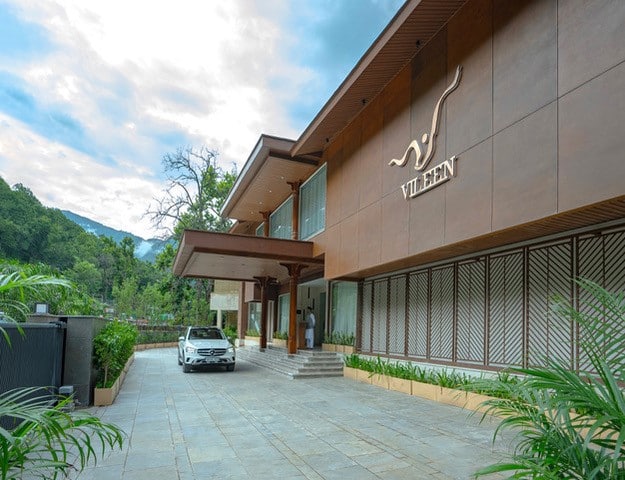
VILEEN, on the other hand, was created as a dedicated wellness sanctuary. Understanding that wellness-focused travellers preferred more serene destinations, we chose a location outside the city to establish a full-fledged spa experience, ensuring a tranquil environment without the distractions of high footfall.
With these additions, we’ve created a well-balanced circuit for guests. Those seeking a city experience can stay at Ganga Kinare, while those looking for deep relaxation and healing gravitate toward VILEEN, and nature lovers find solace at ONENESS. Rather than forcing one property to cater to all needs, we felt the best long-term approach was to develop specialised destinations, allowing guests to craft an experience tailored to their preferences.
What makes Himalayan Hotels stand out in the competitive boutique and character hotel segment?
At Himalayan Hotels, we take pride in staying true to our name and vision. Our focus remains on the Ganges, ensuring that each of our properties is deeply connected to the sacred river. We have been fortunate to find and develop prime riverfront locations, allowing us to offer an international-quality experience while maintaining an authentic Himalayan charm.
One of our key differentiators is our commitment to local hiring and training. By nurturing local talent, we not only create meaningful employment opportunities but also ensure that our guests experience genuine hospitality. This approach enables us to deliver a five-star experience at a competitive price, offering high value without the premium pricing of global luxury brands like Taj or Oberoi.

What truly sets us apart is the cultural authenticity infused into every aspect of our guest experience. From traditional aartis and personalised guest welcomes to small yet meaningful rituals at each of our properties, our hospitality is deeply rooted in local traditions. Unlike larger chains that offer standardised menus and international cuisines—like pizza counters on the Ganga Ghat—we remain dedicated to elevating regional experiences, ensuring that guests immerse themselves in the true essence of Rishikesh.
Beyond hospitality, we curate unique experiences tailored to each guest, from culinary storytelling that highlights local flavours to adventure trails that showcase the best of the Himalayan landscape. Every stay at a Himalayan Hotels property is designed to be immersive, culturally rich, and deeply personal—something mass-market luxury brands simply cannot replicate.
By blending world-class hospitality with local soul, we have carved a niche that makes us stand out in the boutique and character hotel segment.
Sustainability is a key focus for Himalayan Hotels. Could you elaborate on your approach beyond the usual measures like zero plastic and wastewater recycling?
At Himalayan Hotels, sustainability is deeply embedded in our philosophy, extending far beyond conventional practices like zero plastic and wastewater recycling.
- Eco-Friendly Alternatives: We avoid single-use plastic wherever possible. For example, we do not use plastic liners in dustbins, instead opting for recycled newspapers. Additionally, we have eliminated mineral water bottles for nearly a decade, providing guests with purified water in reusable glass bottles.
- Responsible Resource Use: We have discontinued daily newspaper distribution, recognising that most guests prefer digital news, thereby reducing unnecessary paper waste.
- Sustainable Sourcing & Local Impact: We emphasise local employment and support regional businesses by sourcing amenities and supplies from nearby vendors instead of importing from other states, thus minimising our carbon footprint.
- Organic Farming: At Ganga Kinare, we maintain a small organic farm, growing micro greens, herbs, and fresh produce for our kitchens, ensuring healthier meals with minimal environmental impact.
- Energy Efficiency: Our properties utilise LED lighting and energy-efficient DG sets, contributing to lower energy consumption.
- Sustainable Architecture: At ONENESS, we have focused on sustainable building practices, using natural materials to blend harmoniously with the environment while maintaining structural integrity.
Sustainability for us isn’t just a policy—it’s a way of life. By integrating eco-conscious choices into every aspect of our operations, we ensure that our footprint remains minimal while offering an authentic and responsible travel experience.
The boutique hospitality market has evolved significantly. What trends do you think will shape its future in India?
The boutique hospitality market in India is undergoing a transformative shift, driven by experiential travel, sustainability, and technology-driven personalisation. Several key trends shaping its future include the rise of design-led, independent hospitality brands; discoverability through digital & content marketing; the work-leisure hybrid model; sustainability as a core differentiator; and geography no longer being a barrier.
The future of boutique hospitality in India will be shaped by authenticity, exclusivity, and digital discoverability. As travellers move beyond conventional luxury, entrepreneurs who blend design, technology, and experiential storytelling will lead the industry forward.
If you had to describe Himalayan Hotels in one sentence, what would it be?
Himalayan Hotels is a passionately run, conscientious organisation dedicated to offering international-quality, culturally rich experiences for every guest, with meticulous attention to every detail.