In today’s rapidly evolving culinary landscape, the importance of sustainability cannot be overstated. As an expert in the cooking industry, I’ve seen firsthand how sustainability in a kitchen extends far beyond just the ingredients we choose. It’s about the energy we use, the waste we produce, the space we optimise, and ultimately, the environmental impact of every meal we create. In a restaurant setting, where efficiency is paramount, these factors become even more critical.
One of the most promising developments in achieving sustainability in the kitchen is the integration of artificial intelligence (AI)-enabled combination cooking devices. These technologies not only provide a comprehensive overview of energy usage and waste but also offer innovative solutions to reduce both. By meticulously tracking and documenting the inefficiencies within the cooking process—whether it’s excessive energy consumption, material waste, or time inefficiencies—AI helps us pinpoint where improvements can be made. This leads to substantial savings in energy, reduces the cost of cooking, and minimises raw material waste, all while enhancing the overall operational efficiency of the kitchen.
When a kitchen adopts an AI-enabled cooking device, the transformation is profound. These devices monitor every aspect of the cooking process, from the amount of food prepared to the exact quantities of raw materials used. This data is invaluable for predictive inventory management, allowing restaurants to precisely manage their stock and reduce unnecessary waste. The result is not only a more sustainable operation but also a more cost-effective one.
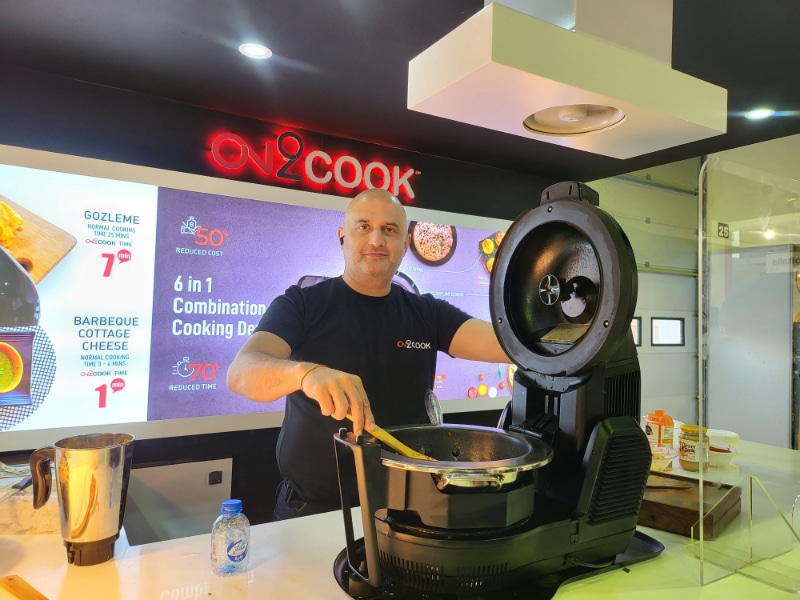
The impact of AI-enabled combination cooking devices on energy consumption is particularly remarkable. These devices can cut energy usage by up to 80% (especially in a QSR or cloud kitchen environment, where devices need to be kept on consistently to manage quick orders from online ordering platforms) and reduce cooking times by up to 70%. This dramatic reduction in energy requirements not only lowers costs but also significantly reduces the environmental footprint of the kitchen. In an era where energy prices are on the rise, these savings are more important than ever.
Moreover, the efficiency gains from reduced cooking times cannot be understated. With AI-assisted devices handling tasks such as stirring, temperature management, and timing, kitchen staff can focus on other critical aspects of meal preparation. This hands-free approach allows chefs to prepare multiple dishes simultaneously, maximising productivity and reducing labour costs. The intelligent communication between the device and the cook ensures that ingredients are added at the optimal time, resulting in consistently high-quality dishes, leaving them enough time for plating and a great customer experience!
These combination devices are incredibly versatile, often replacing the need for multiple other pieces of kitchen equipment. With up to six functions in a single unit, they are capable of handling large orders with ease, making operations more sustainable by reducing the number of devices—and thus the energy and space—needed in the kitchen. This also simplifies inventory and maintenance, cutting down on the costs and complexities associated with managing multiple vendors and equipment types.
Another significant advantage of these AI-assisted devices is their ability to minimise the need for additional kitchen infrastructure, such as hoods, chimneys, and specialised furniture. By controlling the cooking process more efficiently, they reduce energy wastage and eliminate the need for gas, even in high-temperature cooking methods like those used in Chinese cuisine. This not only lowers initial setup costs but also reduces ongoing expenses related to maintaining the kitchen environment.
As we look to the future, the adoption of AI-assisted combination technologies in kitchens represents a crucial step towards a more sustainable culinary industry. These advancements promise substantial savings in terms of direct costs, energy usage, space, and labour, while also enhancing the quality and consistency of the food produced. For any restaurant committed to sustainability, embracing these technologies is not just a smart business decision—it’s a necessary one for a greener, more efficient future.