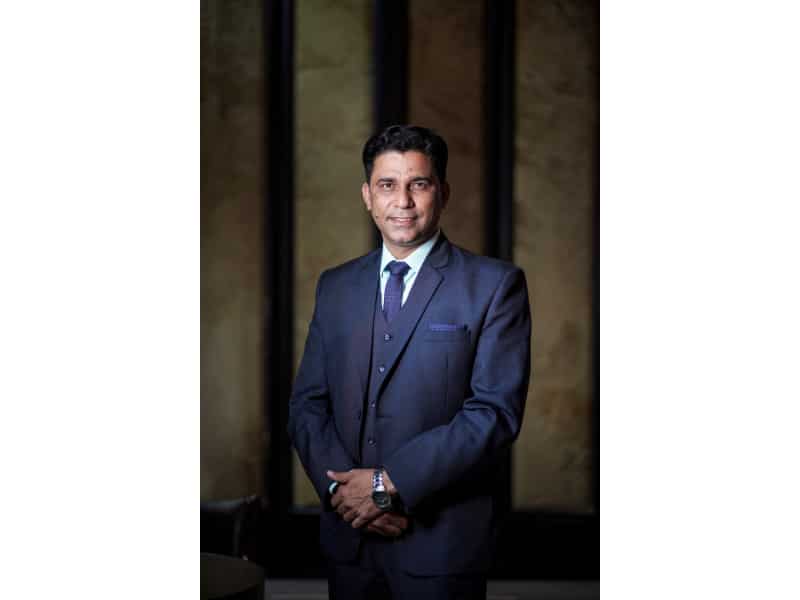


Do food courts offer competition to hotel F&B outlets and stand-alone restaurants? Punam Mohandas asks some key food and beverage managers to debate on the subject.
Q: Do you think the increasing number of food courts at malls and multiplexes pose a challenge for hotels and stand-alone restaurants?
JVS RANA: I don’t think they pose a challenge for hotels, but to some extent they eat into the business of non-branded stand-alone restaurants.
YOGESWARAN VEERSAMY: Food courts are certainly not a threat to five-star hotels. Malls, multiplexes, and food courts, are under one roof as a complete entertainment destination for a customer whose needs are different from a guest who visits stand-alone restaurants or five-star hotels.
PRASHANT GUPTA: I would regard food and beverage outlets in hotels, stand-alone’s and the ones in malls as totally separate, as they attract different kinds of clientele, however, sometimes they share the same pie of food and beverage covers.
It’s true that some stand-alones have been providing far better product and services than some hotels, therefore it affects the frequency of visits of a individual to a hotel. Having said that, in most cases the stand-alones cannot match the wow factor a dining experience in some trendy restaurant in a five-star hotel offers. With a growing economy like India, more and more people are patronising hotels as they can afford the finer things in life.
ABHISHEK SHARMA: In our industry, good restaurants are the ones that outlive the other as a successful business venture. The frenzy with which outlets are sprouting up across the retail sector does have a short term impact on the culinary experience for us, but in the long run, the effect is negated. Essentially, if a retail outlet as a mall would open a restaurant based on ideologies that hotels or high-end restaurants use then it may prove successful.
Also, a meal experience is beyond just the food and the service at your table; all factors, such as ambience, service experience, safety and security of the venue, music of the area, are just some of the factors that build towards a complete experience. In a retail location, some of these factors are beyond day-to-day control.
MAHESH SHARMA: Food courts are targetting a different market segment compared to hotels and stand- alone restaurants. I do not think that they pose any challenge, however, hotels need to keep updated with the current trends and maintain high quality and authentic cuisine.
Q: Are food courts so popular because of the entertainment options available in malls?
JVS RANA: The food courts at malls are the not the actual drivers of footfall, as most people coming into the mall are there because of the multiplex, shopping, and kids entertainment areas which most of the new upcoming shopping malls are providing.
Food courts form a part of value-added service and because of the wide range, reasonable pricing, comfortable and fashionable surroundings, people tend to hang out in the food courts.
YOGESWARAN VEERSAMY: Entertainment in Hyderabad is majorly movies and pubs; there are no other options such as fishing, bowling, karting, on a large scale. People love to watch movies these days and with more malls slated to open in coming years, there will be an increase in number of food courts.
This will definitely meet the needs of every individual who wishes to stop by a destination that is under one roof.
PRASHANT GUPTA: Yes. In terms of malls, they do pose a challenge for the hotels and stand-alones as firstly they are a destination in themselves, offering everything people would want to do on their holiday and also, there is a convenience factor, as a family that plans to watch a movie or shop in a mall will not go to a hotel later to have food. Mall managements understand that, as their footfalls increase along with the increase in the time spent by customers.
ABHISHEK SHARMA: The entertainment options do feed the outlets with footfalls, but my opinion rests solidly on the entire thing being an experience rather than just food at the table.
MAHESH SHARMA: Entertainment options do play an important part, but the style of service, the price, cuisine, and the location, has a prominent role to play as well.
Q: How are you going to deal with this challenge to ensure better footfalls at hotel restaurants?
JVS RANA: India has a large market segment of people who can afford to pay for a high-end experience, extremely good authentic food, and service. Some of the hotels have done an excellent job on this; this is what they should focus on and provide.
YOGESWARAN VEERSAMY: We believe in providing our guests with a personalised service; our associates are well acquainted to anticipate guest needs. We are very positive that our values, taste, product and services will generate trails and bring in more foot falls.
ABHISHEK SHARMA: The overall challenges for the hotel and restaurant segment will be to continually innovate and expand their target data base. They have the ability and the infrastructure to create customised experiences and hence can fare well. Over the next few years, hotels may see outlets that are becoming popular in the retail sector being directed towards franchising spaces within the hotel premises.
A lot of new hotels are hitting the nail on the head with opening outlets with live kitchens offering six-ten types of cuisines under the same roof. It must also be understood that the younger demographic section of our society tends to propel their parents towards many of the above decisions.
MAHESH SHARMA: Hotel restaurants target people who are willing to pay and don’t want to compromise in the standards of food and services provided to them. However, with the increased choice, diners now have options based on price, location, quality, cuisine, and so on.
Q: In your opinion, is price the only reason people tend to prefer going to food courts over the traditional options?
JVS RANA: In my view price is not the main reason, it is more the variety and informal, interesting experiences which food courts provide. Today, people are more independent and different in their food choices; this kind of an option is only available at food courts and not in traditional stand-alone restaurants.
YOGESWARAN VEERSAMY: Price, accessibility, and varied options could be the reasons why more people prefer food courts. I haven’t seen many customers who only prefer to go to a food court; most of them club the food court visits with shopping or movies.
PRASHANT GUPTA: Food courts are made keeping footfalls in mind so their menu pricing targets the college kids with not much pocket money, housewives shopping in groups and families whose whole idea for a good weekend is to spend a day in the mall doing some shopping, watching a movie, and having some lunch in between.
While price is not the only criterion, it is certainly one of the major criteria both for families and corporate. Flexibility to order different cuisines is also a good factor, but not necessarily a deciding one.
ABHISHEK SHARMA: The ability of food courts to be able to varying tastes simultaneously also plays an important factor.
MAHESH SHARMA: In my opinion, price is not only the reason for this trend, the location and various entertainment and shopping options available helps to target people.
Q: Should hotels reduce the price of liquor and other beverage items which are generally sold on a premium price, as a customer retention strategy?
JVS RANA: The price a guest pays at a hotel bar is not just for the liquor but for the overall lifestyle experience he/she enjoys. In many cases, it is the quality of food, service, and entertainment, which provides new and repeat customers for hotels.
YOGESWARAN VEERSAMY: Liquor prices are always competitive and the markets flourish on a big retention policy. Liquor laws and tax components are generally steep and the tag gets heavier by the time the beverage reaches the consumer. The idea is to be competitive and realistic, while offering a huge range of beverages to suit individual moods and tastes.
PRASHANT GUPTA: Reducing the pricing in hotels as a customer retention strategy will not work as firstly, most of the stand-alones are maybe 20% less or equal to hotels as they have higher costs, majority being the venue cost. Also there are not many malls where alcohol is allowed to be served.
Hotels use the price factor as a way of segmenting their patronage in order to attract the right kind of people and that economic stratum; because of a growing economy, there are more and more Indians who are embracing this kind of lifestyle which involves patronising food and beverage in a hotel once or twice a month.
ABHISHEK SHARMA: The ultimate pricing of any branded liquor depends on its perceived value from a customer, and the added costs of excise and custom duty paid to bring it in. Customer retention strategy will have to be based on creating experiences rather than lowering costs continuously.
Attractive packages, depending on various factors for each establishment and its target audiences have been created by many free standing operations, and hotels would be wise to learn from them. Our traditional business model needs to evolve as the free market becomes more brand positive and quality consciousness.
MAHESH SHARMA: Hotels should study the psychology of their target guest and then formulate a customer retention strategy because, in my opinion, our target customers are willing to pay for quality and experience.
Q: Is it a good idea to open established (international) restaurant brands in hotels to increase your revenue from the F&B section?
JVS RANA: Yes, it is a good idea, especially for hotels who do not have a strong track record of food and beverage concepts.
YOGESWARAN VEERSAMY: Established international brands always do well in stand-alone/independent locations. Globally, established restaurants or coffee shops like Starbucks do well in budget or medium hotels. Five-star hotels would always showcase their expertise in cooking and presenting a great restaurant – they have their own signature restaurants which are a brand in itself.
PRASHANT GUPTA: It depends on what business model is it based on – revenue sharing, profit sharing or management fee based.
All three impact the revenues differently. Some hotels where the business model is more room focussed, would prefer to lease out some of the restaurant space except for the bar and the multi-cuisine all day dining, as it might make more business sense to have an international brand in their hotel. There will be more footfalls because of that, and more exposure to the hotel.
ABHISHEK SHARMA: It depends on many factors – location, target audience group, saleability of that brand, and awareness in its own regional market, may contribute towards profitability.
MAHESH SHARMA: Yes, it could be a great idea if your organisation policies allow you to do so. In recent years, various chain restaurants have emerged as a popular choice for dining. International hotel companies are now standardising dining experiences which are becoming a signature offering unique to a brand. Branded consistent quality and authentic cuisine is the way forward.
Q: The concept of having hotels and malls in the same building is entering into India. Do you agree with this trend?
JVS RANA: This trend is good for serviced apartments, business hotels catering to the mid segment, and hotels at holiday destinations. For luxury hotels, it is more advisable to have a separate dedicated area with a few, very high-end international brands.
YOGESWARAN VEERSAMY: This is a very positive trend. It is mixing entertainment and leisure with quality and choices. Maximising footfalls and revenues is the mantra of this concept. Business and city hotels thrive on this concept, while luxury hotels would still like to be aloof and special.
PRASHANT GUPTA: I don’t agree with this trend. The huge human traffic in and around a mall might be a deterrent to some corporate and leisure guests due to the noise generated. Even though the hotel is in a mall, it will still have to have all F&B concepts, which may be a loss making proposition if their pricing is not right as they might lose out to the outlets in the mall.
For these outlets to ensure footfalls they will have to provide enough choice in order to make sure outside guests come and patronise the outlets instead of the malls, as well as capture their in-house guests.
ABHISHEK SHARMA: Although being attached to a mall may increase footfalls at an early time, it needs to be matched to what perception the hotel would like to create. Also the desired positioning of the hotel plays an important role in this decision to pair up or not. The average five-star consumer may still benefit from going to a classy hotel with high-end retail stores rather than a cheap mall with a classy hotel.
MAHESH SHARMA: This trend could be applicable for business hotels, as the clients are mostly business travellers and they would find every necessity within the same premises. But for resorts where people come to relax, this trend would be questionable. However, as new trends emerge we must change with them and continue the learning process.
Q: Would you say that the Indian consumer is ready to be so adventurous in his choices?
JVS RANA: Yes, I think so.
YOGESWARAN VEERSAMY: The Indian customer had always been adventurous. From KFCs to Hard Rock cafes, MTR Tiffin’s to a traditional idly house, all are well accepted by Indian society. It is all about providing tasty food in a comfortable ambience and providing the customer that personal touch in service.
PRASHANT GUPTA: I can easily say that the Indian consumer is ready to be adventurous and not stick to the regular Italian, Indian, South Indian, and Chinese fare. People are already craving about Japanese, Vietnamese, European, Mediterranean, Lebanese, Greek, and Mexican along with other world cuisines. Thanks to deeper pockets and world media, the young are more informed about these choices and do not hesitate to try it out.
ABHISHEK SHARMA: Absolutely. With international travel becoming cheaper, the internet being a centre of the young generations’ lifestyle, all signs show a ripe future for this development. Although the uber middle class is still under a cloud in India, the awareness has definitely grown by leaps and bounds in the past five years.
MAHESH SHARMA: Yes. Nowadays, Indian consumers are more demanding and also ready to try new and better things in the market. The Indian consumer is willing to pay the price for the best services and products, they are highly discerning, and they are respected globally for their spending power.
Our Distinguished Panel
JAGVIR SINGH RANA
director operations – India,
HMSHOST India Private Limited
I have 24-years of hotel experience, all with the Taj Group. My background is F&B, and I have held various positions such as EAM, Taj Samudra, Colombo, Resident Manager, Taj Krishna, Hyderabad, and General Manager, Taj Deccan, Hyderabad.
ABHISHEK SHARMA
food and beverage manager,
The Leela Palace Kempinski, Udaipur
I began my career with Oberoi Hotels, Mumbai in 2000. I was also involved in the pre-opening of Three-Sixty restaurant at the Oberoi New Delhi. Later, I moved to pre-opening Shanti Ananda, Mauritius, in 2006, and then to Soneva Gili by Six Senses in the Maldives in 2008, as head of F&B.
MAHESH SHARMA
food and beverage manager
Le Meridien, Jaipur
I actually came to this hotel as executive chef, and got promoted as F&B manager, so I handle both portfolios. I have trained under Begum Mumtaz Khan, who is an authority on Hyderabadi nizami cuisine. Prior to this I have worked with the Rajputana Palace Sheraton, The Regent Mumbai, and Ras Al Khaimah Hilton in the UAE.
PRASHANT GUPTA
food and beverage manager
Trident,Gurgaon
I have a career graph that spans more than 12 years. Prior to joining the Trident Gurgaon, I was with the Shangri-La, Singapore. I have also been a part of the opening teams of both the Radisson, as well as The Grand, New Delhi.
YOGESWARAN VEERSAMY
Director, food and beverage
The Westin Hyderabad Mindspace
I began my career with the Grand Raffles Hotel Singapore. I set up the first Ritz Carlton Bistro in Kuala Lumpur. Later, I moved to open the Four Seasons Riyadh, followed by Hilton Kuala Lumpur, Four Seasons Maldives, Swissotel Grand Shanghai, and Raffles Grand Hotel D’Angkor Siem Riep.