They’re not known as the ‘Deal Makers’ for nothing. For over 30 years, JLL (Jones Lang LaSalle) Hotels & Hospitality Group have been the world’s leading hospitality advisor.
Their India chapter is no different. As the only IPC (International Property Consultants) in India and South Asia with a dedicated hospitality practice, JLL, completing 25 years in India, can be easily called the ‘Leading Light’ for the Indian hospitality industry. They work silently behind-the-scenes researching, procuring, negotiating and sealing deals within different segments of the hospitality industry to create products that are revolutionary. So, who better than JLL to give us the real story about where the hospitality industry in India is actually headed towards?
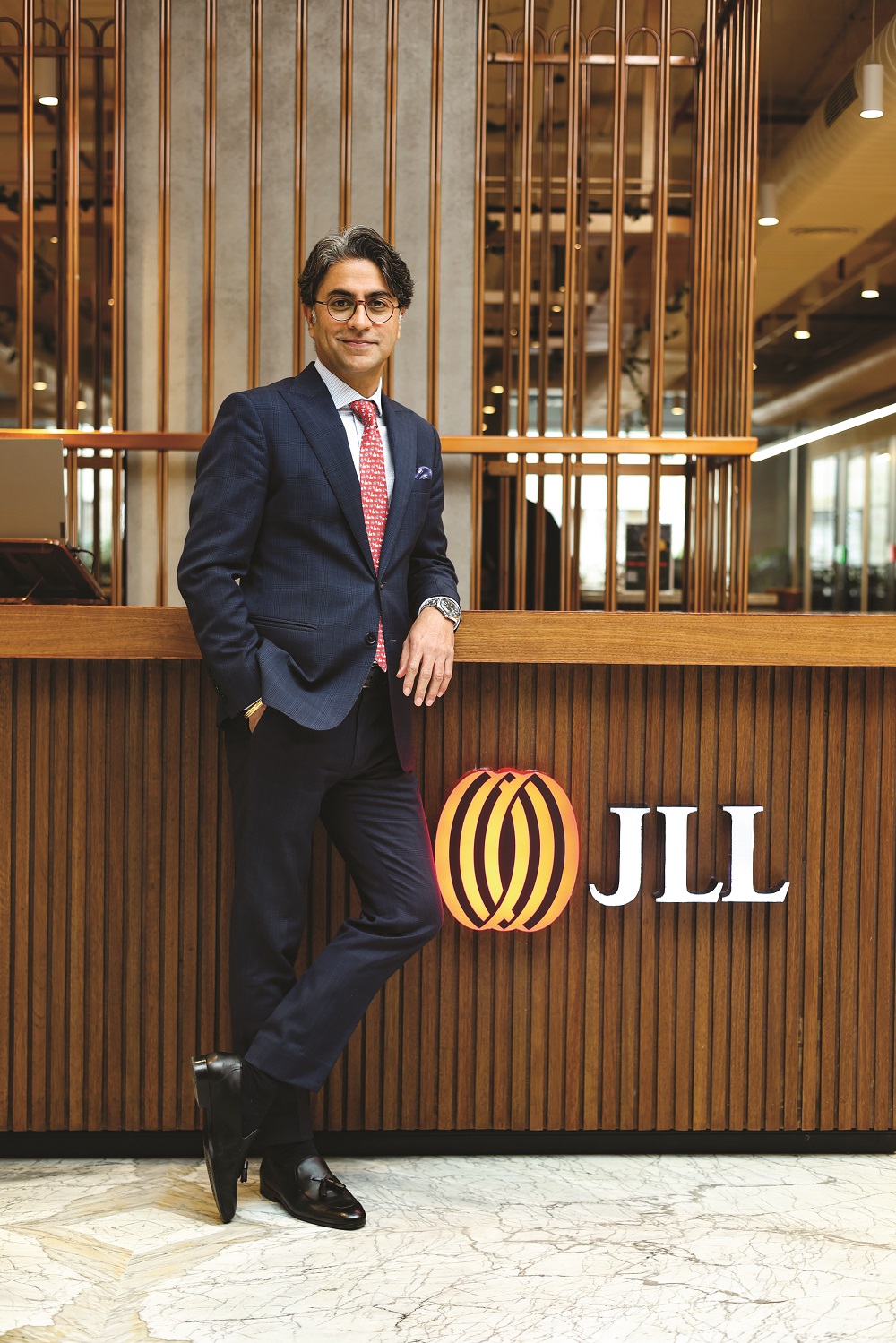
In an up, close and personal interview with the Managing Director of JLL India’s Hotels and Hospitality Group, Jaideep Dang, we attempt to seek answers to questions on every hospitality professional’s mind.
Warm, dynamic and a powerhouse of information on anything and everything related to the hospitality industry, Dang answers all our questions with patience and precision. Read on, for some wonderful insights on how COVID impacted the industry, its comeback and the road ahead for India.
- Although JLL is a leading global provider of real estate and investment management services, it remains a force to reckon with in the Indian hospitality industry. We’d like to start the interview by asking you what exactly is the role JLL plays in the hospitality sector in India, since most people only seem to know you’ll as the ‘deal makers’ working silently behind-the-scenes.
Our expertise lies in the confluence of hospitality, real estate and hotel operations. We are the only IPC (International Property Consultants) in India and the sub-continent with a dedicated hospitality practice, which is an integral part of a larger platform of 350+ global hospitality specialists across JLL.
JLL Hotels and Hospitality Group offers end-to-end solutions – from initial feasibility and market studies, financing, operator search and contract negotiation, project development services, valuations and investment sales. We work with people, funds and companies who buy, develop, operate and invest in hotels.
- What is your business model? What are the prerequisites that are needed for a hospitality client to be on board with you?
Our clients range from institutional investors – private equity and pension funds, individual investors, family offices and hotel operators. We have worked across various geographies and the entire hospitality spectrum ranging from large portfolios and single luxury assets, resorts to select service hotels. We offer a gamut of advisory services which hotel owners can benefit from at various stages of their asset and portfolio lifecycle, even from the early inception stages. Given the cyclical nature of the hotel industry, our business model ensures that we stay relevant across these periods.
- Incidentally, your client base largely comprises the big players in the industry. What draws them towards you?
The legacy and credibility of JLL speaks for itself. With our roots going back as far as the 18th century, we have established our foothold in key geographical markets, expanded our capabilities in select service offerings, and further broadened the global platform we make available to our clients.
Our range of services spreads across the globe in all asset classes which gives us the opportunity to swiftly penetrate markets and successfully establish ourselves as leaders in the real estate advisory and transactions’ space. As thought leaders in the space, we keep an eye on global events that shape the industry in order to be future proof and empower our clients with data driven guidance. Our reach allows us to keep our ear to the ground and understand the pulse of the market.
We are a global company with local expertise. JLL’s established global track record, deep relationships and larger real estate platform are some of the many reasons clients gravitate towards us – be it a large international fund, bank or established developer. With our larger global platform, we keep a very close eye on cross-border capital and leverage our wide knowledge of hotel owners and investors. In India alone, we have nine full service offices, giving us greater reach into Tier 2 and Tier 3 markets as well.
- You are also into market research and data analysis. Tell us something about how the last three years impacted the industry?
Travel and tourism history will be read in two parts – pre-COVID and post-COVID. All that was rising until early 2020 was put to ground in March of 2020 by the pandemic. However, leisure markets led by the great Indian domestic traveller kept the industry afloat since the latter half of 2020.
Despite a virulent second wave, 2021 rose to recovery in terms of hotel occupancy levels and RevPAR performances across major markets in comparison to 2020 figures. As the pandemic receded, people and systems built their resilience to the virus. The Indian hospitality sector witnessed a significant improvement in hotel performances across segments, especially with the realization of pent-up demand across under-performing segments and with the easing of restrictions overtime.
With air traffic and domestic travel demand almost back up to pre-COVID levels and the opening up of all travel globally, H2 2022 welcomed the return of corporate travel, company off-sites and overall business travel after two very difficult years. Large scale MICE (Meetings, Incentives, Conferences and Exhibitions) events made a comeback in 2022 with September 2022 witnessing the highest number of events in a month since the onset of the pandemic. Leisure travel continues to enjoy year-round domestic demand since its quick and sustained recovery since Q3 2020.
Occupancy levels for the overall branded hotel segment in India are gradually inching towards pre-COVID levels. While several key markets have surpassed all previous performance, the India average occupancy as of September 2022 is just a few points shy of 2019 figures. The Upper Midscale segment in India showed the strongest recovery across destinations, especially in New Delhi, Gurugram, Pune and Hyderabad in comparison to 2019 performance. Hyderabad especially is poised to witness the highest growth in grade-A office space absorption in the years to come. In the Upper Upscale and Upscale segment, Hyderabad also witnessed the strongest recovery in RevPAR (revenue per available room) followed by Ahmedabad, Pune and Goa. This growth can be attributed to strong domestic demand across corporate and leisure segments for these destinations.
On the whole, the pandemic has not only triggered a definite shift in guest preferences and consumer patterns but has also established consolidations as the key theme for the expansion of the industry. We are currently witnessing a large number of conversions of independent inventory into the branded segment either via change in ownership or rebranding.
Several global and Indian hotel operators have also launched sub-brands with the clear focus of acquiring quality, erstwhile independently operating inventory within key destinations towards swiftly building a robust pipeline. While hotel management agreements continue to be the preferred route, franchises and even manchises are being tabled for discussions more than before. Furthermore, hotel companies have also streamlined expenses to achieve leaner staffing ratios and rationalized cost structures with a stronger focus on profitability and maximizing revenues after a few challenging years.

“The Indian hospitality sector witnessed a significant improvement in hotel performances across segments, especially with the realization of pent-up demand across under-performing segments and with the easing of restrictions overtime.”
Jaideep Dang, MD, Hotels and Hospitality Group – India, JLL.
- Now, the question that is on everyone’s lips… With travel and tourism making a great comeback and the opening up of the markets post pandemic, what are the big developments that will take place in the industry? And in the different sectors?
Hotel demand is closely linked to several factors such as macroeconomic policy, economic development but most importantly, the growth of commercial real estate and tourism. As people make a full return to pre-pandemic routines and places of work, vocation and education continue to remain open, we foresee traditional seasonality returning to leisure markets, resulting in rationalized occupancy levels in 2023. After the realization of pent-up corporate and MICE demand over the last few months, multinational companies in India have already begun limiting corporate MICE travel in light of current global economic headwinds. This is also likely to result in the plateauing of corporate travel and MICE in the first half of 2023.
Nonetheless, India’s G20 presidency comes as a mammoth boost to the hospitality sector as it presents an opportunity to establish India as a global MICE destination while generating significant room night demand and higher room rates, especially across key metro markets and urban consumption centres. We anticipate significant demand to come from the 200+ meetings and conferences that are likely to happen in 2023. In light of the same, the Government is also undertaking necessary initiatives to streamline visa and immigration processes to further boost inbound travel.
Given this environment, investors and operators are optimistic about the overall hospitality market potential for the near future on the back of strong domestic demand fueled by surging disposable incomes, a growing tourism industry and rising inbound travel. With anticipated demand likely to outpace current supply and should the current travel momentum continue, H1 2023 is likely to witness steady room rates on the back of buoyant domestic demand.
On the development front, mixed-use formats are likely to see stronger growth, as more developers move away from traditional single-asset developments, thereby de-risking their investments. We have seen strong activity in Tier 2 and Tier 3 cities, resort markets and emerging markets, with India’s vast development potential.

Note: Chart represents aggregate numbers for the seven cities of Delhi NCR, Mumbai, Bengaluru, Chennai, Hyderabad, Pune and Kolkata
Source: Real Estate Intelligence Service (REIS), JLL Research
- You had said earlier that hotels are now performing at a higher level than the pre-COVID days. What do you think are the reasons for it?
The complete shutting down of all revenues called for the deliberate recalibration of all business expenses. The silver lining to a mass disruption of this scale is the coming together of the industry to rewrite prevalent practices aimed at reducing overheads and achieving higher profitability with leaner operating structures. These efforts are further being supplemented by the collective effort across the industry to grow rates on account of a rationalized supply pipeline in most cities.
With developers taking a more cautious approach to greenfield projects and applying a renewed focus on repositioning, rebranding, mergers and joint ventures, the industry is inching towards a more financially and environmentally sustainable sector with a strong base and a leaner pipeline which enhances the opportunity to increase average room rates on the back of steady occupancy levels.
- Which are the cities that will see an upward growth?
For key Tier I cities in India, the relationship between hospitality and commercial real estate is largely symbiotic, with the office sector providing the largest demand base. The net absorption for the first nine months of 2022 (Jan-Sep 2022) was at a three-year high backed by strong supply completions with healthy pre-commitments from Grade-A multinational occupiers. The YTD September 2022 net absorption is also 90% of the corresponding number for 2019, which also recorded the highest-ever net absorption for the full year which benefits hotel demand in those regions.
The Bengaluru office market has historically been the best performing market in India and is also one of the top performing commercially-driven hotel markets in the country. As businesses bounced back, the city witnessed the steepest increase in RevPAR. Hyderabad also witnessed a significant increase in RevPAR. It is currently one of the fastest growing cities in India with an office market, blooming into one of the top two markets in the country in the last few years. It is almost on par with Bengaluru both in terms of Grade A supply and leasing volumes. Given this, the city is also witnessing tremendous growth in the hospitality sector, especially since Q3 2022. Pune and Chennai continue to show progress along with promising markets such as Mumbai, Delhi and Goa.
From the development perspective, over the last five years, 40% of the new inventory in India opened in Tier II cities while the rest was equally distributed across Tier I and Tier III locations. This statistic manifests a healthy shift in focus beyond concentrated metro markets and marks the inclusion of more destinations on the travel and tourism map. Government initiatives such as the Smart Cities Mission have also generated traction in upcoming destinations such as Dharamshala, Guwahati, Bhubaneshwar, Trivandrum, etc.
Infrastructure developments in business as well as leisure-driven markets will also result in the establishment and development of quality hotel supply in the relevant districts. The upcoming supply around the under-construction Navi Mumbai International Airport and the New Goa International Airport are prime examples of the same and the upcoming supply pipeline for these micro markets is testimony to it.
Furthermore, the 100 cities and union territories under the National Smart Cities Mission will see strategic urban renewal and revitalisation of these destinations which will also result in the growth of the hospitality industry to cater to emerging businesses and tourism related room night demand.
- Can you throw light on some of the promising mergers and acquisitions in the last couple of years? Please cue us into some of the coveted projects facilitated by JLL in recent times; so also, some upcoming deals that will shake the market.
The near-zero cash flow environment of 2020 severely impacted hotel investments at large. However, come 2021, investment activity in India regained traction gradually, recording transactions worth USD 133 million, a 5% decrease compared to 2020. With limited asset transactions on the books, consolidation emerged as the primary theme for Indian hotel investments in 2021.
Of the total seven transactions that took place in 2021, four can be described as strategic investments and partnerships that address the need for consolidation to provide scale and portfolio diversification and were worth over INR 5,200 million. Of the limited asset transactions that took place during the year, all 1,200 keys were transacted under the Insolvency and Bankruptcy Code (IBC) resolution process. The same year also recorded the transaction of a couple of smaller properties under domestic branding, albeit at smaller-ticket sizes.
In 2022, JLL executed four hotel transactions worth over INR 5,800 million including the sale of two operational assets, the execution of a master franchise agreement and a land lease deal. The new year has also started well for us on this front as we have already facilitated sale of two upper mid-scale operating hotels in Chennai and Ahmedabad and we are undertaking a couple of signature hotel land monetizations across India’s two leading airports. We are witnessing good traction in the asset sale space and we are proudly associated with credible hotel investors who are leading this sentiment.

- How attractive is the Indian hospitality market currently for investors? Who are they and why are they looking at this?
A few private equity and institutional investors have started to re-engage with us on the Indian hotel real estate market. We have also noticed a few hospitality companies, both public and private, backed by institutional capital that are interested in acquiring operational assets. Additionally, Ultra HNIs (UHNIs) and some leading corporate houses with their increased wealth over the course of the last three years have also evinced interest in this asset class. This interest has peaked from the viewpoint of diversifying their investment portfolio, especially in light of the faster than anticipated recovery of the hospitality sector.
While the India hotel investment space lacks the scale of mature markets in terms of quality inventory and institutional capital, the overall volume of trade is encouraging from an India growth perspective.

- Also, how volatile is the hospitality market right now, owing to the current COVID scene abroad with countries like China, Japan and the US still struggling with the virus? Are we secure/ better than other countries?
By virtue of our total population volume and vaccination rates, the Indian hospitality market is more resilient than before. Despite scarce inbound travel, hotel performances across India have bounced back on account of strong domestic demand across the leisure and commercial segments.
In the early days of COVID vaccinations, before the onset of the second wave, India at one point was the fastest vaccinating country in the world. As of January 2023, India has administered over 2.2 billion doses and has
over 950 million fully vaccinated citizens, which has kept the country safe and insulated from another major wave.
As per the World Travel & Tourism Council’s (WTTC) Economic Impact 2022: Global Trends report, our domestic tourism recovery in 2021 had recovered almost fully to pre-COVID levels. In 2021, India secured the 4th position for highest domestic spend value among the top 20 global markets as against the 6th position it secured in 2019 for the same. By value, domestic spending in India for 2021 was recorded at USD 151.11 billion as against USD 155.8 billion in 2019, showcasing a 96% recovery as against China’s 50% and USA’s 67% recovery.

“With anticipated demand likely to outpace current supply and should the current travel momentum continue, H1 2023 is likely to witness steady room rates on the back of buoyant domestic demand.”
Jaideep Dang, MD, Hotels and Hospitality Group – India, JLL.
- Moving on to the face behind brand JLL’s Hotels and Hospitality business… Please tell us something about yourself. You studied to be an architect. Didn’t you want a career in the designing and creativity department? How did the interest in hospitality happen?
I am an architect by qualification. I got selected in JLL as an intern circa 2003. Back then, the property business in India was not syndicated and organised the way it is now. We were a humble operation with a few employees, doing whatever was coming our way. I worked across the board and did residential research and warehousing, followed by retail leasing as shopping malls and multiplexes were just being built. In 2007, I was given an option to work in the hospitality consulting practice since a lot of hotels were being planned in the country and some international chains were committed to expand in India. We built a smart practice back in the day and had an enviable client list.
Oberoi was one of our principal clients. One day, I got a call from Gautam Raj, who was head of Strategy and Development at The Oberoi Group, that the legendary PRS Oberoi would like to meet me. Little did I know that he would offer me a job to look at their real estate and brand expansion. I would say that was my real entry into the hospitality business. I joined The Oberoi and realised that the syllabus is unlimited. Those nine years taught me several things on design, real estate development, guest preferences, F&B and more importantly BOH and engineering aspects that are needed to make a project and business work.
In 2018, I decided to move back to JLL to lead the hotels’ practice and use my hard-earned hospitality experience coupled with my architecture qualification for the benefit of many more hoteliers, investors and bankers who were seeking to move their capital in hotel real estate. It was a difficult decision to move back to consulting from the world’s leading luxury hotel brand. The challenges were unique. India hotels transaction volumes have always been marginal as compared to other developed markets where JLL has been a leading hotel brokerage company. However, I could see it growing and took a leap of faith. As we see it today, we are the only hotel real estate consultants in India and South Asia, who have managed to transact operating hotels successfully.
I am proud to have built a unique team of hotel and real estate professionals at JLL, who have built India’s strongest transactions and advisory business.
“I am proud to have built a unique team of hotel and real estate professionals at JLL, who have built India’s strongest transactions and advisory business.”
Jaideep Dang, MD, Hotels and Hospitality Group – India, JLL.
Barely two years with the company and the pandemic happened. What was the biggest challenge for you during COVID? And how did you tackle that?
Our focus has always been on our people and our clients. During COVID, our focus further sharpened on these two aspects. We remained ahead of our clients all through COVID. We used our global reach and local knowledge to inform clients on the fast-changing patterns of the market. On the other hand, we ensured that our people remained safe and healthy both physically and mentally. We did not cut on salaries or jobs even once during COVID which resulted in upholding our staff’s motivation and focus to service our clients through the worst times. I attribute the volume of business that we achieved in 2022 to the constant hard work that the team was putting through the troublesome 2020 and 2021. Persistence is the key.

“On the whole, the pandemic has not only triggered a definite shift in guest preferences and consumer patterns but has also established consolidations as the key theme for the expansion of the industry.”
Jaideep Dang, MD, Hotels and Hospitality Group – India, JLL.
- Please share with us some of your personal work values and beliefs that have now become part of the company culture?
• Focus on high quality and detailed approach.
• Think and research comprehensively about all aspects of business before committing to a client. There is no place for mediocrity in our business.
• Don’t take on transactions and projects which we don’t believe in. It is important to say ‘no’ at times.
• Under commit and over deliver.
• Never lose your sense of humour. You need it in a competitive, fast moving and stressful life.
- What are the values that you uphold in your team?
We have a multifaceted team with a diversified blend of competencies that sets us all apart from each other. We are a good mix of real estate professionals, economists, architects and hotel managers which equips us well to advise on primary and complimentary hospitality services as well. Our global footprint also prepares us for emerging asset classes such as branded residences which are currently seeing a lot of traction outside India.
Cross competencies across the JLL umbrella in India also largely contribute to the services we provide and set us apart from our peers. We have a dedicated a project development services team (PDS) which excels in creating project management solutions that bring efficiencies to our clients across their portfolio. The team has a dedicated service delivery for hospitality sector and has managed over 12,000 keys. They add value through end-to-end project management solutions for new assets and also provide gap analysis, CAPEX estimates and upgradation management solution for aging assets. This is further complemented by our sustainability team which operates with a clear focus towards achieving the greatest impacts aligned to our purpose and corporate strategy: Climate action, healthy spaces, and inclusive places.
- What about the industry appeals the most to you?
This industry is a big yet small and wonderful world. Hoteliering gives you a perspective of many facets of life. It teaches you how to conduct yourself in business as well as in society. At JLL, we continue to strive to upskill our people. We have realised that people from a hospitality background make a good cut for us as people from this industry are hard-working, smart and adaptive.
“Hoteliering gives you a perspective of many facets of life. It teaches you how to conduct yourself in business as well as in society. At JLL, we continue to strive to upskill our people.”
Jaideep Dang, MD, Hotels and Hospitality Group – India, JLL.
- What are the targets you have set for the company for 2023? And what is your roadmap to achieve them?
In 2022, we were the only IPC (International Property Consultancy)/ brokerage firm which delivered multiple hotel asset transactions across India and South Asia. We have set ourselves at the pole position to build on the momentum further. We have achieved a 4X revenue growth as compared to 2021. As this interview goes to print, we have closed two mid-scale hotel transactions in the first month of 2023. We are looking at a further growth of 30% in our fee revenue in 2023.
- You obviously must be doing a lot of travel owing to your job. How do you strike a work-life balance?
I love traveling and my job ensures that I get plenty of it. I try and strike as much balance as I can. I must admit that I have immense support from my parents, wife and children on the personal front and from my team on the work front. We all distribute our work well. We are organised and follow timelines diligently so that when we need to switch off, we are able to do that well.
- How would you describe your journey in the hospitality industry so far?
Very rewarding, personally. I think hospitality has made me polite yet firm.
Lastly, if you had to give five tips to aspiring leaders in the hospitality sector, what would they be?
• Be nimble – bad times or good times don’t last forever.
• There is still no shortcut to success – work hard.
• Cash is king – value it.
• Count your blessings – remain positive.
• People first – whether it is your family, employees, customers, vendors – keep them at the centre of whatever you do.