
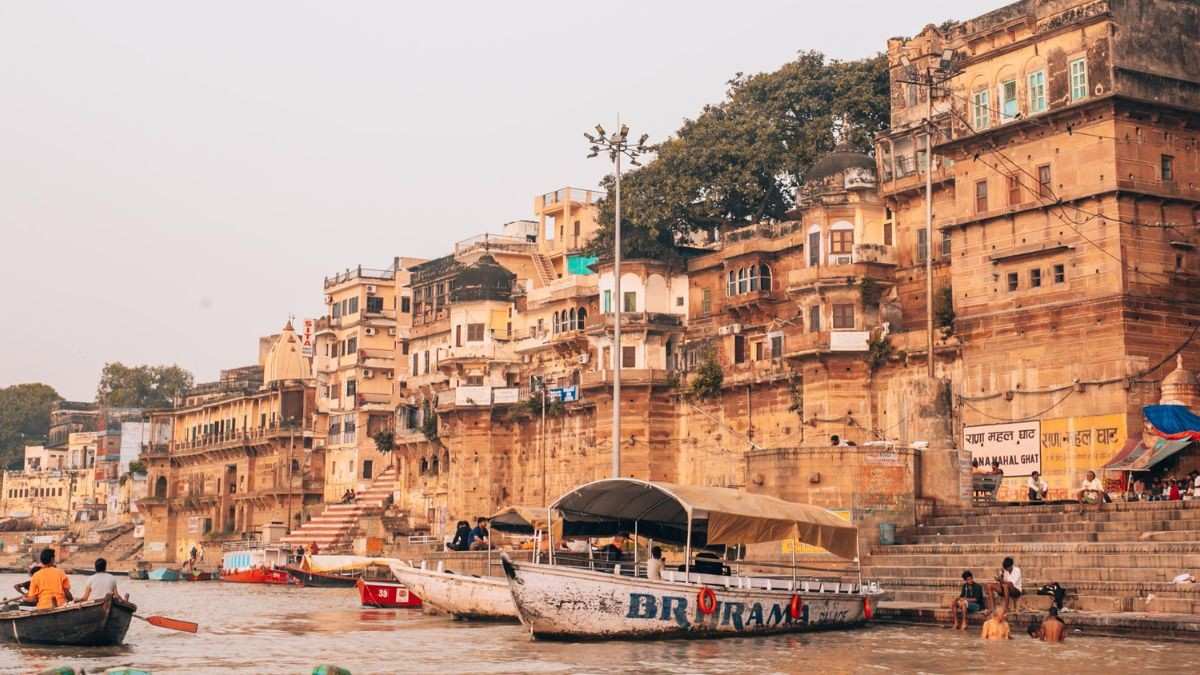
The holy month of Shravan in 2025 witnessed an unprecedented surge of faith and festivities across Uttar Pradesh, shattering all previous records in religious tourism. Temples, ghats, and religious fairs saw extraordinary pilgrim turnout, strengthening the state’s position as India’s leading spiritual destination. This grand confluence of devotion also brought a remarkable boost to local trade and the economy.
From the capital to Varanasi’s ancient temples, chants of “Har Har Mahadev” filled the air as pilgrims thronged sacred sites across the state. At Lucknow’s Mankameshwar Temple, daily footfall surged to over 15,000–20,000 during Shravan, while Budheshwar Temple drew more than 20,000 devotees every Monday and Wednesday.
Barabanki’s Lodheswar Mahadev Temple hosted nearly 1.2 million visitors, with up to 300,000 on Mondays. Bagpat’s Shravan Mela saw 1.4 million pilgrims, including over 500,000 in a single day. More than 100,000 kanwariyas carried Ganga water from Hapur’s Garhmukteshwar Ghat, and Lakhimpur Kheri’s Gola Gokaran Nath Temple recorded 800,000 to 1 million devotees.
Varanasi Remains the Spiritual Crown Jewel
Varanasi’s Shri Kashi Vishwanath Dham remained the highlight of Shravan celebrations, with footfall rising over 10 percent from last year, averaging 70,000–82,000 daily and peaking on Mondays. This surge reflects both the city’s spiritual pull and the state’s effective crowd management.
As per July 2025 figures from the Uttar Pradesh Tourism Department, Lucknow recorded about 350,000 hotel stays, including nearly 5,000 foreign visitors. Traditional fairs attracted over 600,000 people, while cultural events drew nearly 66,000 attendees. These numbers underline Shravan’s role as a major driver of religious and cultural tourism in Uttar Pradesh.
Minister Highlights Record-Breaking Pilgrim Turnout
Tourism and Culture Minister Jaiveer Singh said, “Shravan 2025 has gone down as a golden chapter in Uttar Pradesh’s religious, cultural, and economic life. Record-breaking pilgrim turnout has reaffirmed that UP is India’s foremost religious tourism hub. We ensured that every devotee enjoyed an uninterrupted, safe, and fulfilling experience while significantly strengthening infrastructure at pilgrimage sites.”
While temples resonated with chants of Lord Shiva, traders too witnessed a festive boom. At Budheshwar Temple, Mahant Leelapuri Ji shared that thousands visited daily, with grand maha aartis held four times on Mondays and Wednesdays at 7:30 PM, and every dawn at 4:30 AM. Tourism department-led beautification further eased the devotees’ experience.
Infrastructure and Safety Measures Ensure Seamless Experience
Large-scale measures such as drinking water, clean toilets, first-aid centres, better pathways, and improved lighting were set up at temples and kanwar routes. Resting spots, beautification works, and road upgrades enhanced the experience, while coordinated efforts by officials and volunteers ensured safety and smooth crowd management.
Principal Secretary for Tourism and Culture, Mukesh Kumar Meshram, said, “The extraordinary crowds of Shravan 2025 are living proof of the success of our religious tourism strategy. From temple management to transport, security, and amenities, preparations were made with meticulous attention to detail to ensure every pilgrim enjoyed a safe, seamless, and unforgettable spiritual experience.”
Economic Benefits Ripple Across Communities
The festivities brought a surge in demand for prasad vendors, temporary stalls, eateries, transport services, and accommodations, creating thousands of seasonal jobs. Both rural and urban communities benefited, with pilgrims arriving not only from across Uttar Pradesh but also from Delhi, Haryana, Rajasthan, Uttarakhand, and abroad.
With Shravan now concluded, Uttar Pradesh has once again shown how spiritual heritage, robust infrastructure, and smart planning can transform a religious festival into a powerful driver of economic activity.

![[ L - R ] Suhail Kannampilly, MD, Concept Hospitality; Rahul Chaudhary, MD and CEO, CG Hospitality Holdings; Rajeev Menon, President, Asia Pacific Excluding China, Marriott International](https://www.hotelierindia.com/cloud/2025/08/12/7fzgGUMB-IMG-20250812-WA0038-1200x900.jpg)
