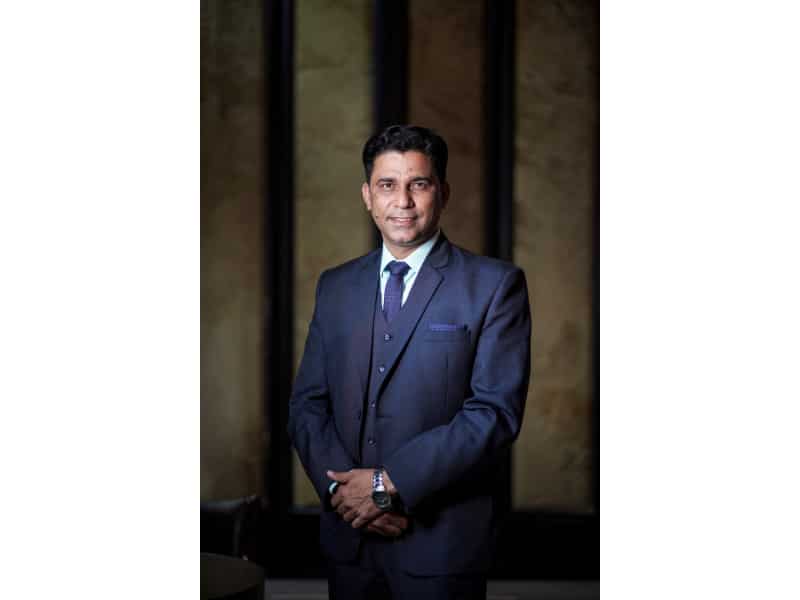
Hotels require higher levels of security in order to manage the high inflow and outflow of people on their premises. From guests who need to be welcomed and made to feel secure when in the hotel, to staff who need to be trained in safety measures and be made responsible for the guests, a whole lot of preparation needs to go into the security of a hotel.
To better understand what the pertinent issues related to this department of the hotel are, Hotelier India invited security heads from a few top hotels to share their views:
Are criminal background checks performed on all staff members, including housekeeping and catering personnel?
VIKAS LAKRA: It’s a priority for us during staffing; additionally strong multiple reference checks are done for all the staff/contract workers. Strict surveillance is also exercised during their probation period.
COLONEL ASHUTOSH KALE: We, at The Leela Mumbai, are cognisant of the huge responsibility we have of ensuring the security of our guests and the relevance of adequate criminal background checks of staff members.
Irrespective of the level of hierarchy at which a person is joining, he or she has to have a police clearance undertaken by the authorities.
The appointment letters are handed over only after the required documents from the police are furnished.
BK BHARDWAJ: Our human resources team is very cautious and vigilant while recruiting new members to the Shangri-La’s Eros Hotel team. A thorough background check is done for every new employee.
Their previous employment and educational records are doubled checked via interaction with their previous employers, organisations and educational institutions. Following which, the security team leader gets a thorough verification done for the employee through the Delhi Police.
SUKHENDU BASU: As per corporate HR policy we have integrity verification to check the backgrounds of each and every staff member, which includes past employment records, criminal or any other police record. The same is carried out as a part of the pre-employment process.
Is management adeptly trained for emergencies: bomb threats, natural disasters, fires and medical situations?
VIKAS LAKRA: Yes, we do regular departmental training on these as well as other related topics three times a week and with hotel staff, twice in a month.
We have our own crisis management plan, which is supported by our incident and crisis manual covering all the topics identified as critical considering our business operations and current scenario, which is reviewed every six months. Random exercises are also carried out for practical training.
COLONEL ASHUTOSH KALE: A lot of time and manpower is invested in ensuring that security offered at The Leela Mumbai is of international standards.
Comprehensive training programmes are conducted for various levels of employees and senior management, which includes not only emergency response and disaster management, but also risk mitigation. Security is a function of three parameters – risk, vulnerabilities and mitigation.
As part of effective management, one needs to identify the risks, limit the vulnerabilities that arise from such risks and finally, possess the ability to mitigate the consequences should an emergency situation materialise. Unless the management is trained and adapted to the complete cycle of security, it cannot function effectively.
BK BHARDWAJ: Regular training sessions are conducted for all employees in various emergencies. All threats to disaster management practices are covered during these sessions.
SUKHENDU BASU: The hotel has a scheduled training program for all emergencies and the same is briefed to all associates during their induction program and on a monthly basis during our internal training program.
We undertake training in relation to bomb threats, fires, thefts, natural disasters and medical emergencies. In fact, the hotel has also set up an emergency hotline for all such services, extension 7333.
Any guest or employee can dial this number and report any emergency or unidentified object in the hotel.
What security and emergency management training has the hotel provided its staff in the past year? Does the hotel conduct regular drills? Is staff evaluated regularly regarding these measures?
VIKAS LAKRA: We have around 40 topics related to security and various emergencies, which require instant management on events considering our operations; they are further classified into levels of
response.
Yes we do conduct regular drills covering these emergencies and we also have a system of training need analysis to strengthen our Quick Reaction Team (QRT). This is done internally and there’s also an audit done by an outer agency on drills and procedures.
COLONEL ASHUTOSH KALE: A timely and credible response is imperative to deal with a situation effectively. Such a response will be evoked naturally only from practice and training.
To adequately prepare and train members of our staff, fire fighting drills, emergency response drills and evacuation drills are conducted regularly in the hotel. These drills are preceded by class room sessions.
In addition to the in-house training, we have also organised civil defence training conducted by the Department of Civil Defence, functioning under the Home Guards wing of the Government of India.
The training includes emergency response, fire fighting, first aid, dealing with explosives and CPR techniques. Twenty such batches have been trained in the past one year.
BK BHARDWAJ: We have trained all our emergency response team members on fire fighting, rescue, first aid and evacuation procedures with the help of Delhi Fire Service & Safety Circle (First Aid & CPR). Drills are conducted at regular intervals as per international and local standards.
SUKHENDU BASU: Since the beginning of our hotel operation, we have maintained a training program as per our SOP (Standard Operating Procedures), which is the benchmark of our hotel standards.
Regular fire and emergency evacuation drills with latest technology, computerised security information system and proper management have been used by a team of experts. We educate our staff through theoretical and practical means.
Does the facility comply with the national fire code, ensuring safe building evacuation?
VIKAS LAKRA: We definitely abide by all the safety codes in force; our facility is planned to support all mandatory safety norms and regular evacuation drills are exercised with staff and guests.
COLONEL ASHUTOSH KALE: Yes it does.
BK BHARDWAJ: Yes
SUKHENDU BASU: The hotel is equipped with the latest fire fighting technology from Honeywell, complying with the local and national fire codes and is capable of safe evacuation within three minutes as per design.
In the event of a “lock-down” situation (catastrophic weather or other situation), does the hotel provide an area of refuge stocked with food and water for guests?
VIKAS LAKRA: We have SOPs designed for lockdown situations additionally, our crisis management manual also covers that and since we are a hotel we have strong policies that require arrangements for security and safety of employees and guests in case of a lockdown situation.
COLONEL ASHUTOSH KALE: Procedures and responses to such situations have been formalised. For example, just before the onset of the monsoons every year, the executive committee and heads of departments meet to discuss the monsoon emergency procedures.
The strategy to be adopted is chalked out and promulgated. The role of each department is clearly spelt out and responsibilities allotted.
Emergency stocks, which include provisions and essential commodities are accounted for and set aside. This is an annual feature.
BK BHARDWAJ: Yes, we have a refuge area stocked with all facilities required for survival and sustenance of a person for at least a week’s time.
SUKHENDU BASU: We are equipped to provide all the necessary assistance to our employees and the guests to fight with the natural calamities or any lock-down considering all human needs. Safe accommodation with proper amenities is available in the hotel in case the need arises for the same.
Are there any shortcomings with the security equipment that is currently being used in hotels?
Eg: x-ray belts etc. Do they need to be replaced?
VIKAS LAKRA: No, we are efficiently equipped with the right security equipment and through capital budget we update our inventory regularly as and when required.
COLONEL ASHUTOSH KALE: While hotels today are fully aware of the significance of top-class security equipment, the transition to cutting-edge equipment is a gradual and phased one. Although the equipment available today is not fool-proof, the industry is jointly working towards addressing this.
BK BHARDWAJ: No such shortcomings or compromise at the price of our guests, we have installed the best of equipments, all of which are in good working condition.
SUKHENDU BASU: We use the latest equipment and keep them upgraded as and when required. The hotel is equipped with baggage x-ray machines, CCTV cameras, walk-in and hand held detectors, sniffer dogs and a force of undercover armed marshalls during each shift.
What budgets are set aside for security?
VIKAS LAKRA: There is no fixed budget and it depends on operational requirements.
COLONEL ASHUTOSH KALE: Budgets for security are based on need and requirement. These are adequately catered for in the annual budget forecasts.
BK BHARDWAJ: There is never shortage of funds for required security management and maintenance.
SUKHENDU BASU: There is no budget for loss prevention. Being a hotel with an attached airport, we are equipped with the latest in the security business.
We had organised a seminar where experts from Israeli Intelligence attended and addressed all hotel loss prevention managers to deal with new age crime and terrorism and are accordingly equipped. It would be pertinent here not to disclose all measures adopted for security reasons.
What are the main factors you look out for while choosing security equipment?
VIKAS LAKRA: We look for original equipment manufacturers (OEM’s) rather than dealers; also competency in after sales service and BDS cost is crucial.
COLONEL ASHUTOSH KALE: Reliability, durability and cost effectiveness – these are the three most important factors. The equipment must be able to cover the need for which it has been purchased, both technically and tactically.
BK BHARDWAJ: Good brands, quality of their equipments and most importantly their track record of after sale services.
SUKHENDU BASU: Security is mostly a deterrent, which has to be essentially visible with latest technology. We also take care of the convenience of handling of the equipment with respect to the guest service. The guest should feel secure when they enter the property.
The hotel industry is one which is based on service delivery, and with good service comes good security. The guest’s security is integral to the hotels success, as poor security can expose guests to a plethora of risks and compromise the reputation of the hotel.
Security is an essential investment for the success of a hotel, however large or small it is. The guest’s peace of mind is central to whether or not they will return to stay again.
There are particular risks that are pervasive in hotels, one of which is unauthorised visitors. Any detection of unauthorised or suspicious visitors should be communicated immediately to patrolling security staff that is fully trained to deal with the situation in a safe and professional way, causing minimal disruption.
Other key security measures include key/door security and control, adequate staff identification measures, front desk security, corridor patrolling and CCTV and camera control.
What are the main characteristics you look for when choosing security personnel?
VIKAS LAKRA: We look for strategic orientation with the ability to act tactically, as required; multicultural understanding and approach; high integrity, emotional maturity, strong negotiating skills; ability to interact at all levels of the organisation and sensitivity to divisional organisational management issues.
COLONEL ASHUTOSH KALE: Integrity, alertness, trust and the ability to work effectively under pressure are the abilities that distinguish a good candidate for the security team.
BK BHARDWAJ: We choose young NCC graduates who have the will, ability and are responsible enough to abide by the terms that accomplished security personnel should live by. Both physical and mental strengths of a person are duly monitored before we take them in as a team member.
SUKHENDU BASU: We prefer qualified, healthy, intelligent individuals when we select security personnel. The recruitment process goes for three rounds of interview and psychometric tests, where in we check the ability of reflective action and general knowledge.
Is there a gap between the security concerns of domestic and international guests?
VIKAS LAKRA: There is a drastic gap between the two – security maturity with understanding is high in international guests, also their attitude is one of cooperation and they are very reasonable with hotel policies.
COLONEL ASHUTOSH KALE: Indian and International guests view security very differently. The perceptions stem from exposure and understanding of the security environment. This is a mindset, which requires to be changed. Indians who have travelled abroad are more understanding and amenable. They have a higher degree of security consciousness.
BK BHARDWAJ: No, I have not come across any such gap.
SUKHENDU BASU: Emergencies do not differentiate between international or domestic guests or even staff for that matter. There are a couple of mandatory compliances defined by the government authority, which need to be followed and we do comply with the same. For us every human life is precious and our approach is tailored accordingly.
VIKAS LAKRA
CHIEF SECURITY OFFICER
GRAND SAROVAR PREMIERE
He has over 19 years of experience in handling security in the Indian Navy and hospitality Industry. He has extensive experience in planning and execution of security systems including electronic surveillance systems for security and loss prevention.
He has also drafted and compiled a hotel incident and crisis management manual. He is a qualified departmental trainer, certified by the director of training and development at Sarovar.
SUKHENDU BASU
CHIEF MANAGER, HR & LOSS PREVENTION,
SAHARA STAR, MUMBAI
He has more than 20 years of working with Sahara India in different business verticals such as parabanking, HR and IT. He joined Hotel Sahara Star on January 14, 2009 as HR Head, and also administratively and functionally looks after the loss prevention department for the planning of security for the Hotel.
He is completely responsible for the hotel’s security and has been instrumental in implementing all the latest systems and gadgets for the guests’ and property’s security.
BK BHARDWAJ
DIRECTOR OF SECURITY,
SHANGRI-LA’S EROS HOTEL, NEW DELHI
He has over 10 years experience in hospitality and 20 years in the Air Force. He has been instrumental in setting up the security systems and the entire security workforce at the Shangri-La’s Eros Hotel, New Delhi. He has arranged for a tight security approach for the CWG season which is as per the international guidelines.
COLONEL ASHUTOSH KALE
HEAD – SECURITY & VIGILANCE,
THE LEELA, MUMBAI
He has served with the Indian Army, with distinction in J&K, Nagaland and Manipur besides also being the senior most Indian officer. He has led a contingent of Indian troops in the United Nations, in the Horn of Africa and is a post graduate in Strategic analysis and Defense studies. He has done international security courses in Kenya and Israel and is presently head of security and vigilance at The Leela, Mumbai.