
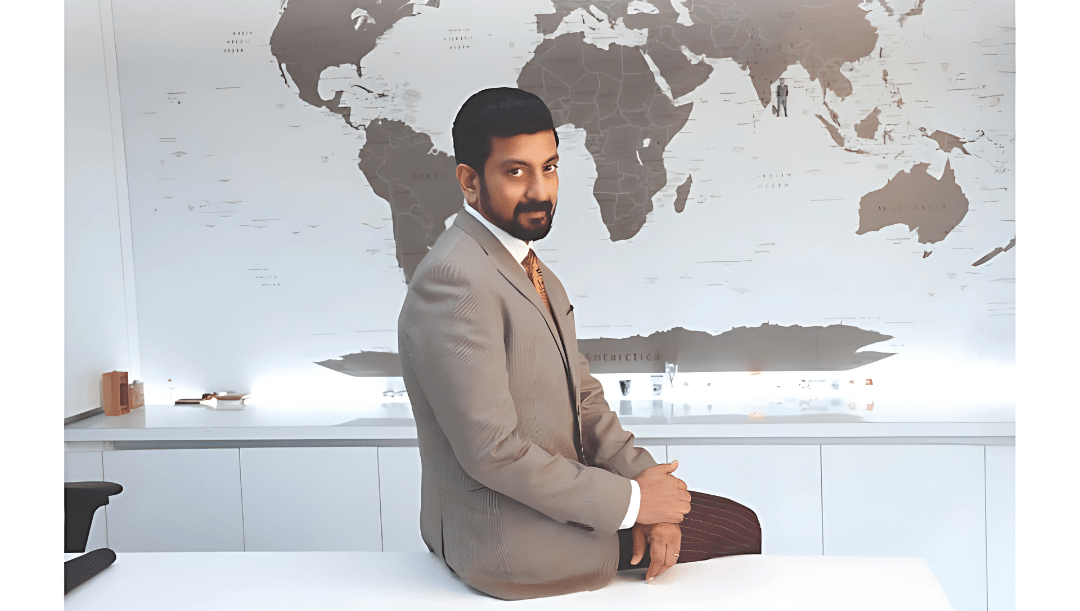
In an industry often obsessed with size, scale and numbers, Vikram Cotah is known to take a different route. As CEO of GRT Hotels & Resorts, he has quietly transformed a home-grown brand into a collection of 23 beautiful properties across India. Each one built on purpose, character and South Indian grace.
A few minutes with Vikram, and you’ll realize he’s not your typical CEO. Humble, grounded, and refreshingly honest, he describes himself as a “gardener of culture” instead of a corporate leader. From launching ‘The Great Cult’, a movement that encourages staff to lead with empathy and authenticity, to The Great Butterfly Effect, a bold plan that has made all GRT hotels completely plastic-free, smoke-free, and pet-friendly, Vikram combines heart with action.
Today, every GRT property tells a story – from temple trails in Madurai to the musical streets of Mylapore, making stays memorable even after check-out. It’s no surprise his books ‘Mojo in the Mango Tree’ and ‘The Great Butterfly Effect’ are recognized in hospitality circles for capturing this spirit.
Vikram is also celebrated as a LinkedIn Top Voice in Thought Leadership, but he stays approachable. His motivation comes not from titles or awards, but from a simple mission: To create spaces that make a difference, uplift teams, and respect the Earth.
We spoke with Vikram Cotah about soulful leadership, sustainable luxury, and what’s next for GRT Hotels. Here’s our interview with the man himself…
Take us back in time – what first drew you to hospitality?
I found my purpose very early. I was always obsessed with happiness – creating it, sharing it, making people feel seen. At 13, I walked into a five-star hotel for the first time. The grandeur, the warmth, the orchestra of service – I didn’t just see a building; I saw my future. The dream wasn’t handed to me. It came with hurdles, rejections, and sacrifices. But something within me knew: I wasn’t just going to be an hotelier. I was going to be the kind of hotelier who led with soul.

How was GRT Hotels & Resorts born, and how did its South Indian heritage shape its identity?
GRT Hotels was born from the vision of a man who believed that business should serve society. G Rajendran, our founder and a first-generation jeweller, believed that service was sacred – whether it was through gold or great hospitality. From this ethos, “The Promise of More” was born. Rooted in South Indian values of humility, respect and grace, we built a hospitality brand that doesn’t just serve guests – it honours them.
What were your initial years at GRT like?
When I joined GRT, I wasn’t just joining a hotel – I was stepping into a legacy. GRT was already a household name trusted across South India for its jewellery. People associated the brand with values like integrity, respect, and trust. And I felt a deep sense of responsibility to carry those same values into the world of hospitality.
I began my journey at GRT Grand Days – our very first hotel – as the Executive Assistant Manager, Food & Beverage. From there, I went on to become the General Manager of Radisson Blu GRT Chennai, which later became one of the most awarded hotels in the region.
But the real learning came not from accolades – it came from the founder himself, G Rajendran. He taught me that hospitality isn’t just about service, but about soul. He believed employees should be treated like guests, and that a guest should walk out not just satisfied, but touched.
One lesson that left a deep imprint on me was his belief in community care – that a business doesn’t grow unless the community around it grows too. That principle continues to guide our work in sustainability and CSR to this day.
The brand now encompasses multiple segments – from luxury to spiritual stays. How do you ensure each brand pillar remains true to its ‘The Promise of More’ tagline?
Every GRT property carries the same soulful DNA. It’s not just a brand promise – it’s a service philosophy we call ‘I Say Yes’. Whether it’s a luxury beachfront villa or a spiritual stay in Thiruthani, the emotional architecture remains the same: Humanity, warmth, and authenticity. The pillars are curated individually, but their foundation is one.
From Madurai to Bangalore to the Maldives, you’re entering very diverse markets. What guides your property selection and brand positioning strategy?
We follow three guiding stars: Demand, distinctiveness, and design. While the market and location dictate viability, our core DNA guides the guest experience. Each property, whether in the IT corridor of Chennai or the coral islands of the Maldives, reflects its locale in spirit and its guest in service. We build hotels that belong to their people.
You’re investing to build new hotels in South India. What differentiates your growth approach from other regional chains expanding nationally?
What sets us apart is that we don’t just build hotels – we build legacy experiences. Every brick carries our promise, every hallway hums with our culture. We don’t replicate; we reimagine. While others chase metros, we believe India’s spiritual towns, heritage hubs, and leisure belts are where tomorrow’s hospitality stories will be written.
Partnerships like the one with Radisson signal a collaborative shift. How do you choose partners, and how do you ensure GRT’s soul isn’t diluted in the process?
Our partnership with Radisson began over 25 years ago, and it worked because our values aligned. We’re deeply mindful that our soul is not for sale. When we collaborate, it’s as co-creators. We adopt distribution, global tech stacks and loyalty programs, but never at the cost of GRT’s identity. Co-branding is our bridge – not our compromise.

You’re aiming to double GRT’s footprint to 50 hotels by 2034. What is the deeper vision behind this ambitious growth? What is your roadmap to achieve the same?
The vision of 50 hotels by 2034 is ambitious, but it’s not just about numbers – it’s about creating value, expanding thoughtfully, and staying true to our soul.
Our roadmap is layered:
• Geographic expansion in tier 2/3 cities and spiritual tourism circuits under Regency by GRT Hotels
• Experiential resorts under Great Trails by GRT Hotels in nature-rich destinations.
• Luxury offerings and franchise partnerships with Grand by GRT Hotels and global brands like Hilton, Marriott and Radisson.
• Asset-light growth, including lease and management contracts.
• Strong talent pipeline, because our future leaders will build the next 25 hotels.
• And above all, technology and sustainability will be woven into every brick we lay.
We’re not just growing in size. We’re growing in spirit, impact, and brand promise.
The deeper vision is not scale for the sake of size – it is scale for the sake of service. Each new hotel is an opportunity to uplift a community, offer livelihoods, and make hospitality accessible without losing soul. We are building not just rooms, but hope. Growth, for us, is a human project.
What was The Great Butterfly Effect? What was the trigger?
The journey of The Great Butterfly Effect started not in a boardroom, but deep in the Himalayas.
I was trekking through the remote mountain village of Munsiyari when I came across a massive landfill – a mountain of plastic waste, in a place that should have been untouched and pristine. It shocked me. And months later, while diving in the Maldives, I saw plastic water bottles nestled at the bottom of the ocean, alongside coral reefs and marine life.
That’s when it hit me – the hospitality industry, which is meant to give joy and comfort, was also contributing to this damage. I made a personal decision then: GRT Hotels would go plastic-free – and we did it in just six months.
That commitment became The Great Butterfly Effect, our ESG mission. It wasn’t about sweeping change overnight – it was about small, meaningful actions that ripple outward. Today, it’s not just a sustainability initiative. It’s our conscience. It’s in our glass water bottles, our biodegradable packaging, our no-smoking policy, and even our belief that guests and communities must be equal stakeholders in our success.
Most shy away from systemic change. We embraced it. Our decision to set up bottling plants in every hotel, to ban smoking completely, and to become pet-friendly across the board are bold moves. But we’re not afraid to lead. In fact, we wrote the book on it – literally. ‘The Great Butterfly Effect’ was launched by the Union Minister of Tourism as a beacon for the industry.
How has writing – you’ve authored ‘Mojo in the Mango Tree’ and ‘The Great Butterfly Effect’ – shaped your perspective as a hospitality leader? And what role do stories play in shaping culture at GRT?
Writing helped me pause, reflect, and remember why I started. ‘Mojo in the Mango Tree’ was my love letter to leadership. ‘The Great Butterfly Effect’ was my manifesto for sustainability. At GRT, stories aren’t decorative – they’re foundational. They teach. They remind. They bind. Our stories are our silent service.
What were some of the biggest challenges in your career so far? How did you overcome them?
Two moments stand out like battle scars that turned into badges.
The first was the Chennai floods in 2015. Our hotel was hit hard. Guests were stranded. Teams were stretched. But what I saw in that chaos was something beautiful – housekeepers helping guests carry luggage through waist-deep water, chefs cooking meals for rescue teams, and staff walking miles to get to work. We rebuilt GRT Grand Chennai in record time – not just the building, but the spirit.
The second was COVID-19. An invisible enemy that shut down the world. We could’ve frozen. Instead, we opened two hotels during the pandemic – because we believed in bouncing forward, not just back.
We overcame these moments by going back to our roots – to our people, our values, and our promise of more. I’ve learned that adversity reveals your culture more than any strategy document ever can.
What, according to you, are the biggest risks in this next phase of growth – and how are you preparing to navigate them?
The risks are real: Economic shifts, volatile real estate, and infrastructure gaps. But we’ve learnt to be both dreamers and doers. We’re choosing locations with foresight, unlocking value in our land banks, and expanding via asset-light models like management contracts. Growth is a journey, and we’re wearing both seatbelts and wings.
Share with us some personal work values that have gone on to become company policies…
Many of the values I personally believe in have slowly become the invisible backbone of GRT Hotels.
One of them is “people before performance.” I’ve always believed that when you invest in your team’s growth, their performance takes care of itself. That’s how our “Employee of the Moment” program began – not for KPIs, but for kindness and extra effort.
Another is the value of nurturing communities. We don’t just open hotels – we become part of the social and environmental fabric of that location. From sourcing ingredients locally to hiring from the region, our community-first mindset came from something I believed in early – that business must give back more than it takes.
And our strong sustainability policies. They began with personal discomfort. With that image of plastic in the ocean. Now they’re institutionalized, measured, celebrated.
Looking back, what were some defining leadership lessons that prepared you to take GRT from a regional brand to a national and international player?
Crisis is the greatest teacher. In 2004, during the Tsunami, we rose as one. In 2015, when Chennai was flooded, we opened a community kitchen and offered medical camps from our closed hotel. These weren’t PR moves. They were who we are. Leadership is not loud – it’s human. And that lesson will take us global.
You obviously travel a lot on work. How do you manage to strike the perfect work-life balance?
The idea of “balance” has always felt a bit rigid to me. I prefer to think of it as harmony or prioritising.
Yes, I travel often – visiting our hotels, scouting new locations, building new hotels, speaking at summits. But I make space for presence. When I’m home, I’m home. My wife and daughter are my grounding force. A morning call with my daughter Ramya, who lives in Toronto, or a cup of filter coffee with my wife Sowmya can reset even the busiest of days.
My early mornings are sacred – I work out with my wife, run, reflect, journal. These moments are where clarity happens. I’ve also learned to integrate joy into work – I walk the beaches near our resorts, talk to guests, and get inspired by my team.
So, do I strike a perfect balance? Not always. But I try to live fully in every role I play – CEO, father, husband, friend.
What is your vision for GRT’s place in the future of global hospitality – and your personal legacy within that vision?
My vision is simple: That GRT becomes India’s first global soulful hospitality brand. Our Maldives venture with Marriott’s Luxury Collection is only the beginning. I want the world to experience Athithi Devo Bhava – not as a tourism slogan, but as a lived emotion. If my legacy is a brand that puts people and planet before profit, I’ll sleep well.


