Chatting up Ranju Alex, Area Vice President, South Asia, Marriott International, is like catching up with an old friend. Her warmth, infectious energy, and genuine passion for her work make you feel instantly at ease. We met at the beautiful JW Marriott Mumbai Sahar for a quick cover shoot and interview, but it quickly became so much more than that – fun, heartfelt, and full of meaningful moments that leave you feeling truly inspired.
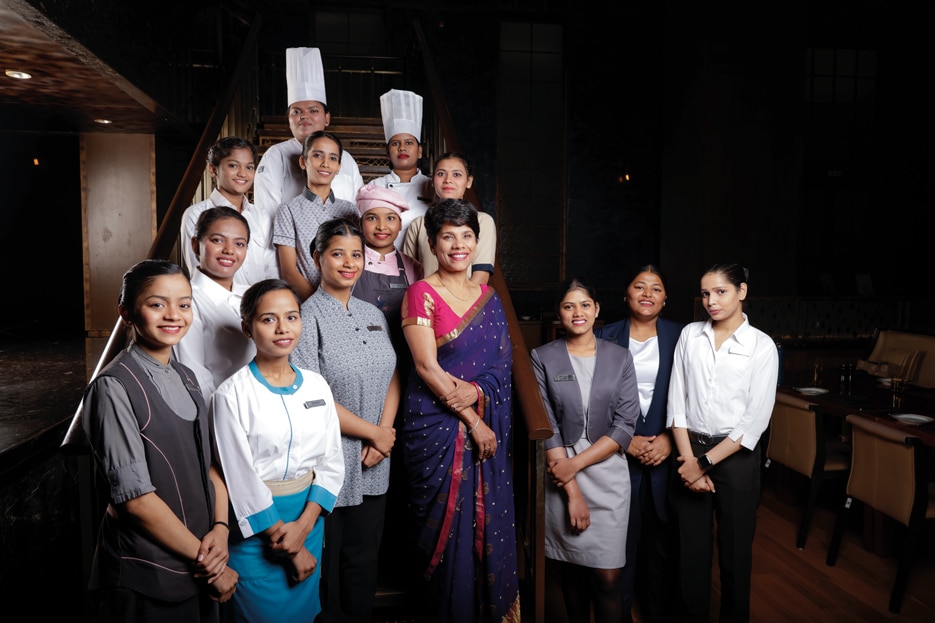
The shoot was especially memorable, thanks to Marriott’s ground-breaking initiative to empower young girls from underprivileged backgrounds. Ranju posed alongside 10 bright, enthusiastic young women who are part of this program, and their excitement was truly infectious.
It wasn’t just a photoshoot – it was a celebration of hope, determination, and the transformative power of opportunity. Moments like these remind you of the impact a global brand can have when it goes beyond business and connects with people at a deeper level.
Marriott’s Expanding Footprint
As the shoot wrapped up, we settled in for our conversation, starting with Marriott’s plans for India – a topic Ranju is clearly passionate about. “India is the fourth largest market for Marriott International,” she noted, her voice full of pride and purpose as she highlighted the country’s rapid economic growth and the booming demand for hospitality.
Marriott, which celebrated its 25th anniversary in India last year, also reached the incredible milestone of 150 hotels in the country. It was clear that for Ranju, this isn’t just about numbers – it’s about creating a meaningful presence in a market with immense potential.
“Most of our owners who sign with us are existing partners,” Ranju highlights. “This shows their faith in our performance. At the end of the day, it’s a business, and performance trumps everything.
“Joining our portfolio very soon would be marquee openings such as St. Regis Aerocity, New Delhi, New Delhi Marriott Marquis, W Bangalore, and The Ritz-Carlton Mumbai. Additionally, new properties in Jaipur, Jim Corbett, Dehradun, Udaipur, and Amritsar reflect Marriott’s strategy to cater to both urban and leisure markets.”
Tier-Two and Tier-Three Cities: The Growth Frontier
With operations in 44 cities across India, Marriott is making significant inroads into smaller towns. “We’re growing because the economy is growing across the country,” she explains. “Tier-two and tier-three cities have high aspirational value and increasing disposable incomes, making them ideal for new properties.”
Cities like Amritsar and Jaipur, which have shown consistent demand, are receiving multiple new properties, while Marriott’s first hotel in Udaipur marks a milestone for the brand. “Opening in these cities gives us hope that tier-two and tier-three markets are continuing to grow in India,” she adds. “Resorts are also growing, and we’re riding the wave.”
Even remote destinations like Shillong and Kashmir are part of the expansion. Ranju cites the Courtyard property in Shillong, which achieved 75% year-on-year occupancy growth, as an example of untapped potential in such areas. “Who would have thought that Ed Sheeran would perform in Shillong or Bhutan? These cities have aspirational audiences with the means to spend.”

Key Trends Shaping Hospitality
The COVID-19 pandemic has reshaped travel habits and sparked new trends in hospitality. According to Ranju, shorter, more frequent leisure trips are becoming the norm. “People now prefer small breaks focused on experiences rather than saving for one big holiday,” she observes.
Staycations have also become a staple. “We thought staycations would decline post-COVID, but they’re here to stay,” she says. Hotels are adapting to these trends by balancing business travel during weekdays and leisure travel on weekends.
Domestic travel currently outpaces international tourism in India, reshaping marketing and sales efforts. “Domestic travel rules in India, and our dependency on international travel has lessened,” Ranju explains. Marriott has responded by deploying sales resources in smaller cities to support both leisure and wedding-focused travel.
Another enduring trend is the demand for personalized service. “Guests seek curated experiences and personalized attention,” Ranju remarks. “This is where our loyalty program, Marriott Bonvoy, plays a pivotal role. With over 219+ million members globally and approx. 7 million in India, it’s a key driver for business growth.”
While artificial intelligence (AI) is a buzzword in many industries, Alex views its role in hospitality with cautious optimism.
“Hospitality is about personal interactions, emotions, and occasions. AI can’t replace that,” she asserts. However, she acknowledges its potential to improve backend efficiency. “AI can make us more efficient in areas like bookkeeping, but it’s too early to predict its larger impact.”
Despite the availability of contactless options, many guests prefer human interaction. “Recognition and personal engagement remain at the heart of hospitality. Saying, ‘Welcome back, Vinodini,’ will always matter more than a chatbot,” Ranju affirms.
Marriott’s Ground-breaking Initiatives: Transforming Hospitality through Empowerment
Marriott International, renowned for its innovative approaches to hospitality, is leading the way with new initiatives designed to address critical challenges in the industry. Two standout programs – the ‘Life on Time’ initiative and Project Pranita – reflect Marriott’s commitment to fostering inclusivity, improving work-life balance, and empowering women. These initiatives showcase Marriott’s forward-thinking vision, aiming to transform the hospitality landscape in India and beyond.
Project Pranita: Empowering Women through Opportunity
Project Pranita is a ground-breaking initiative that seeks to empower young women from economically challenged backgrounds. Inspired by a conversation with Prime Minister Narendra Modi about women’s empowerment, the program aims to dismantle societal taboos and provide meaningful opportunities for women to build careers in the hospitality industry.
“Many families are hesitant to let their daughters work in hotels,” shares Ranju. “We’re changing that by offering a three-year program where girls gain hands-on experience, education, and financial independence.”
The program offers participants a unique combination of practical experience and academic development. Enrolled in a distance-learning hotel management program, participants work five days a week in Marriott properties while dedicating one day to their studies. Marriott provides a stipend, enabling participants to become financially independent and, in many cases, contribute to their families.

A Transformative Impact
Project Pranita’s first cohort enrolled 206 young women, “We aim to double this number each year,” Ranju reveals. “Our long-term goal is to create a strong pipeline of talented women in the industry.”
The initiative is already changing lives. Families who were once sceptical now visit Marriott properties to witness the professional environment first-hand. “It’s heart-warming to hear how proud families are of these young women,” Ranju shares. “This program doesn’t just empower individuals; it transforms perceptions and builds trust within communities.”
The benefits extend beyond participants. Marriott’s emphasis on community engagement ensures that the program’s impact is holistic. By partnering with NGOs and government schools, the company identifies and supports deserving candidates. “It’s about creating a supportive ecosystem that fosters growth,” Ranju emphasizes.

An Industry-First Approach
Project Pranita is a sustainable solution to one of the industry’s most pressing challenges: Gender diversity. Historically, women have been under-represented in the hospitality sector, often confined to specific roles.
“When I was younger, there was a perception that women could only work in certain departments like reception or sales,” Alex recalls. “We’re breaking those barriers. By equipping these young women with a degree and practical experience, we’re ensuring they have the skills to succeed in any department.”
Springboard Program: Supporting Career Comebacks
Another path-breaking initiative is the Springboard Program, designed to help women re-enter the workforce after career breaks. While still in its experimental phase, the program reflects Marriott’s commitment to diversity and inclusion.
“Getting women back into the workforce is challenging, especially in a physically demanding industry like hospitality,” Ranju acknowledges. “But we’re determined to create pathways for their return.”
The ‘Life on Time’ Initiative: Redefining Work-Life Balance
Marriott’s ‘Life on Time’ initiative addresses another critical industry issue: Work-life balance. Known for its demanding hours, the hospitality sector has long struggled with high attrition rates. Recognizing this, Marriott introduced a program to ensure associates work stipulated hours, with additional pay for any overtime.
“The biggest challenge wasn’t the cost but changing the mindset,” Ranju notes. “For years, long hours were seen as a measure of performance. We’re changing that narrative.”
The initiative required a significant investment in technology to track hours and create transparency. Associates clock in and out of their departments, ensuring fairness and clarity. Supervisors must approve any overtime through a tech-driven process, ensuring that extra hours are justified and compensated.

Measurable Results
The impact has been remarkable. Efficiency has increased, with tasks once requiring 12 hours now completed in eight. Associate engagement scores have risen, and attrition rates have fallen by 30%. “This initiative is about respecting our associates and valuing their time,” Ranju explains. “Happy associates lead to better service, which ultimately benefits our guests.”
A Holistic Vision for the Future
Together, these initiatives reflect Marriott’s holistic approach to tackling industry challenges. While Project Pranita focuses on empowering women and fostering diversity, the ‘Life on Time’ initiative ensures a supportive and balanced work environment for all associates.
“These aren’t just Band-Aid solutions,” Ranju asserts. “They’re sustainable, long-term strategies that address the root causes of our industry’s challenges.”
“Our goal is to lead by example,” Ranju concludes. “Whether it’s empowering young women through Project Pranita or redefining work-life balance with the ‘Life on Time’ initiative, we’re committed to creating a positive and lasting impact.”
Leading with Heart and Vision
Ranju’s leadership goes beyond the boardroom. Whether it’s standing shoulder-to-shoulder with young women from Project Pranita during a photoshoot or personally engaging with associates to understand their challenges, she leads with empathy and purpose.

“It’s not just about growing a brand; it’s about creating something that lasts, something that changes lives,” Ranju reflects. “These initiatives are personal for me – they represent the values I hold dear and the kind of legacy I want to leave behind.” .