
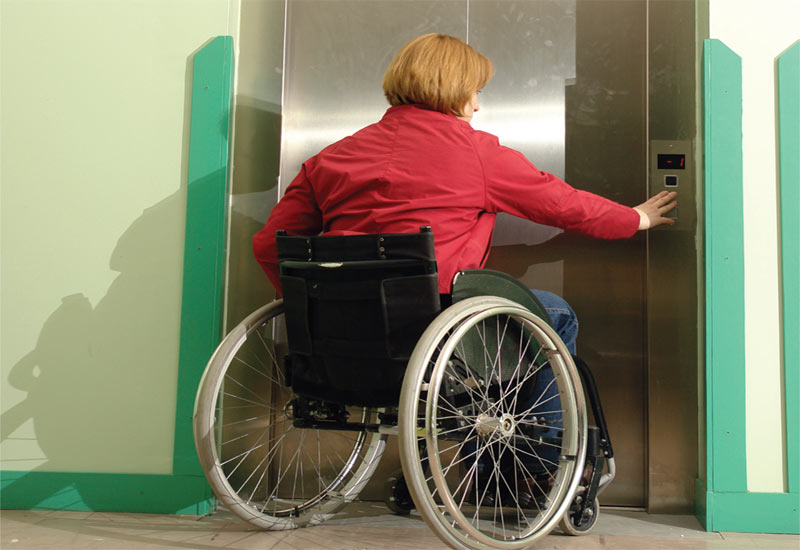
The government’s new guidelines addressing issues such as the needs of differently-abled guests, is welcome, but implementation remains a big question, says Syed Ameen Kader
Hotels now have to mandatorily follow certain guidelines regarding making their properties handicapped-friendly, and providing adequate arrangements for safety and security, in order to get star ratings.
“Existing and new hotels of all categories all over the country would now have to comply with the requirements for differently-abled persons in respect of accessibility, special rooms with bathrooms, and facilities in the public area by 1st September, 2010”, a tourism ministry release says.
It also adds that, depending on the star category, hotels are now required to have metal detectors, CCTVs, X-Ray machines, under-belly scanners, and verification of staff and suppliers done before thier employment. Until now, hotels have been offering these services on a voluntary basis, but the recent guidelines will make them mandatory.
The revised norms also specify hotels to have a minimum percentage of trained supervisory and skilled staff, possessing a degree or diploma from recognised institutions. Further, the government has relaxed rules for food and beverages (F&B) for three-to-four star hotels.
The new norms also say that hotels from one-to-four star categories availing subsidy and tax benefits from the government, would be subject to a lock-in period of eight years, so that these hotels continue to serve as budget category hotels.
The government said that it felt the necessity to revise the norms due to the “changing requirements of international and domestic travelers, coupled with an emerging safety and security consciousness in view of the recent incidents in the country”. Hotel classification norms were last reviewed in 2003.
The hospitality industry has welcomed the government’s move to make hotels handicapped-friendly, but said that the emphasis now should be given on implementing them properly.
“It is a very welcome move by the government to bring some firmness and discipline in the classification. I think it should be made mandatory, but implementation is always a big question,” said Guy Godet, general manager, JW Marriott Mumbai.
Akshay Kulkarni, executive director, Cushman & Wakefield Hospitality, said, “It is great that the norms have been revised, and efforts have been made to bring them abreast of changing times. However, I think implementation is the key, rather than the thought alone.”
Though such facilities are already in place in most star properties attached to big names and international chains, the government’s revised guidelines, industry players say, will make India come up to international standards.
“The rest of the world has done this in many places, and it’s a good initiative for India to align itself to global standards. I think everybody will benefit from this,” added Godet.
He said Marriott being an international company, already has such facilities for disabled persons, and he wouldn’t be surprised if other international hotels also follow the same as they have to maintain certain standards.
FHRAI president MP Purushothaman opined that the earlier hotel classification guidelines were outdated and not commensurate with modern developments in hotel projects.
“At least now, the re-structured classification guidelines will, to some extent, meet international and domestic travellers’ requirements, especially for differently abled persons”. He thinks the specifications to beef up security should be made applicable to all categories of hotels keeping guest security in mind.
Sudhir Sinha, president and chief operating officer, Best Western India, said that practical aspects should also be kept in mind while implementing the specifications.
“It is not always that the differently-abled guest travels alone. We do expect an escort with them most of the time, but the specifications provided by the DOT has ignored this aspect altogether,” he added.
In terms of extra cost burden to implement these facilities, industry players say, it is a negligible additional cost in the context of larger projects. “I think there will be no major impact on costs and the additional cost will definitely help the hotels in the long run”, said Kulkarni.
Purushothaman agrees, “The cost involved in this should not be viewed as extra cost, but as an integral project cost as they are required in the changed environment and to make hotels user/guest friendly”.