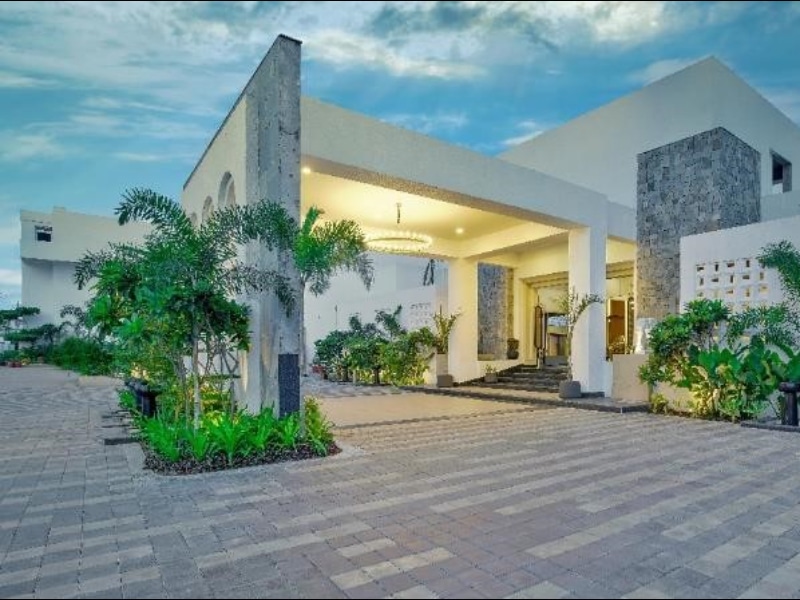
After a few years of hiatus, Goa once again witnessed the launch of a new resort property. Punam Mohandas flies down to the Alila Diwa on Majorda beach for a quick recce.
Alila Diwa Goa is the result of a partnership between Alila Hotels and Resorts and Seabird Resorts, a hospitality company that belongs to the Parekh Group, who have interests in shipping and logistics.
Alila Hotels and Resorts is a luxury boutique hotel and resort operator headquartered out of Singapore, with its flagship property in Bali, Indonesia.
The reason for the Parekh Group to venture into the hitherto uncharted waters of hospitality is fairly simple. “Hospitality is definitely an infrastructure-related industry. If you look at it, India has less rated rooms that the city of Bangkok, so there is a lot of potential here in the organised sector,” says Nirav Parekh, director, Seabird Resorts.
For architect Tony Joseph, principal, Stapati, it has truly been a labour of love. He is known to do work keeping a keen sense of preservation of eco-systems in mind, and that is exactly what Alila was expecting. “For me, Alila is a fresh look at Goan architecture. I don’t think any hotel in the state has authentic Goan architecture of this scale,” says Tony.
Saji Joseph, the energetic general manager, has very clear definitions of how he intends to steer the hotel. For one, his own thinking and the Alila philosophy appear to be very much in sync, as the first thing he has done is to enthuse and absorb the local populace into the Alila culture. Seventy per cent of the staff is from the neighbouring villages; this has effectively ruled out any disgruntlement, while of course creating employment opportunities. “The heart and soul of a property is its people,” avers Saji.
In a further bid to avoid any rumblings from the locals and thus run into rough weather as so many new hotels are wont to do, in addition to the above Saji has also arranged a deal whereby eight Innova cars have been taken by the villagers through bank car schemes; in return they get regular custom from the hotel such as airport picks and drops, thus enabling them to pay off the loan.
Which brings us to the question of clientele – what is the target market Alila is looking at? “I am looking at a mix of couples/honeymooners, families, as well as corporates, as I have conference space to offer,” says Saji.
While the Parekh Group does not have many interests in Goa, they felt it is the only true leisure destination India has, and hence, decided to set up their first hotel venture here. However, considering the traditional family business, what led to the decision of venturing into hotels in the first place? “It’s not always advisable to put all eggs in one basket,” says Parekh. “The hospitality business does not scare us, but I think the time taken to develop these projects, the number of approvals required – all of that really tests your patience.”
So will Parekh now consider the route of land banks? “Land banks definitely help in planning,” he muses. “However, in India, it’s almost 60% of the total cost, which doesn’t make sense sometimes.”
So are we going to see a further expansion into the hospitality sector, especially with Alila having already announced its forthcoming properties at Bengaluru, Calicut and Cochin? “Being our first venture, we’re taking it a step at a time,” says Parekh.
We’re looking into Tier II cities, like Ahmedabad and Surat. We may go for mid-market too, not just five-star, but we will definitely consider working with Alila again.”
A Goan surprise
Spread over 12-acres, the property will have 149-rooms, of which 114 are currently operational. The remainder, which are to be club suites, as also the spa complex, is expected to be ready by year end. All the rooms measure 44-square metres except the suites, which are at a 88-square metres. The total cost of the whole project is between US$25-30 million.
With Alila Diwa, the architect pays tribute to the Goan architecture of yore; the impression is of a cluster of tiled rooftops peeking through the palms in the manner of a traditional village.
Natural materials such as terrazzo and kota for the floors, Malaysian Sal wood for the roof truss, and terracotta roof tiles from Calicut, have been used. The laterite stone pillars are local, although it’s a new trend to use it as cladding.
The lobby is an open-air area, with a high, vaulted ceiling and Mangalore terracotta tiles inlaid among wooden rafters. The whole ambience is reminiscient of the clubs of days gone by, indolent and relaxing, where instead of the punkahs, you have the waving palms.
Alila respects the environment; indeed, the Spice Studio restaurant has been cleverly created betwixt the overhanging roots of leafy banyans. One thing Tony was adamant about was that no trees were to be sacrificed to make way for construction. The Infinity pool is the centre of attraction in the resort. A seemingly infinite expanse of water that falls away in a gentle sheet, it is bordered by lush paddy fields.