
Hashan Cooray is a third-generation hotelier from Sri Lanka. His grandfather, Herbert Cooray, founded Jetwing in 1973 with a humble six-bedroom property on the golden shores of Negombo. Today, Jetwing has grown to be one of the most respected hospitality brands in the country and a leader in sustainable tourism with over 50 years of experience in delivering authentic Sri Lankan hospitality to travellers from around the world.
Cooray currently oversees all sales and marketing functions of Jetwing Hotels as its Director of Marketing and Development. His dream is to see Sri Lanka recover from the current economic downturn and one day be recognised as a global economic powerhouse.
Jetwing is a family legacy. What values from your grandfather’s founding vision continue to guide you today?
Honesty and integrity have always been the bedrock of our continuity. My grandfather, the late Herbert Cooray, built Jetwing on a foundation of integrity, honesty, and an unwavering belief in doing the right thing. These values weren’t just business principles to him; they were a way of life. And they continue to guide every decision we make today.
My grandfather believed deeply in the power of people. Not just because we’re in the hospitality industry, but because he understood that people—our teams, our communities, our guests—are at the heart of everything we do. More than 50 years later, it’s our people who carry Jetwing forward, who embody the spirit he instilled in us.
He had a profound love for Sri Lanka. It wasn’t just patriotism, it was personal. He saw the beauty, the potential, and the responsibility we have for this island. That perspective keeps us grounded and reminds us of the legacy we’re here to protect.
As a third-generation hotelier, how do you balance legacy with innovation in today’s changing travel landscape?
Balancing legacy with innovation is about honouring our roots while embracing change. We’re very aware that we operate in a different world, one that moves faster, expects more, and demands greater accountability. But the values my grandfather built Jetwing upon—honesty, integrity, and a deep love for Sri Lanka—continue to guide us.
Innovation doesn’t mean abandoning tradition. We’re constantly learning, adapting, and building on the principles he instilled. His belief in people as the heart of hospitality still holds true. It’s our teams who deliver the warmth and authenticity that define Sri Lankan hospitality—and that’s something no technology can replace.
We’ve embraced change where it matters most. From adopting advanced operational systems to integrating digital platforms into our marketing, we’ve made it easier to connect with guests across the globe. But even as we innovate, we’re careful not to lose the human touch.
From a six-bedroom property to 30+ resorts—how has the brand’s growth reflected Sri Lanka’s own journey?
Jetwing’s story began in Negombo at a time when Sri Lanka’s tourism industry was just beginning to take shape. In the early years, our portfolio expanded quickly. But the onset of the civil war brought decades of uncertainty. Growth slowed, and the industry faced immense challenges. My grandfather remained steadfast in his belief in Sri Lanka’s potential; even during those difficult years, he continued to take business risks and invest.
When the conflict ended, that foresight allowed us to grow rapidly in the post-conflict era, just as tourism began to flourish. But the journey hasn’t been linear. The Covid-19 pandemic and the recent economic crisis hit the industry hard, testing our resilience once again.
Today, we’re slowly recovering. More guests are returning to Sri Lanka, drawn by its beauty, culture, and warmth. And as we look ahead, we remain committed to growing sustainably, guided by the same values that shaped our beginnings.

What continues to set Jetwing apart from others in the region?
What sets Jetwing apart is our unwavering commitment to values that go beyond business. Sustainability, for instance, has always been at the heart of who we are. Long before it became a global conversation, our Founder was already living it—though he never called it that. For him, it was simply about doing the right thing: caring for people, respecting nature, and uplifting the communities around us.
Another defining aspect is our people—and the way they deliver hospitality. At Jetwing Hotels, we don’t believe in a one-size-fits-all approach to service. Each of our properties reflects the unique character of its region, and our teams are empowered to offer experiences that are authentic, heartfelt, and rooted in local culture.
We don’t chase trends or commercialise our offerings—we focus on creating meaningful connections.
How do you approach the development of new properties?
At Jetwing Hotels, our approach to development is guided by a deep respect for place and people. We’ve always believed in going beyond the usual, venturing into regions that are underexplored but rich in potential.
After the end of the conflict, we were proud to be the first hotel chain to establish a premium property in Sri Lanka’s Northern region. More recently, we launched Jetwing Wahawa Walauwa in Rambukkana, a town steeped in history and ecological wealth.
Our design philosophy is rooted in sustainability and storytelling. Each property is thoughtfully curated to reflect its surroundings—through architecture, cuisine, and community engagement. Sustainability isn’t an afterthought; it’s embedded in our process.

Can you share some of Jetwing’s proudest sustainability initiatives?
Sustainability has been a part of our DNA from the very beginning. My grandfather was ahead of his time; he envisioned a business that was inclusive, responsible, and deeply connected to the world around it.
Our sustainability journey began with a strong focus on community empowerment and equitable tourism. In the early 1990s, we expanded this vision to include environmental stewardship, pioneering initiatives such as wastewater treatment plants and early adoption of circular economic principles.
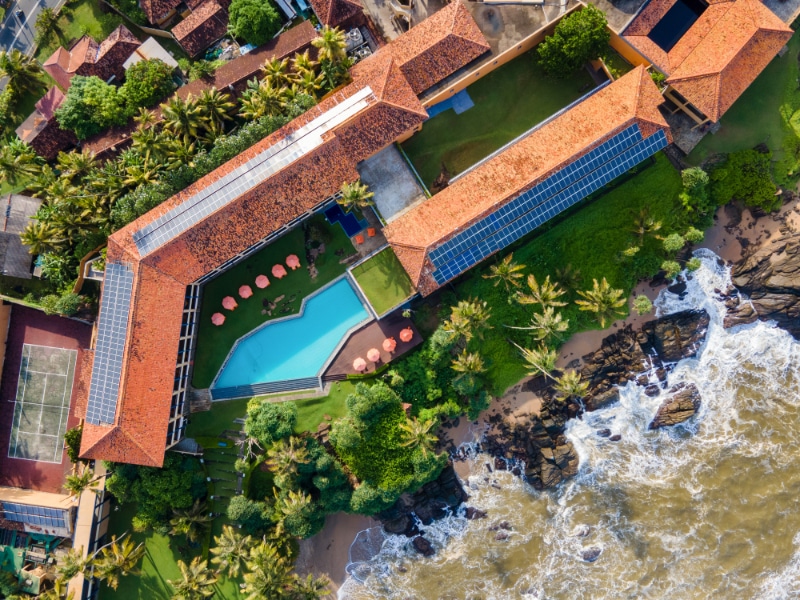
Currently, 24% of our total electricity requirement is met through solar photovoltaic systems, while approximately 66% of our overall energy needs are fulfilled through renewable sources such as biomass and biogas.
The Jetwing Youth Development Programme (JYDP), launched in 2006, has trained over 1,200 youth across the island, creating meaningful employment opportunities and fostering local talent.
Another initiative close to our hearts is Second Careers, which focuses on empowering women over the age of 45 by providing them with training and employment opportunities within our hotels.
What are some unique guest experiences that stand out to you?
Today’s guests are seeking more than just comfort, they’re looking for connection, meaning, and authenticity. At Jetwing Hotels, we’ve always believed that travel should be transformative, not transactional.
One region that continues to surprise and inspire is Sri Lanka’s East Coast. Guests can visit ancient archaeological sites, explore vibrant coastal ecosystems, and witness the vibrant culture of the region.
We’ve had guests request curated wildlife excursions or guided walks through lesser-known cultural landmarks that reveal the depth of the region’s history.
What are the biggest opportunities and challenges for Sri Lanka’s tourism industry?
We face new environmental, social, and economic pressures that demand thoughtful, adaptive responses. Climate change, resource scarcity, shifting traveller expectations, and the need for more inclusive growth are just a few of the realities we must navigate.
Travellers today are more conscious than ever before. They seek meaningful experiences, responsible choices, and brands that align with their values. We are well-positioned to meet this demand.
How can hospitality players help reshape global perceptions of Sri Lanka?
Sri Lanka’s journey has been one of resilience and reinvention. As hospitality players, we have a responsibility not just to rebuild, but to reimagine what travel to Sri Lanka can mean.
The opportunity lies in embracing sustainable, experience-driven tourism. This aligns naturally with Sri Lanka’s strengths: a rich cultural heritage, diverse ecosystems, and deeply rooted communities.
The challenge lies not in the destination itself, but in the mindset and systems that support it. We need to move away from reactive, short-term thinking and embrace a more progressive, collaborative, and quality-driven approach.
Tourism is not just an economic driver; it’s a platform for storytelling, cultural exchange, and long-term impact.
With improved airline connectivity, streamlined visa processes, and growing interest in wellness, nature-based tourism, and digital nomadism, we’re seeing a shift toward year-round, higher-value travel.
At Jetwing, our strategy remains clear: stay agile, stay informed, and stay deeply committed to our values.
Are there new international markets or traveller segments you’re focusing on?
Emerging Asian economies are showing strong potential, especially countries with growing middle classes and increasing outbound travel. We’re also seeing more traction from tier-2 cities in India.
Another key demographic is the eco-conscious millennial and Gen Z traveller. They want purpose-driven experiences—something Sri Lanka offers in abundance.
Tourism has the potential to be a transformative force in Sri Lanka’s economic future. When thoughtfully developed, it can help decentralise economic activity, empower local communities, and showcase the best of what Sri Lanka has to offer.
To realise this potential, we need to elevate our standards, invest in long-term infrastructure, and foster a mindset of excellence across the industry.
Rapid Fire
A Jetwing property closest to your heart? Jetwing Warwick Gardens
A destination every traveller must see? Jaffna
One word to describe Sri Lankan hospitality? Unique