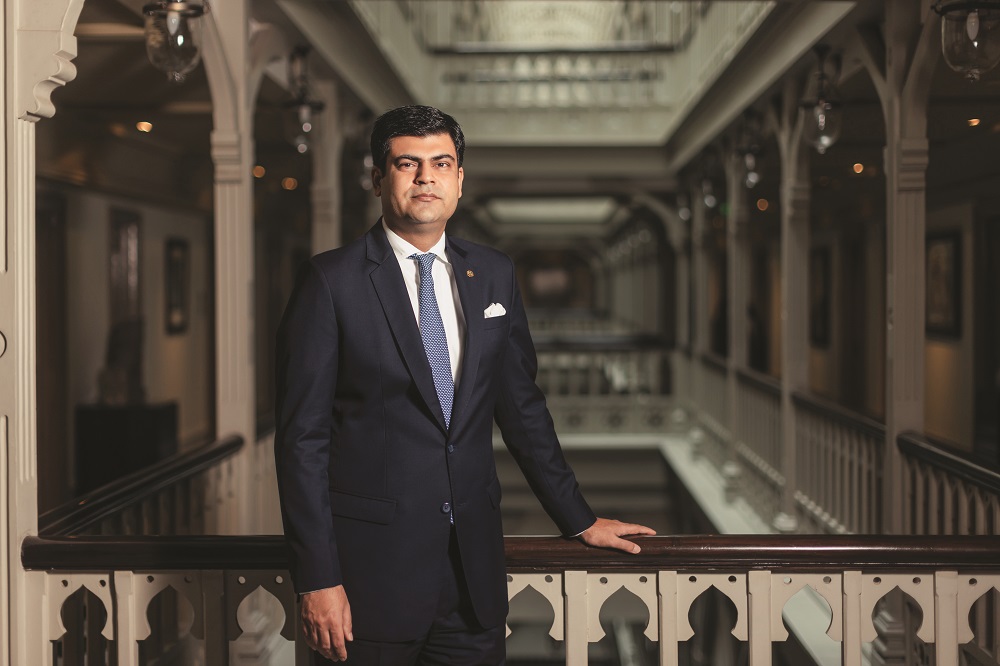

Sanjay Jain began his career with Nestle India Ltd as a Sales Officer in 1989. His career soared and in 2002 he was DGM, All India Head of Service, for the commercial refrigeration and air-conditioning products division in the East & North region at Blue Star.
In 2004, he took on the challenge of building a nascent refrigeration solution business by setting up Celfrost Refrigeration Pvt Ltd, with a strong focus on technology. After successfully evolving and exiting the business, he co-founded Elanpro (Elan Professional Appliances Pvt Ltd) in 2009. With his immense knowledge of the expansion of distribution and scale, he has built the company on excellent servicing and innovation. The company is currently amongst the top ten commercial refrigeration companies in India.
Excerpts from the interview…
You have been part of India’s refrigeration industry for over three decades. How has the food service refrigeration landscape evolved over the years, especially in the hotel, restaurant, café (HoReCa) segment?
Over the past three decades, I’ve seen India’s food service refrigeration landscape transform dramatically especially in the HoReCa segment. Earlier, a basic chest freezer was expected to do every job. But today, there is a clear shift towards application-specific refrigeration. Operators now understand that different foods demand different storage conditions to ensure quality and safety.
I remember a time, about a decade ago, when many businesses relied on locally fabricated products, often unaware of how crucial precise cooling is to food quality. A big catalyst for this change has been the entry of global hospitality brands. They have brought a strong focus on aspects such as temperature control, and food safety.
Today, that awareness has only grown. Even customers are far more informed and discerning, thanks to travel and global exposure. People now know the difference between a perfectly crisp French fry and a soggy Aloo Bhaja — and they expect better. For example, earlier, it was common for ice creams to be served in a semi-melted or refrozen state. But now it cannot be overlooked. Expectations have evolved, and so has the industry’s response.
Another factor that has enabled this shift is improved infrastructure including better electricity supply, power backups, and more stable voltage. Businesses now feel confident investing in high-quality refrigeration because they know the systems will function reliably.
Lastly, I would say, even the food offerings in menus have changed. Earlier, restaurants mostly served freshly prepared dishes which limited variety. But now, with robust refrigeration in place, many kitchens prep gravies and ingredients in advance, allowing for wider menus and faster service.
In that sense, refrigeration has definitely become an enabler of both operational efficiency and culinary innovation in HoReCa.
What key challenges do HoReCa businesses in India face when it comes to refrigeration, and how is Elanpro addressing these?
One of the biggest challenges we see in the HoReCa segment is the lack of awareness around correct refrigeration practices especially when it comes to product handling and equipment usage. For instance, many operators unknowingly mix freshly brought-in, unrefrigerated products with already chilled stock. What they don’t realise is that this drastically impacts the internal temperature and compromises the safety and quality of the stored food.
Another major issue is the misapplication of equipment. Many HoReCa kitchens use chest freezers or even reach-ins to pull down the temperature of hot or ambient food. But that’s not what these appliances are built for. Most reach-ins, for example, are designed to maintain a set temperature, not to bring down the temperature of freshly cooked or warm food. Reach-in coolers or freezers are for display and storage at stable temperatures, not for freezing.
This is where specialised equipment like blast freezers comes in as they are meant for rapid cooling and safe storage. Unfortunately, the adoption of such equipment in India is still quite limited.
There is also a clear workflow in professional kitchens that’s often overlooked. Ideally, freshly prepared or ambient food should go into a blast chiller, then into a cold room for short-term storage. From there, it can move to an under-counter refrigerator for thawing and prep. But what we often see is operators using a chest freezer or a reach-in at every stage — which disrupts the cold chain and affects food quality.
At Elanpro, we are working to bridge this knowledge gap through better training, application-specific solutions, and engineering equipment that matches the operational realities of Indian commercial kitchens. Our goal is not just to supply refrigeration products but to help businesses use them more effectively and responsibly.
Can you tell us about some of Elanpro’s latest innovations that support energy savings and sustainability?
At Elanpro, innovation has always been driven by the evolving needs of the HoReCa industry. Whether it is a five-star kitchen, a high-volume QSR, or a standalone restaurant, we are constantly pushing the boundaries to offer refrigeration solutions that go beyond performance to deliver energy savings, operational efficiency, and long-term sustainability.
One of our standout innovations is India’s first reach-in freezer with inverter technology compressor. Traditional compressors operate at a fixed speed, leading to higher energy consumption and temperature fluctuations. But our inverter-based compressor dynamically adjusts the compressor speed based on real-time cooling demand. This not only ensures precise temperature control but also reduces energy use by up to 30%, cutting electricity bills and extending equipment life by minimising wear and tear. It is a smarter, more sustainable choice. I feel this feature will soon catch up to become an essential.
We are also proud to be the pioneers in introducing reach-in with innovative internal structure which helps in maximising storage and improved cleaning. It also has specially designed duct cooling to ensure optimum cooling on all shelves with zero air mist contamination. It is a game-changing innovation engineered for India. Designed for high-demand commercial environments, this technology offers increased energy efficiency, improved temperature stability and enhanced cooling performance.
For professional kitchens, Elanpro’s new-age blast freezers are redefining food prep. Equipped with a USB-enabled, menu-driven preservation system, chefs can now pre-set freezing parameters for different ingredients across multiple recipes bringing precision and consistency into commercial cooking. Complementing this is Elanpro’s next-gen under-counter refrigerator, which features a pass-through double-door design that allows access from both sides — enhancing workflow and making kitchen operations faster and smoother.
As a company, we take sustainability challenges head-on. Elanpro garbage coolers, for instance, help hotels and institutions reduce food waste by enabling safe and hygienic composting which is a significant step toward circular food practices.
We have introduced our platinum series kitchen refrigeration solutions. These rugged, high-performance equipment are crafted with 100mm insulation and premium-grade stainless steel, built to deliver unmatched cooling while elevating the look and hygiene of modern kitchens.
In the bar and beverage segment, we offer a full suite of products tailored to elevate service including ice machines, back bars, kegerators, beer towers, and wine coolers, designed to support the growing craft cocktail movement and upscale hospitality experiences.
Most importantly, we have made a strategic commitment to environmental responsibility by adopting green refrigerant R290 across all new and existing products. This aligns with our broader goal of helping F&B businesses lower their carbon footprint while maintaining the highest standards of food safety.
At the heart of it all is our belief that innovation in refrigeration is key to ensuring food quality, reducing waste, and future-proofing hospitality operations. For us, every innovation is a step toward empowering the food service industry to operate smarter, safer, and more sustainably.
What distinguishes Elanpro’s newly introduced ‘Made in India’ cooling system—developed in-house—from imported alternatives when it comes to performance and reliability?
We have been committed to progressive and dynamic offerings. Our USP is performance-pumping refrigeration equipment. That’s why we introduced an innovative range of blast freezers for cold rooms featuring a Made in India cooling system. The product is equipped with a condenser and evaporator developed by the company’s in-house R&D team.
This Made in India cooling system integrates international engineering with homegrown expertise to ensure rapid, reliable, and energy-efficient cooling in Indian weather conditions. It is designed with local realities in mind including Indian weather, operational ecosystem and food handling practices. It is for the same reason the product is a cost-effective alternative to imported units, which can be 40%–50% more expensive.
What key trends do you foresee shaping the future of refrigeration in the HoReCa sector over the next three to five years?
A wave of revolutionary trends has energised the entire hospitality industry. I’ve noticed the hospitality industry is really embracing eco-conscious trends. Businesses are actively looking for eco-friendly products that not only promise better ROI but also show a strong commitment to sustainability, which is key to staying competitive.
I’m also seeing a rise in specialised refrigeration systems, especially for farm-to-table setups and pour-by-glass wine displays. Compact, user-friendly systems with IoT integration for real-time monitoring of temperature, humidity, and energy use are becoming more popular. It’s clear that these innovations are shaping the future as businesses adapt to shifting customer expectations.
What’s next for Elanpro in terms of product development or new verticals you’re targeting?
Growth has always been a driving force behind our journey. We have charted a strategic roadmap to accelerate our momentum. With a new wave of innovative products, key technology alliances, and a deeper focus on customer needs, we are well-positioned to reach new milestones in the coming time.
Expanding our regional footprint remains a key objective. Strengthening our presence in high-potential markets allows us not only to widen our reach but also to build closer, more meaningful relationships with our customers and partners fuelling sustainable, long-term growth.
A major highlight on the horizon is our backward integration plan. This is not just a tactical move, it is a step toward greater operational efficiency, tighter quality control, and a stronger foundation for innovation across our product range.
As we move toward a more sustainable future, Elanpro is committed to leading the shift toward low-GWP refrigerants and aligning with upcoming energy efficiency norms. Our goal is to help businesses stay ahead of the curve and make smarter, future-ready refrigeration investments.
Looking back, what are some pivotal moments that shaped Elanpro’s growth journey since 2009?
Looking back at our journey, it’s incredible to see how far we’ve come—from a modest team of ten, including the three founding members, to a strong workforce of over 150 passionate individuals.
One of the earliest turning points for us was the five-star ITC project, which served as a powerful validation of our capabilities in the premium hospitality space. It was a huge motivator and set the tone for the path ahead.
Over the years, several pivotal milestones have shaped our trajectory. Securing partnerships with industry giants like The Lalit, Marriott, Le Meridien, Club Mahindra, The Hyatt and Radisson Hotels, not only gave us market credibility but also broadened our expertise in catering to diverse refrigeration needs at scale. Another proud moment was our partnership with FSSAI, where we contributed in almost 800 districts in India—helping advance food safety infrastructure nationwide.
Geographic expansion has also played a vital role in our growth. After identifying untapped demand, we entered the Nepal market with customised offerings in 2019 and now export to 11 countries across Asia, Africa and Australia. This global footprint reflects both the relevance and reliability of our solutions.
Additionally, to strengthen our position as a full-stack refrigeration solutions provider, we made three key acquisitions. We acquired Thingif(y), an AI-driven monitoring system that helps reduce food waste by tracking temperature, pressure, and humidity in real-time. We also brought I Cold into our fold to expand our cold storage offerings with modular, customisable walk-in units. Most recently, we acquired a 41% stake in smart vending startup Wendor, marking our entry into automated retail with AI- and IoT-enabled vending machines and smart lockers for secure, contactless self-service.
Finally, what advice would you offer to upcoming entrepreneurs in the foodtech or kitchen equipment space?
I always urge them to think about the cost of ownership rather than just the one-time cost. They should look at the full lifecycle cost of the equipment including energy consumption, maintenance, repairs, durability, etc.
Whether you are building a cloud kitchen or launching a new kitchen equipment brand, it is important to focus on performance, reliability, and energy efficiency. Also, I would like to say that investing in the right technology from the start is not just smart but strategically advantageous.