
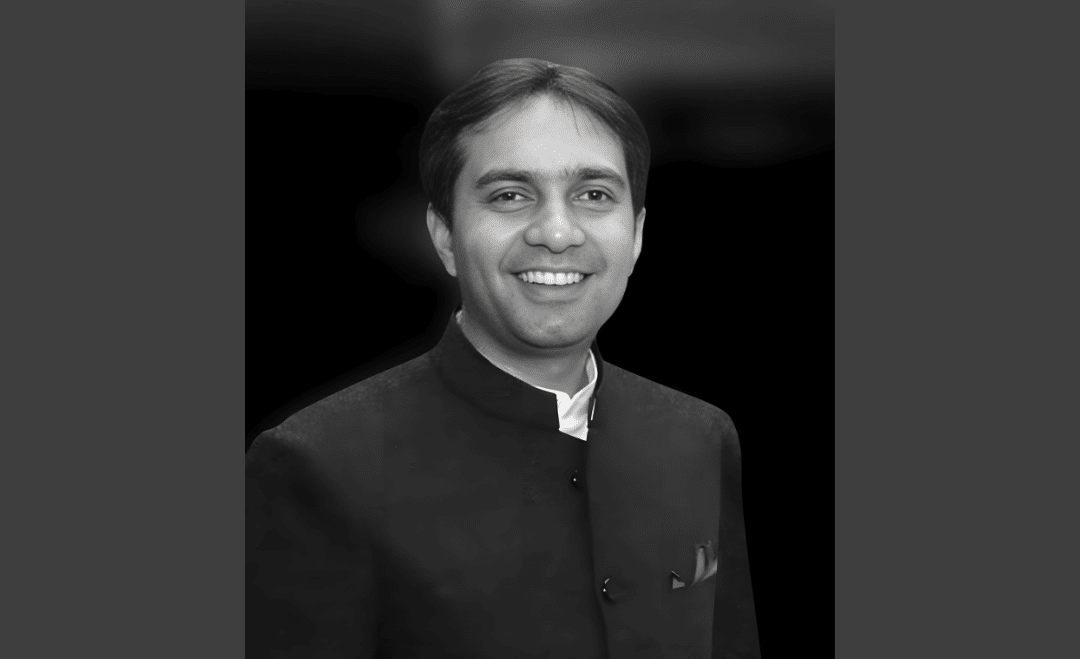
An accomplished architect and visionary entrepreneur, Raj Rishi Garg serves as the promoter of Vaidyaratnam Vrindavan Ayurveda Chikitsalayam, North India’s prestigious Ayurvedic Wellness Centre located in Baddi, Himachal Pradesh. An alumnus of the prestigious Chandigarh College of Architecture, his academic foundation laid the groundwork for his innovative approach to design and development.
Garg began his professional journey with Gables India Pvt. Ltd. in 2007, where he played a pivotal role in transforming the company from a single-location resort to a multi-project developer. His expertise spans design, budget management, scheduling, and construction across industries such as hospitality, healthcare, wellness, and real estate.
During his tenure, he successfully spearheaded the development of landmark projects, including the 125-room Club Mahindra Pristine Peaks Resort in Naldhera and the boutique Hotel Gables in Mashobra, Shimla. His focus on integrating spaces harmoniously with nature and the community underscores his commitment to sustainable and innovative practices.
With over 18 years of experience, Garg’s transition into Ayurveda and wellness through Vrindavan Chikitsalayam is a natural progression of his vision to create holistic spaces. His understanding of hospitality, combined with a passion for wellness and ecological balance, ensures that the facility offers not just healthcare but also a rejuvenating experience rooted in India’s ancient traditions.
Garg continues to redefine the intersection of architecture, hospitality, and wellness, making Vrindavan Chikitsalayam a benchmark in Ayurveda care and hospitality.
You began your career as an architect. How did that foundation influence your approach to wellness and hospitality development?
My journey into wellness began not with medicine, but with space—space that breathes, nurtures, and heals. Starting my career as an architect gave me a deep appreciation for how environments shape human experience. Architecture, to me, has never been just about creating structures; it’s about sculpting emotions, guiding energy, and subtly influencing well-being.
When we envisioned Vaidyaratnam Vrindavan Ayurveda Chikitsalayam, I didn’t want to simply build a wellness centre—I wanted to craft a sanctuary. One where the walls, corridors, and courtyards quietly work in harmony with the principles of Ayurveda. Sunlight floods our corridors, guest rooms open out to quiet forest lines, and every treatment space is acoustically cocooned to foster deep inner silence.
These choices weren’t decorative—they were intentional, rooted in the belief that architecture should echo the healing process, not distract from it. My architectural roots have taught me that healing doesn’t start on the treatment table—it begins the moment a person steps into a space that allows them to exhale.
What was the vision behind establishing Vrindavan Chikitsalayam in Baddi, and how did the location play into your decision?
The vision for Vaidyaratnam Vrindavan Ayurveda Chikitsalayam was clear from the beginning—to create a space where authentic Ayurvedic healing could unfold in its truest form, surrounded by nature that complements and amplifies the therapeutic journey. Ayurveda isn’t just about herbs and treatments; it’s a holistic science that thrives in balance—with the land, the air, and the light.

We found that balance in the foothills of the Shivaliks. Though Baddi is often recognised as an industrial town, it quietly shelters pockets of untouched beauty. Our 25-acre campus is cradled by over 500 acres of reserved forest—an ecological buffer that provides not only clean air and silence, but a kind of natural sanctity.
Our retreat offers the paradox we were seeking: proximity without pressure. The centre remains accessible for those traveling in, yet it feels a world apart—removed from the noise and pace of modern life. In that sense, the land itself became a silent partner in our vision. Here, the wind, the birdsong, the filtered light through trees—all of it plays a role in the healing process. We didn’t just build an Ayurveda retreat on this land; we allowed the land to shape the healing.
How does the Chikitsalayam differentiate itself from other Ayurvedic wellness centres in India?
We are not attempting to commodify Ayurveda; we are trying to protect it from dilution. That’s what makes Vaidyaratnam Vrindavan Ayurveda Chikitsalayam different. We’ve aligned ourselves with the Vaidyaratnam Group, whose lineage stretches back to the 19th century, to ensure classical purity in our protocols.
Every treatment here is prescribed only after a formal consultation with vaidyas (doctors) trained in the Kerala school of Ayurveda, and we’ve built a three-floor treatment block that accommodates all five karmas of Panchakarma in controlled environments. While other centres often mix in spa elements or abridged versions of therapy, we do not offer Ayurvedic “experiences”—we offer Ayurvedic treatments.
Yet, we’ve designed our hospitality experience to meet the needs of today’s wellness traveller—digital detox, curated Satvik cuisine, personalised daily rituals, and residential comfort in the form of three distinct blocks: Madhav, Krishna, and Govind.
Can you walk us through the design philosophy behind the Chikitsalayam—how does architecture enhance healing here?
The design blends Kerala’s naalukettu style with Himachal’s traditional timber architecture to create calm, breathable spaces. We focused on deep verandahs, open courtyards, and passive cooling to support a natural rhythm. Our 7,500 sq. ft. yoga hall is pillarless, offering visual and mental openness.
How do you ensure the authenticity of Ayurvedic treatments while meeting the expectations of today’s discerning wellness traveller?
Ensuring authenticity in a market that is increasingly performative about wellness is a constant effort. Our collaboration with the Vaidyaratnam Group allows us access to time-tested formulations, vaidyas (Ayurveda doctors), and traditional knowledge systems. We do not standardise treatments—we personalise them, which means every guest undergoes Nadi Pariksha (pulse diagnosis) before a treatment plan is crafted.
To bridge the expectations of today’s global guest, we provide bilingual explanations, integrate modern physiotherapy through our tie-up with ReLiva for post-trauma recovery, and offer curated educational sessions on Ayurveda. Rather than dilute the science, we educate the guest. The luxury, here, lies not in gold taps or private butlers, but in feeling seen and treated as a unique constitution—not a category.

What were some of the design challenges you faced while integrating the wellness philosophy into the architectural plan?
One of the key challenges was aligning the slow, intentional philosophy of Ayurveda with the fast pace and constraints of modern construction. We adopted a hybrid approach—local stonework with hidden conduits, and sustainable finishes that still met fire-safety codes. Even the landscaping was a balancing act between visual appeal and cultivating medicinal plants, requiring close collaboration between agronomists and architects. It was demanding, but it made the final space far more authentic and holistic.
What future plans or expansions do you envision for Vaidyaratnam Vrindavan Ayurveda Chikitsalayam?
We envision Vaidyaratnam Vrindavan Ayurveda Chikitsalayam evolving into a deeper centre of Ayurvedic excellence, with a clear focus on education, sustainability, and responsible wellness tourism. As part of our forward-looking strategy, we aim to establish a dedicated space for Ayurvedic research and documentation, particularly around the clinical efficacy of Panchakarma therapies.
This aligns with our long-term goal of contributing to evidence-based Ayurveda and fostering trust among a global audience. Additionally, we are expanding our wellness programming to introduce longer, condition-specific residential stays—particularly for stress-related disorders and lifestyle ailments.
There is also an ecological dimension to our growth: we’ve begun rewilding five acres of adjacent land to enhance the biodiversity of our healing environment, and we are working on incorporating more medicinal flora into the landscape to deepen the therapeutic context of the site. Every step forward is grounded in our belief that wellness must be inclusive, ethical, and rooted in natural intelligence.


