

Club Med has shown that an all-inclusive model can help you stay afloat in difficult times. But can it get Indians to understand this pay-once philosophy? Amish Mody finds out
For most people, going on holiday without the need for money or credit cards would be a bizarre and perhaps terrifying experience. But that is exactly what Club Méditerranée (commonly known as Club Med) has been convincing people to do in Europe since 1950.
Now, the company has set its sights on Asia, and India, it says, will play a significant role in its plans. The company launched its Indian sales and marketing office in Mumbai last September.
But how will it convince Indian travellers, as well as travel agents, that ‘all-inclusive’ does not mean ‘time-share’ with all its negative associations?
The task will not be a quick and simple one, admits Henri Giscard d’Estaing, chairman & CEO at Club Med, and the man who has been responsible for returning the business to profit after the slump following the World Trade Centre attacks in New York in 2001. But he thinks now is the perfect time to be trying to do exactly that.
“The combination of happiness and efficiency through our all-inclusive offer is most relevant in the current times of gloom and recession,” he says. “Customers never needed Club Med as much, as we help them budget a relaxed holiday.”
Indeed, Club Med was launched after the Second World War to offer some escape from the daily turmoil for the local population. Similarly, people today could be looking for exactly the same thing and the way to do it is to focus on its upmarket holiday village positioning, says d’Estaing.
Club Med was one of the first in the world to offer premium all-inclusive holidays. After a one-off membership fee and an annual subscription fee, members pay a single payment for their holiday and can then forget about the cost.
The packages include travel costs, accommodation, food and drink, including some alcohol (wine, beer and soft drinks), bar and snack goods, baby and child groups, sports and leisure activities and nightly entertainment.
While this model can put some people off initially, it tends to create very loyal customers who return year after year. D’Estaing says it is this loyalty that has allowed it to drive growth even during the slowdown.
“Our global average occupancy is currently pegged at 70% while our studies indicate that other hospitality brands are enjoying an average occupancy of only 50%,” he explains. “The secret to Club Med’s commercial success is that 30 to 40% of our customer base are repeat customers who enjoy the Club Med experience.”
With 80 resorts across five continents, a global customer base of 60 million people and with 1.4 million customers joining every year, that loyalty goes a long way.
But achieving the same in India will not be easy nor fast. “We understand that sales will be slow in the initial period and we have learnt this from our experience of launching the China sales office,” says Olivier Horps, VP marketing Asia Pacific and general manager commercial Greater China, Korea, India & South East Asia, at Club Med.
But from 1% today, Horps thinks within five years India will be contributing 10-15% of Club Med Asia’s revenues.
And if China is a good yardstick, he may well be right. China contributed 10% of the total revenue of Asia Pacific last year, and next year this is expected to touch 15%. The other contributing markets for this region are Japan and Australia. “The Chinese market has exhibited the largest potential and India’s potential comes close to this.
Though we have started slow with only 1,000 customers last year, we expect to grow exponentially in the coming years,” says d’Estaing.
There are major differences between countries though so replicating the Chinese model in India, for instance, will not work. “Our sales strategies in Asia are very regionalised and we need to adapt it for different countries,” says Caroline Puechoultres, president & CEO – Asia Pacific, Club Med.
The company’s dependence on the travel agency network across Asia varies dramatically, for instance. While in China Club Med is sold completely through travel agents due to regulatory restrictions, in Korea travel agency sales contribute 50% of its total revenue in the country, in Hong Kong this figure is pegged at 40% while in Singapore it is 25%.
In India, families continue to make their travel arrangements through travel agents, while the younger FIT travellers are increasingly booking their holidays online. “Though in most markets around the world, the trend of buying travel products is moving towards the internet, it is interesting to see that in India both channels continue to work simultaneously. As a result Club Med will continue to work in the Indian market by building strategic partnerships with key agents,” says Horps.
Although it will be hard work, India does offer one key advantage. Its peak travel season dovetails with the peaks of other markets, thereby providing a chance to fill rooms that may otherwise lay vacant. And the fact that India sits between several of Club Med’s key resorts is a beneficial marketing point. “Geographically India is half way between East Asia and Europe, and this allows us to promote both our Asian and European properties,” says Horps.
Nevertheless the sales and marketing network of Club Med in Asia is mostly focused on promoting the eight Asian resorts.
“We notice that Asians continue to travel mostly within Asia then they venture to Europe and later to the US,” explains Puechoultres. “Club Med’s properties in Bintan and Bali remain the most popular resorts in Asia and continue to show growth despite the crisis,” adds Horps.
The relaunch of the brand, following its rocky start to the millennium, as a premium, upmarket resort has had a major impact.
“Club Med is currently positioned as the most affordable upscale resort. We continue to renovate our properties around the world to make this possible and in recent years EUR100-150 million have been spent annually on redesigning the existing properties. However, in 2009, this investment will be limited to EUR50 million due to the current economic downturn,” says Puechoultres.
EUR25 million was also spent on an advertising campaign across 24 countries in 2008 to promote its new slogan: “Where happiness means the world.”
This move has not only helped the company realise a higher yield but has also enabled it to regain some of its customers that were lost as they were looking for more upscale products.
To make the all-inclusive Club Med model more viable the company is now moving away from ownership of its resorts to building partnerships with local owners to make the model less capital intensive. “Though we still own 40% of the 80 Club Med Resorts worldwide, we are not in the business of owning real estate but in the business of managing resorts. We are pleased to observe that potential owners remain bullish about the Club Med business model despite the global economic conditions,” points out Puechoultres.
And the company is not going to rush anything. Speaking on Club Med’s expansion plans, d’Estaing says: “We are trying to be the best, not the biggest, hospitality brand in the world.”
Club Med has announced its intention to launch several new resorts in the coming years. “Our resort in Oman is expected to be launched by end 2010 or early 2011 and our new resort in Egypt is expected to be operational by 2010. We are also keen to launch a ski resort in North China and a beach resort in south China by 2012 and are currently scouting for land for these projects,” reveals Horps.
India so far has remained under the Club Med scanner with regards to developmental work. “Actually there is no real reason why we have not built a resort in India so far. Perhaps not even looking at this option may have been a mistake, but we would love to have a partner in India in the near future to build a Club Med resort in India,” says d’Estaing.
However, he does admit that the preference of working in China is guided by the country’s infrastructural development. “China paid a lot of attention to the development of transportation and airports and it is easier to sell a place that is easier to access,” he says.
THE INDIAN CONNECTION
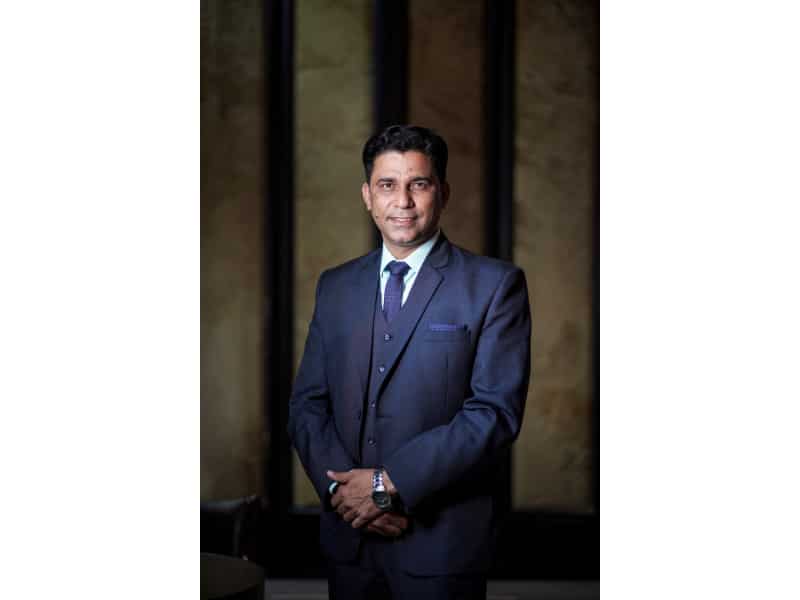
Mumtaz Moiz, general manager, Club Med India
Club Med began looking at the Indian market in January 2007. Mumtaz Moiz, who was then the general manager for Club Med Singapore, was asked to initiate the business in India too. “The response to Club Med in India was encouraging when one considers that even though I was based in Singapore at the time, we managed to clock 1,000 Indian guests during the period between November 2007 and October 2008,” she says.
This encouraged the company to incorporate its office in Mumbai in September 2008, where Moiz is currently based.
But Singapore and India remain two very distinct markets. “While in Singapore, the Club Med brand is well-established, in India it was a challenge to break into the consumers to tell them about the Club Med brand and its unique concept and product offering,” admits Moiz.
Singapore also enjoys proximity to some key resorts. Bintan resort in Indonesia is even considered a domestic resort for Singapore, at just a 55-minute ferry ride away.
The lack of a Club Med resort in India means vacationers have to travel internationally to try the concept. But Moiz believes that it is the right time to enter the Indian market as the Indian traveller is showing signs of maturity, moving away from group travel to explore new places and new experiences.
Moiz is working hard to create awareness about the Club Med brand across the country and is structuring short-term promotions in partnership with key travel-trade partners including travel agents, travel portals and airlines.
“Club Med is a value-driven concept which helps travellers enjoy a hassle-free holiday and we continue to focus on the high-end and upper middle class FIT travellers, which include honeymooners, couples, families and friends. We will soon ramp up our focus on incentive groups,” says Moiz.
With its initial focus on metros such as Mumbai, Delhi and Bangalore Club Med India will be expanding to other metros such as Chennai, Hyderbad and Kolkata as well as tier 2 and tier 3 cities.
THE STATISTICS
Number of properties:
Worldwide – 80 resorts. 53 Sun resorts and 27 Snow resorts
Asia-Pacific – 10
Mauritius – 2
Maldives – 1
Bali – 1
Phuket – 1
Malaysia – 1
Japan – 2
Bintan Island, Indonesia – 1
Australia – 1
Properties in the pipeline – 6
Cambodia – 1
Vietnam – 1
Egypt – 1
Jordan – 1
China – 2