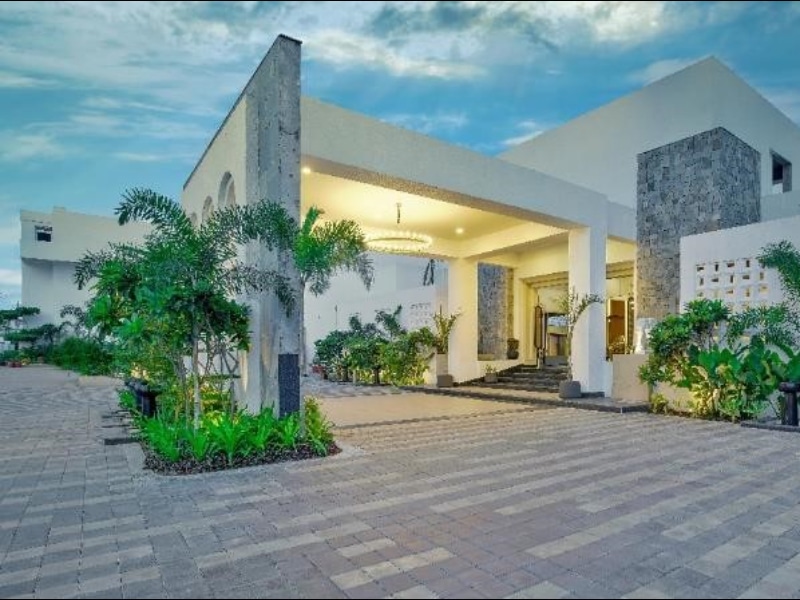
Technology can be effectively used to bring down energy consumption and cut down on overall operating costs. Amrit Dhillon looks at what hoteliers are practising today
Green policies to protect the environment and save energy have jumped from being ‘nice to do’ extras to absolute must-haves and necessities.
A revolution has swept through the industry, from guests altering their instinctively wasteful behaviour in hotels to hotels abandoning ingrained practices.
Customers realised what gargantuan amounts of waste were caused by changing sheets and towels every day, keeping the tap running while brushing their teeth, flushing toilets copiously, opening new bottles of shampoo and conditioner, and leaving the television, lights and air conditioning humming in a room even when they had stepped out.
Such wanton behaviour seemed to hard-wired into guests’ neuron circuity. The moment they stepped into a luxury hotel room, they shed the ‘sensible’ behaviour they displayed at home and turned into raving hedonists, as though comfort was synonymous with waste.
Everything has changed beyond recognition. Guests are now acutely aware of the devastating damage to the planet caused by pollution. Surveys globally show that hotels face well-informed and concerned customers who expect hotels to follow environmentally-sound practices.
In India, studies by Concept Hospitality in Mumbai, which manages eco-friendly hotels, show that 90 per cent of corporate travellers prefer to stay in an environment-friendly hotel. Hotels have also woken up, with a jolt, to the huge savings to be made from cutting energy and water consumption and reducing waste.
Heating and cooling are a hotel’s main energy needs. Consuming less electricity for these two purposes can alone reduce costs significantly and cut down the greenhouse gases. Estimates show that eco-friendly measures can reduce water consumption by 30% and electricity bills by 35-40%.
“The amount of lighting and air conditioning that is wasted in the average hotel is enough to run a small hotel. We now have sensors in parts of the hotel like the public rest rooms, gyms and banquet halls which switch off everything if no one is there and the same happens on the service floor landings,” said Ajay Bakaya, executive director, Sarovar Group.
Measures to reduce carbon emissions and limit damage to the planet fall into three broad categories:
First, energy efficiency which includes using energy-efficient lamps or newer LED lamps, the use of highly energy-efficient air conditioning plants (if possible with a heat recovery system), Building Management Systems (BMS), and solar energy.
Second, solid waste management where the amount of waste is first reduced and then recycled such as treating used water and re-using it in the gardens and adopting vermiculture.
Third, water conservation where hotels opt for low flow shower heads, dual flushing systems, aerators and flow restrictors, drip irrigation, and sewage treatment plants to treat and reuse water.
Hotels are adopting green programmes because they wan to limit the damage they inflict on their already battered planet and because it makes economic sense. Operating costs fall once consumption of energy and water falls. Going green can mean turning a hotel’s book from red to black.
Throughout the industry, the use of solar panels, computerised air conditioning and heating systems to provide light, heating and cooling on an ‘as-needed basis’, intense recycling, reduced water usage, and energy-saving architectural designs are spreading.
The level of consciousness in the industry is greater than ever before. Even small hotels are realising that a host of little changes can make a big difference.
Simply choosing energy-efficient lighting, using water recycling systems and lowering laundry temperatures can reduce emissions and costs significantly.
Small and big, hotels are switching to computerised air conditioning and heating systems to control energy consumption. Those which have heat recovery systems allow hotels to use the heat that is generated during cooling to heat the hot water needed in the kitchens, guest bathrooms, laundry, and toilets.
They are also attaching STL tanks to air-conditioning systems. These store the cold energy produced by an air-conditioning system. This helps cut energy costs considerably by eliminating the need to run the AC 24/7.
Instead, the system can be run during non-peak hours when the electricity tariff is lower. During peak hours, the hotel can keep the air conditioning off and release the stored cool energy, cutting power consumption and reducing compressor overloading. Also widely in use to limit emissions and energy consumption are Building Management Systems (BMS). These tackle the massive wastefulness that used to characterise hotels.
Earlier, rooms and vast areas such as the banquet hall and other public areas would be chilled and lit even though they were empty for large parts of the day.
BMS enables a single employee of a hotel to sit in one room – instead of running around from room to room and floor to floor – to track and monitor where electricity and air conditioning are required in a hotel and where it is not functioning properly.
Energy is automatically switched on and off on depending on when it is required.
When a guest leaves a room, the lighting and air conditioning are instantly turned off. When the guest inserts the key-card in the door, everything comes on.
Similarly, sensors and thermostats can detect when a guest is in the room. If there is no movement in the room for a certain amount of time, the air conditioner will shut off or decrease to save energy. When the guest re-enters the room, hidden infrared devices turn the AC back on.
If a hotel has, say, 10 per cent occupancy, only the occupied 10 per cent will be chilled. Such systems may not be cheap but most hotel managers believe they can recover their investment within 12-20 months.
“BMS is very important to reduce energy consumption because it allows a hotel to track, monitor and control where cooling, heating and lighting are needed.
It will automatically turn on to cool a meeting room one hour before the start of a function and to automatically shut down 45 minutes afterwards,” said Harinakshi Nair, senior associate, HVS Eco Services in Mumbai.
Marutha Vanan, in charge of customer care at Voltas which is one of the companies that supplies BMS, says the system is user-friendly and can cut energy costs by 20-30%.
“It’s all visible on the computer in one single control centre – which areas of a hotel are being heated or cooled and which aren’t. With the flick of a switch, you can turn equipment on or off sitting 10 floors away,” said Vanan.
Apart from the current zeitgeist, pressure from consumers, the abundant logic of green policies and competition from eco-friendly hotels, the Indian government is also nudging the hotel industry to install green technology systems.
It has specified that any hotel or building with more than 50-100 employees must have its own Sewage Treatment Plant and BMS.
Furthermore, 20% of a hotel’s hot water requirement must be met by solar power and if a hotel invests in, say, wind generation anywhere in the country and those windmills supply power to the national grid, the hotel can get the same number of units free, wherever it is located.
“The Department of Tourism is being pretty ruthless and getting tough. To get its star classification, a hotel has to have certain processes and technology in place,” said Amjad Hussain, environment officer, Rain Tree Hotel, in Chennai.
To encourage change, the government recently recognised The Leela Palace Kempinski Bangalore as the ‘best eco-friendly, five star deluxe hotel’ in the country.
Other eco-hotels such as Orchid and Lotus Suites in Mumbai have been trailblazers, pioneering change long before customers and social pressure forced other groups to follow suit. Orchid, for instance, installed an STL tank 10 years ago. Rodas Hotel, also in Mumbai, is similarly in the vanguard.
All three hotels follow the philosophy of ‘Reduce, Reuse, Recycle’ passionately. “While we are determined to follow green practices from top to bottom, none of our measures in any way affects the comfort of our guests. There is no conflict between the two,” said Akshay Gavai, Environmental Officer at Orchid.
Every Orchid, Lotus and Rodas room has a mini-bar that is CFC-free and saves up to 40% of energy because the fridge is equipped with ‘fuzzy logic’ which senses the load inside and cools accordingly.
Another feature of their rooms is the electronic master control panel in every room which has a ‘Green Button’. On pressing this button, the temperature of the room goes up by two degrees. The amount of energy saved is translated into points that are accredited to the guest.
To reduce the amount of rubbish piling up on the country’s landfills, the hotels have also stopped the practice of single servings of sugar, salt, jam, and butter etc. because the packaging cannot be re-used.
“Hotels historically been one of the greatest solid waste generating industries because of the high use of disposable material for packing. By working with suppliers to reduce the amount of packing, they save costs and save the planet,” said Suhail Kannampilly, vice president operations, Concept Hospitality which has been instrumental in developing ecotels all over India.
In fact, he believes that hotels in the west are bigger sinners when it comes to wasting cartons, cans, paper and packaging material than in India owing to the vast quantities of things thrown away by consumers and not re-used.
As Bakaya points out, there are ‘one hundred’ things that can be done to limit waste and carbon emissions. “Just setting the ac temperature at 23 degrees rather than 22 or 21 has made a huge saving,” he said. “But everyone has to be aware and work together.”
Even television sets are acquiring green credentials. A new Sharp model claims to be the first TV set to feature a dedicated ‘eco’ button on the remote control which reduce’s the screen’s backlight output by 20-30 per cent depending on whether a mid or high setting is chosen. The amount of energy saved by one television might be tiny but it adds up to a substantial figure when multiplied tens of thousands of times.
Computers are also being carefully controlled, being switched to energy-saving mode when not required for a while and switched off altogether when they will not be needed for a longish time.
If a hotel uses five computers at its peak load, during the off peak load, it can run the processing of five computers on three computers since all the processes will not be run in totality.
New hotels can be even more environment-friendly because their basic building design incorporates green features. The newly opened Claridges in Surajkund, outside Delhi is a ‘green and intelligent’ building based on green designs, technology and materials.
The hotel boasts of the efficient use of water and water recycling, the use of CO2 sensors for car parking area ventilation, the use of renewable energy, an efficient electrical system, and effective building management.
“Green practices will grow as people’s awareness towards saving the environment and our planet grows.
Though the initial cost of making a building green is higher, over the years this is offset by the resources that are saved,” said Claridges chief engineer Vijay Sharma.
Kannampilly also estimates that while hoteliers probably have to spend 10-20% more on equipment at the construction stage, the returns in the long run are huge and well worth the initial cost.
For green technology to be widely adopted, he expects to see the price of systems such as BMS, STL tanks and computerised air conditioning systems falling in the next few years.
In the future, expect new hotels to have insulated windows and insulated roof tops, covered walls, covered porches, trees to shade windows and roofs during summer while maximising solar power in winter, and a careful placing of windows to provide more natural light and reduce the need for electric light during the day.
At Rodas, the focus point of the building’s parabolic shape faces the northeast, reducing the need for lighting and air-conditioning. False walls and double glazed windows further help reduce its energy needs.
Future hotels will have lobbies and other large public areas bathed in natural light to cut down energy consumption and reduce carbon dioxide emissions. Solar energy, of course, will be a salient feature of new hotels, especially big ones with large rooftops that provide an ideal location for solar panels to be installed. “Imagine a solar panel that lasts upwards of 25 to 40 years and produces energy without any combustion whatsoever,” said Sharma. “But solar energy has to become cheaper to be more popular than it is today.”
In terms of building materials, new ecotels are using materials such as Portland Slag Cement which is 22% slag, a by-product of pig iron ore extraction which otherwise is a waste; bricks made from special terra-cotta clay which is excavated from considerable depths and does not disturb the topsoil of the earth; recomposed veneer made from waste wood and used for furniture; and eco-board made from exterior grade article board which in turn is made from bagasse, a waste product.
The consensus in the industry is that turning green has a positive impact on the bottomline without damaging customers’ desire for luxury and comfort. “When you walk into a eco-friendly hotel, the look and feel are as luxurious and pleasing as in any top hotel. The water pressure in the shower is the same and so is the cool air in the room. The savings are all in the small operating details which guests never notice,” said Nair.
The ultimate fantasy of green proponents is probably the day when hotels bill guests depending on their use of resources. That is not likely to happen, if only because of the angry disagreements that would break out at reception when they guests check out.
But green behaviour, by guests and hotels, is here to stay. “This is not a trend. It will be here forever. It is the future,” said Hussain.