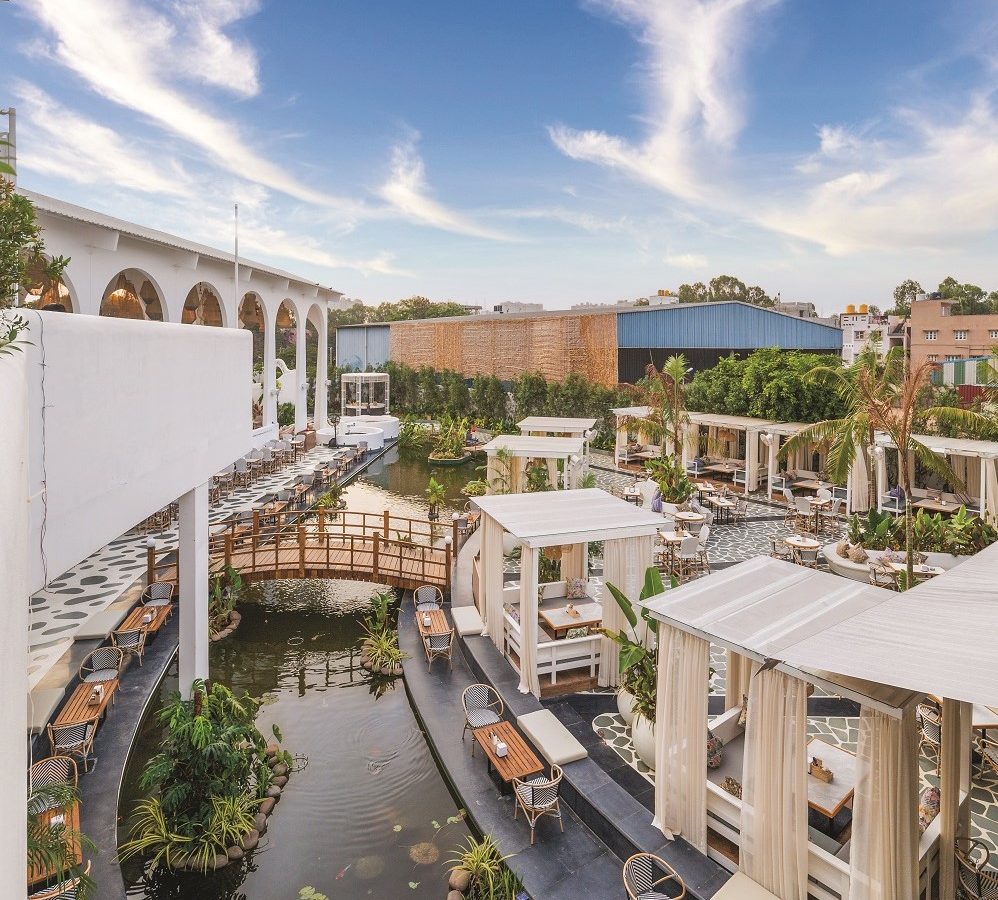

While designing for the hospitality industry, especially luxury hotels, several factors propel the architecture strategy. However, it comes down to three significant aspects – addressing the brand’s identity, aesthetics, supporting the user-experience and principles of sustainability integral to the overall
design.
Our focus has always been to innovate and adopt locally available materials that are traditionally present in the region. It can be used innovatively through layering and in combination with other materials to add to the aesthetics and indigenous flavour of the project. Moreover, it will reduce the building’s overall carbon footprint.
PLANNING FROM THE START
The maximum impact of sustainability in design can be brought in through measures like building orientation and optimal space planning at the master planning and design stage. The supply chain in the construction industry, though complex, demonstrates that early design phases play a significant role in the reduction of construction waste.
This can be achieved by taking the right design decisions. For instance, building and construction materials can be reused, or even repurposed, to avoid future waste. On the journey towards minimising the destructive impact on the environment, architects possess a crucial role in reversing the graph. The AEC industry is aiming for restorative, regenerative and innovative design — from table to site.
Common practices include BIM modelling, energy mapping, sustainable procurement of materials, reuse and recovery, and offsite construction (prefab) techniques, in both pre-construction and post-construction phases. This is in contrast with the conventional linear model of ‘take, make, dispose.’ These methods
minimise a building’s eco-footprints, promote resource-efficient construction and usage of renewable
construction materials — thereby achieving extended lifecycles.
THE LOCAL TOUCH
Localisation continues to be the primary medium to publicise architecture. The hospitality industry seems to have been more critical, considering its direct relationship with visual tectonics, tourism industry and creation of experiential design at vast scales.
Concepts of localisation or vernacularism have started adapting the distinct strategy of utilising local materials and products. Discourse around indigenous sources in India is rooted in critical thinking relating to different aspects of community living.
However, the main subjects for contemporary explorations here should be sustainability and technology. With the pandemic still hovering around, vernacular architecture can harness the situation in two ways. Firstly, it can boost the national economy and pave ways for local artisans to gain access to a wider market.
Secondly, with the development of a cosmopolitan society, utopian and aboriginal thinking will formalise in broader perspectives of construction, architecture, and engineering.