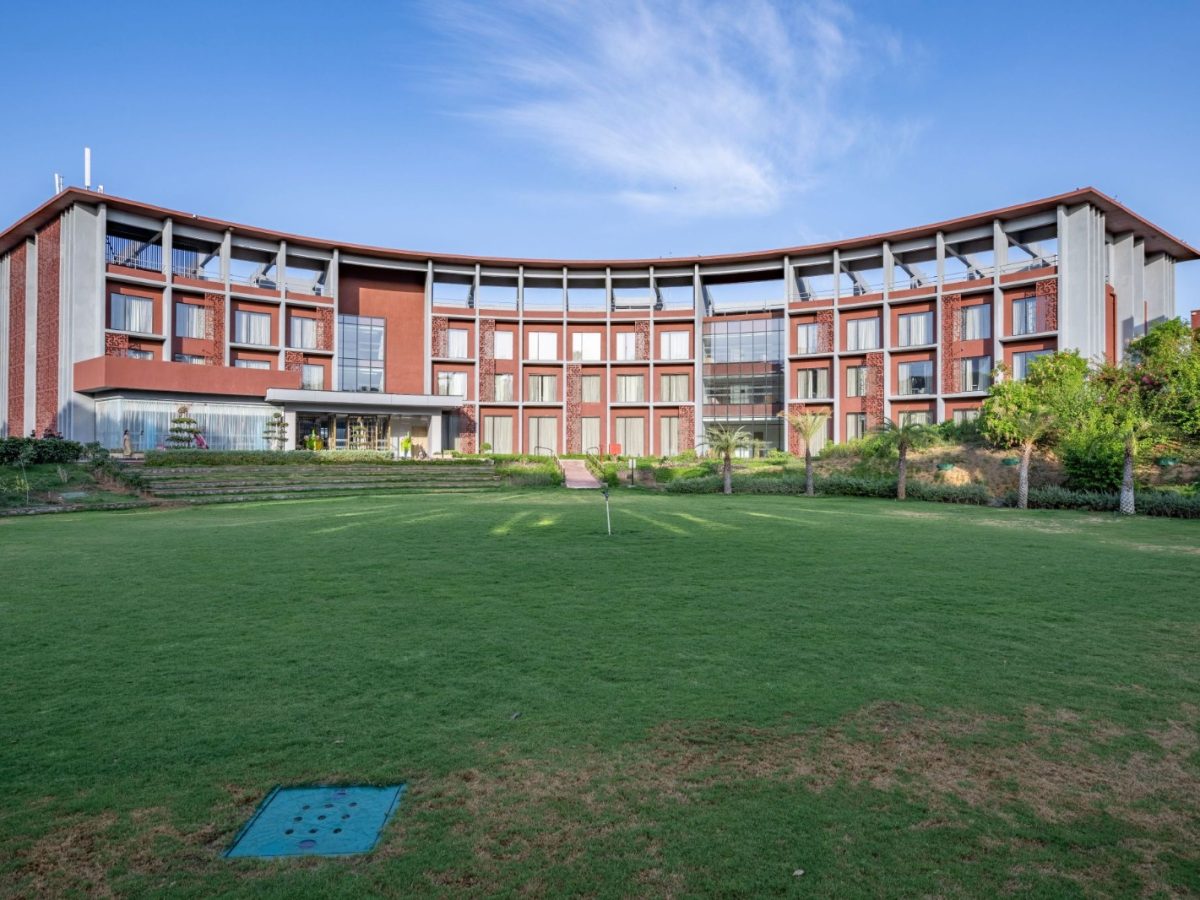
The dining experience in hotels leaves a heartfelt impression on the guests. Customer loyalty, relationships and connection matter greatly in the world of hospitality. In today’s age, guests are keener and tend to partake in bespoke experiences, and though most people do not know this, but the layout and design of an in-house restaurant play a key role in this. Sarika Shetty, Partner, SJK Architects, explains, “Spatial proportions, form, volume, materiality and natural and artificial Lighting play an essential role in enhancing the dining experience. For instance, at the Lotus Cafe we designed for the Dasavatara Hotel in Tirupati, India, a tessellated, multi-dimensional inner wooden ceiling is held up by V-shaped metal columns placed centrally, covered by a glazed façade on three sides. Further, the cafe is envisioned almost as an island, surrounded by the hotel’s central water body. This not only opens up the cafe to unobstructed views of the water body but also enables a play of reflected and refracted light within the space, adding to the overall spatial experience.”
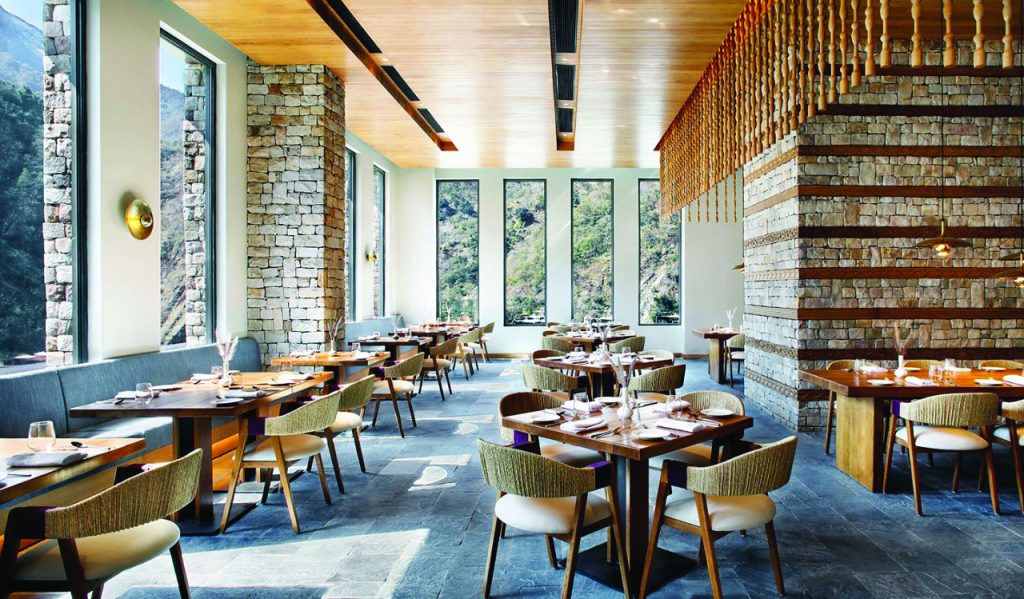
To crack the right service in hospitality, the restaurant’s design layout and strategy should be accurate. From right when the guests enter to the F&B service, furniture design, and lighting layout, even the menu should be such that it communicates a powerful piece of labelling of the hotel, acquiring more visitors. On a technical note, Supriya Gupte, Project Head- Hospitality Interiors, Edifice Consultants, emphasises “The restaurant will not function properly without the back of the house support. The hospitality sector, however, is all about experience, and it clearly segregates the FOH and BOH circulation. It is crucial to camouflage the service entries and strategically locate the service stations. We try to integrate these service stations in design to make them look like an integral part of interiors.”

The right planning
The architecture and design of a hotel’s in-house restaurants play an essential aspect in the F&B space. Factors such as – how freely you can move once the restaurant is crowded, and how to walk around without bumping into people’s tables are considered. It is illogical for a designer to create a beautiful restaurant which is not functional.
Elaborating on this, Shetty states, “While designing restaurants in hotels, we ensure that the space is suffused with daylight, integrates indoor and outdoor spaces, is well-positioned and accessible by all. Furthermore, we ensure that the mechanical, engineering and plumbing services are discreetly integrated and that there is no direct draft of conditioned air, thus preventing bad odours from spreading in the space. If the restaurant also has a buffet, the buffet table is placed centrally such that it is equidistant from all seating clusters. Further, we incorporate spacious seating arrangements with enough flexibility to even cater large numbers of people.”

It’s all in the details
Restaurant designers are not supposed to be afraid to play around with their interiors, trendy. From luxurious cutlery to your tableware, customer engagement and marketing plays a vital role in the buzz of the hotel’s restaurant. On a similar note, Shetty explains, “Our approach is highly contextual to the design language and story being woven through the design. At the Krishna Thaali restaurant in the Dasavatara Hotel, the theme is inspired by the playful and versatile character of Lord Krishna, who is the eighth avatar of Lord Vishnu according to Hindu mythology. The design uses decor tactfully, in the form of elements associated with the image of Lord Krishna, to add to the spatial experience. For instance, we used customised wallpapers with the peacock feather motif, printed using UV-fixed special inks on a vinyl-based wallpaper.”
The food menu should also purely speak about the brand rather than making it a separate entity. Pedro Deakin, Senior Vice President, Brand and Design, Jumeirah Group, explains, “The cuisine was crafted as a Portuguese/Spanish beachside concept with all the strong seafood flavours from the Iberian Peninsula. The food menu emphasises the beach-house atmosphere and transports guests to the shores of the Atlantic, while Arabic touches create a synergy between the hotel’s identity and locality and the food vision of Chef Paolo Mannis”.

Speaking on customised dining, Michal Zemlika, Director of Food and Beverage, Le Meridien, Maldives, states, ‘Tabemasu’ meaning ‘to eat’ in Japanese, is a distinct dining experience where art, design and cuisine are fused to create a playful dining experience. The menu focuses on various Japanese dishes encompassing regional tastes that blend modern and traditional techniques. Tabemasu’s attention to detail extends to a purposely designed teppanyaki counter and curated cocktail, sake and tea list. Insider tip: Savour show-stopping cuisine with a lively culinary performance by Tabemasu’s expert teppanyaki chef. Sample Japanese delicacies – with the option to include wine and sake pairings.
Technology integration since COVID times has been an ideal choice to avoid shared menus, crowding and waiting inside the restaurant. Deakin further adds, “During the pandemic, Jumeirah Hotels & Resorts developed its own food ordering app called e-menu, which allows for easy browsing and placing orders directly to the kitchen from your sun lounger (bypassing the order-taking process). This has significantly reduced waiting times and provides a seamless guest experience. Our signature restaurants also feature a QR code to access our bespoke Spotify playlists.”

Setting the right mood
Lighting design in restaurants cliques the attitude of the entire restaurant. Sarika Shetty, Partner, SJK Architects, mentions, “Lighting in restaurants needs to be designed for visual comfort, as well as clarity in perceiving food while eating. We maintain a good balance of architectural and decorative fixtures and also add accent lighting to set the overall mood and ambience of a space.”
The restaurant’s colours can easily be reflected through this light, which plays an important role in creating the ambience. Gupte opines, “Lighting needs to be strategically planned, allowing the flexibility of moving furniture. Fixed elements like a feature wall or a decorative surface can be highlighted with wall grazers, while adjustable lights can be used for artworks and artefacts. While the lighting effect is important, we prefer to conceal the source as much as possible unless it is a decorative element. When we use a decorative light, we prefer to integrate the form with the design language by customising the fixtures in colours, shapes or prints on lampshades.”
She further adds, “Various moods are also created with light play. In one of the rooftop restaurants-cum-bar, the entrance was kept dark with the use of raindrop lights which created the dramatic effect of the sky with stars, thus setting up the vibe of the space. Strategically located light will not only set up the mood but also make food more appealing and eventually lead to guest spending more time.”

Sensible Seating
Commenting on the type of seating and its effect on the human mind and another clever aspect of restaurant design, Gupte states, “Furniture layout plays an important role in restaurants. Guest experience starts at the entrance of any restaurant. A decorative screen or feature near the entrance creates a welcoming experience. The seating layout should be such that diners don’t gaze at the chair back immediately while entering the restaurant. We usually place the two-seaters near the glazing followed by 4 to 6 seaters in the central area. At the same time, an empty wall provides an opportunity to lay banquette seating or private dining areas.”
She further adds, “Private dining areas are sometimes planned near the entrance in one corner, which can be rented out for small parties without disturbing the other guests. Level differences are sometimes created for an interesting setup. However, the same needs to be tackled with supporting ramps and railings, which is suitable for a larger floor plate.”

Comfortable seating, sofas and recliners make the customers relax in the restaurant and break in for a longer term. Their finishes also play an important role. “Finishes play an equally important role. Marble, if used in the flooring, needs to be selected carefully, which is non-porous and should be treated for stain absorptions, same goes for the upholstery. Artificial leather is a good option for a maintenance-friendly setup. Lighter colour fabrics are generally avoided; velvets are used for some seating pockets, but they need to be selected carefully to ensure they will not leave seating impressions,” explains Gupte.
Colour stimulations
Colours can directly mark the disposition of your guests, from optimistic yellow to comforting blues. The interior partition colour should be picked in such a way that it does not go overboard. Shetty avers, “Colors are strong visual tools that form the backbone of a theme. While designing one of the restaurants in northeast India, where Bamboo is an integral part of the region, the overall décor was adorned with a green colour scheme since Bamboo is locally known as Green Gold.”

Welcoming scents
Scents in hospitality commerce are more or less a concealed marketing strategy. Trails such as chamomile, vanilla and lavender relax the mind, making the restaurant more hospitable. Baked loaves of bread and chocolate smell homely, making the guests hooked on the dessert section of the restaurant and eat more chews than anticipated. For after-work corporate employees, scents such as peppermints, citrus smell and cucumber make them feel fresh and energised. Pedro Deakin, Senior Vice President, Brand and Design, Jumeirah Group, reveals, “We have always placed emphasis on scent to evoke a sense of place. For SAL, we chose a very refreshing and soothing white tea essential oil, which characterises the cold towel on arrival and the cool, contemporary surroundings.”

The right tone

Music does more than kill the silence in a quiet restaurant. From controlling the volume of the space, to the tone and pace at which it is played, the whole ambience of the space can be uplifted through its music. Fine dining music is soft, so the diners can hear each other without struggling. Restaurants always pick faster beats during rush hours and slow beats for non-rush hours. Hotels can adapt acoustic techniques, such as carpets, false ceilings, curtains, etc., to better control the sound. Zemlika states, “Taking a contemporary approach to genres of the past, Le Méridien and Parisian music collective Nouvelle Vague collaborated on an innovative, curated 24-hour hotel soundtrack with exclusive, one-of-a-kind performances at select locations. Honouring the European heritage of Le Méridien, this playlist creates a chic soundtrack for our hubs, transforming the daytime coffeehouse’s calm atmosphere into a lively evening ambience.”