1. How has Isthara brought forward the concept of smart food courts in India? What is “smart” about these food courts?
For years, educational institutions and workplaces have been operating cafeterias with limited food options, minimal hygiene practices and no service emphasis. Since the pandemic, the gap has been even more evident from a safety and hygiene standpoint. After receiving a request from a prominent educational institution, and after a successful transformative exercise, the founders realized the incredible scope in transforming the institutional cafeteria industry, and the potential that lies within the food court sector. Incidentally, the corporate sector also had a similar need. Since then, Isthara has leveraged the smart food court format in workplaces as well.
Isthara stands as a pioneer in the ‘smart food court’ industry owing to the fact that we are one of the few food court operators that has integrated technology into the services that we provide. ‘Smart food courts’ can be classified as food courts that use technology to be able to streamline many of the front and backend operations that are being conducted. The aim of Isthara food courts is to provide customers with a tech-centric culinary ecosystem where patrons can interact with menus, delivery services, among others. At Isthara, we have also implemented tech solutions across the quality control processes, and are using tech solutions and tracking to ensure that the quality of food is maintained across the system. In the wake of the pandemic, Isthara food courts are leveraging food tech to set new standards in food safety, quality, service and choice for urban millennials, thereby redefining the cafeteria experience.
From the technology side, Isthara food courts are powered by POS systems that enable businesses to optimize sales to make the entire experience seamless and hassle-free. The technology being implemented in Isthara food courts has been incredibly beneficial to vendors as well, especially with the Menu and live inventory management resources. In addition, Isthara has also integrated a mobile application to process customer orders and a well-designed POS system to note down orders of customers visiting their food courts. For vendors, the tech here provides them with vendor interfaces, stock management solutions, menu management solutions, machine monitoring, delivery management and many more quality-of-life features that are not prevalent in traditional food courts.
Additionally the Isthara revenue team provides insights to vendors and institutions management teams on business trends/ revenue in food courts, and SKU level information for better management and demand analysis. Through the technology, Isthara is also able to gather valuable information on their customers and emerging food trends, which has in turn helped vendors create menus that are more refined and in keeping with customer demands. This technology also provides vendors with data that can help them identify unique dining patterns and preferences, thereby enhancing the overall dining experience and improving sales.
2. How do you operate the smart food court?
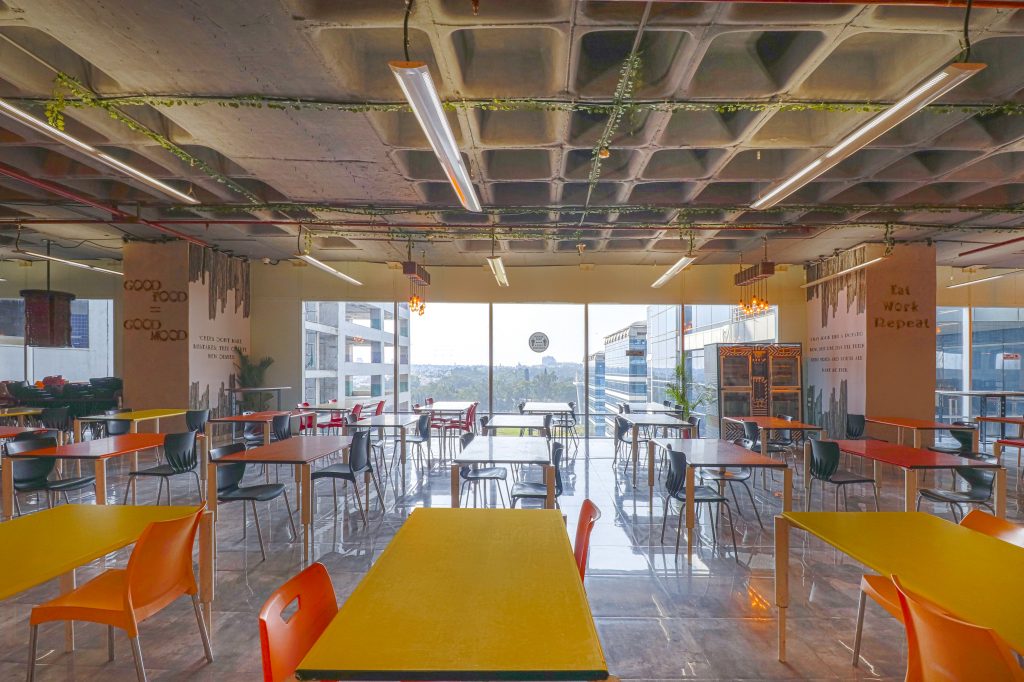
Through these first-of-its-kind smart food courts, Isthara assumes the role of the technology partner and vendor aggregator to help large educational institutes and corporates to digitize their food courts and cafeterias for more efficient management. Through tech-enabled and standardized processes, we aim to provide efficient end-to-end operational support and completely transform the highly fragmented institutional food-tech segment. We take over the cafeteria space of the institution and bring in the required vendors, technology and process and stitch it all together.
Isthara food courts offers a wide range of smart food court services, which are in keeping with the highest hygiene standards and FSSAI Quality Checks. An Isthara assigned ‘Food Court Vendor Management’ team curates food experiences based on demographics of the institutions by bringing together multi culinary curated vendors. Multiple vendors are brought together and each vendor get enough space to have their own set-up. The multi-vendor format ensures that each vendor delivers the best quality food to ensure they attract customers. The food courts also follow an advanced Point of Sale system, enabling businesses to optimize their sales and make the entire experience seamless and hassle free.
Every food court is managed by Manager who reports into Isthara with a set of SOPs and audits. The manager does a daily audit on the kitchen and a tasting session before the counters are opened. Isthara is also the only company in this space which has a quality check team that checks and documents each aspect of quality. Isthara also provides a better customer experience through floor managers and Isthara trained service, maintenance and housekeeping team. As a result, Isthara provides a better revenue yield for the colleges / corporates by optimizing the food court space.
Isthara’s smart food courts operate through a well streamlined POS system that keeps all of the various operational processes in check. Right from the vendor management to customer management, all of the processes are optimized using the Isthara food court app. To begin with, customers coming to the smart food court have to download the app, through which they can browse through menus and place their orders. Once the order is placed, they can even make payments directly through the Isthara food court app.
3. What prompted the decision to start a smart food court model?
At Isthara, we have always been focused on solving the most basic issues of urban millennials. While we started with developing co-living and student living solutions for millennials, we quickly realized that food was a major concern for this segment. A lot of people in this segment was not getting the food that they wanted and it was turning into a real concern for students and parents alike. We also realised that a lot of institutions were facing challenges in their cafeterias as they were run by local unorganized vendors, and there were issues in terms of quality and hygiene, especially during the pandemic. Colleges and workplaces in particular were often limited by having just one particular vendor at their canteens and food spaces, which often led to limited menus and non-optimized ordering processes.
While the concept of food courts in India is not a new one, a strong food court model that operated on modern technology, and which optimized many processes was not being implemented. Across the country, food courts were operating in a tried and tested manner, and were often limited by the services they could provide. This often led to a significant amount of wastages, long queues, and an overall limited experience for those who wanted to sit and have a good meal at food courts.
At Isthara, we realized that there was an immense amount of scope within this industry, and realized the ability to transform the traditional canteen experience into one that was inspired by technology and driven by excellence. As a result, we launched the smart food court business in 2020, and signed up 60 food courts across Telangana, Karnataka and Tamil Nadu, catering to over 200,000 people. The company aims revolutionize the co-living and food court industry through the use of technology and operational excellence, and was started with the aim of catering to the urban living and culinary needs of millennials and Gen Z.
4. What has been the response to smart food courts? What growth have you witnessed since inception?
While the concept of smart food courts is a relatively new one, with very few names in the country adopting the model, the response to these food courts has been nothing short of exceptional. Previously, educational institutions were challenged by unorganized cafeteria vendors, however, Isthara, with their innovative smart food court model, is revolutionizing this space, and bringing about a more organized cafeteria management structure to these institutions. Since opening our first food court, Isthara has recieved regular requests from various educational institutions to be a part of their campus and carry out this transformative exercise. The unorganized cafeterias, which were a pain point for educational institutions and workplaces since the pandemic, is today a unique proposition due to the unique SOP driven food-tech platform introduced through Isthara smart food courts.
Isthara’s unique tech enabled smart food court system has enabled the company to set itself apart from traditional cafeterias, and set new benchmarks for the institutional cafeteria segment. As compared to the per ticket consumption of in a traditional standard cafeteria/canteen format, the transformed smart food court format has witnessed a growth of over 100% and the current sale in the smart food court has grown by over 50%
The scale of growth that we have witnessed since inception has been remarkable, with Isthara food courts serving over 1 million customers across locations. With over 50 food courts currently operational in India, it is safe to say that the response to the concept of smart food courts is positive, and is set to transform the entire food court industry.

5. With Covid hitting institutional cafeterias, how has Isthara food courts coped with this turmoil?
During Covid, we re-structured our business model to make it a sustainable, long term business model. There was also a change in customer habits and safety and hygiene standards became a priority. This opened up new avenues for us as we identified the gaps and challenges that the pandemic presented. As a result, we believe that, today, we are stronger and more efficient as compared to the pre-Covid phase. We also used this phase to invest further in our tech to make our product and offerings superior.
The change in customer buying habits and safety and hygiene standards led to a rise in demand for professional players in the space. Post the second wave, parents were particular about sending their kids to a safe and hygienic place that met their standards. Institutions were not capable of delivering such high quality food standards, which opened up the market for standard focused players such as ourselves. The colleges which were earlier averse to give away businesses within the system are now more open as there are unable to satisfy the evolved mindset of customers. There was also a vacuum in the cafeteria management space as the college were looking to get rid of unorganized operators.
The pandemic also spearheaded the digital transformation of payments, and Isthara was able to implement a system of contactless payments. Customers getting their daily meals at the food courts would be able to easily browse through menus and make payments for their dishes, without having any kind of human intervention, thereby limiting the risk of exposure and disease transmission. Through the implementation of these processes and innovations, Isthara was able to redefine the traditional cafeteria experience and establish a more seamless and use friendly model that was in keeping with the new normals established during the Covid-19 pandemic.
With hospitality going through a challenging phase, we were also able to attract a lot of new talent, who were open to joining startups. Our total number of employees also increased from 400 to 900 during the course of the pandemic. So, we as a company have demonstrated that even during these difficult times, we have been able to generate job opportunities. As we see more and more offices and educational institutions returning back to normal, we believe that we are today in a better position to cater to the needs of the market as we continue to expand our business.
6. How do you plan to expand the smart food court model?
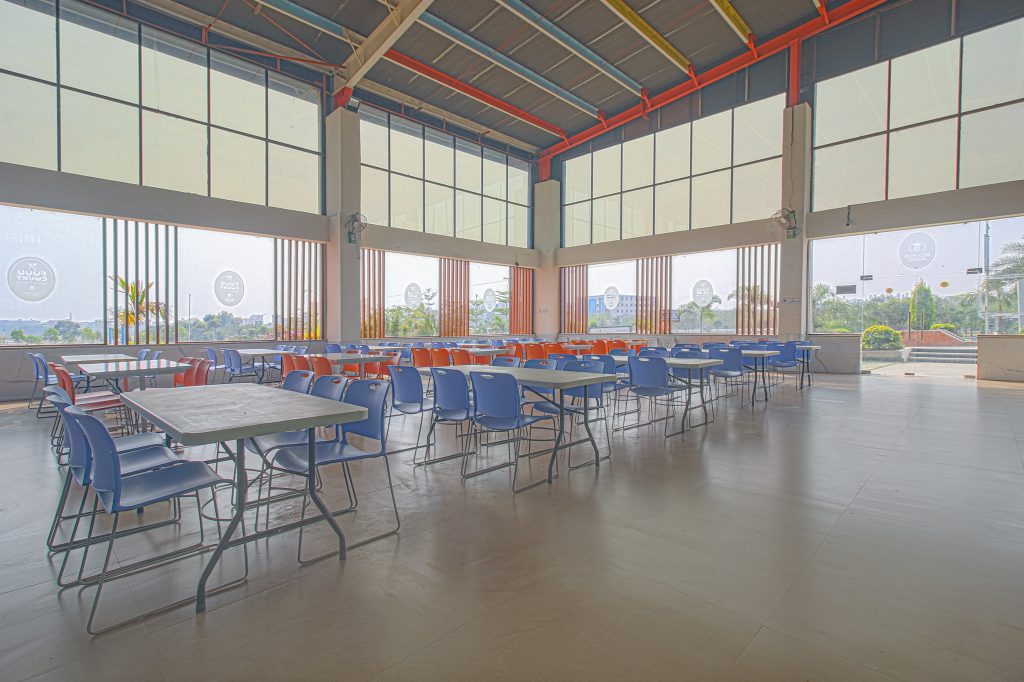
Over the past year, we have been reinventing conventional institutional food courts by pioneering tech-enabled processes in cafeterias across institutions. While there is going to be an increased focus on safety and hygiene in the coming year, we believe that it is a good opportunity for us to aggressively expand our smart food court segment. Currently, Isthara leads over 60 food courts across the country, and plans to launch 11 new food courts by the end of August and 4 large scale food courts in corporate and educational institutions. This rapid expansion has enabled Isthara to spearhead the digital food court transformation, and has enabled the company to stand as one of the few food court providers actively working to reinvent the hospitality industry.
In the next 3 years, Isthara aims to grow by 10X to 500 food courts across 30 cities, catering to a million people on a monthly basis. We are excited to bring this new concept to more cities in the near future and look forward to bring about a revolution in the institutional cafeteria ecosystem. Looking at our success factor and the scalability of our model, we are definitely looking to expand into different, large scale industries. Apart from corporate, our focus is to target hotels, universities, schools, hospitals and other institutions that have the capability to scale their cafeteria. Additionally, we hope to bring on more budding food and beverage operators, giving them a platform to be able to bring their food to a larger customer base.
We have also recently acquired Letsmobility, a leading software product engineering company. Through this acquisition, we aim to leverage Letsmobility’s private cloud-based microapps platform, Livet, to introduce advanced tech solutions and strengthen our offerings in the institutional cafeteria segment.

7. Where do you see this concept going in the next 3-5 years since the hospitality industry is ever evolving?
Post the Covid-19 pandemic, the hospitality industry has had to rethink every aspect of their businesses, including the most basic practices. What was traditionally considered a tried and tested practice is now being redefined within this industry, and it can all be attributed to the new normal that we have grown accustomed to. The food court industry has without a doubt had to adopt new practices that could ensure their customers are staying safe when visiting their hotels, restaurants and outlets. We see the concept of smart food courts being implemented on a significantly wider scale post the pandemic, and predict that this concept is soon set to become a well-established norm within the industry. The smart food court offers a tech-enabled multi-vendor setup, which will cater to the evolving hospitality needs of customers and offer a personalized dining experience. Moreover, we expect there to be a significant increase in the number of people preferring digital menus, contactless payments and strict safety practices to ensure that customers can feel safe when dining out. The hospitality industry is ever growing, and we expect the food court industry to also grow in a similar trajectory, especially with the recovery that we are currently experiencing post the Covid-19 pandemic. We look forward to expand this digitally-defined cafeteria experience as we continue to drive innovation and push boundaries in the institutional cafeteria and the ever-evolving food-tech segment