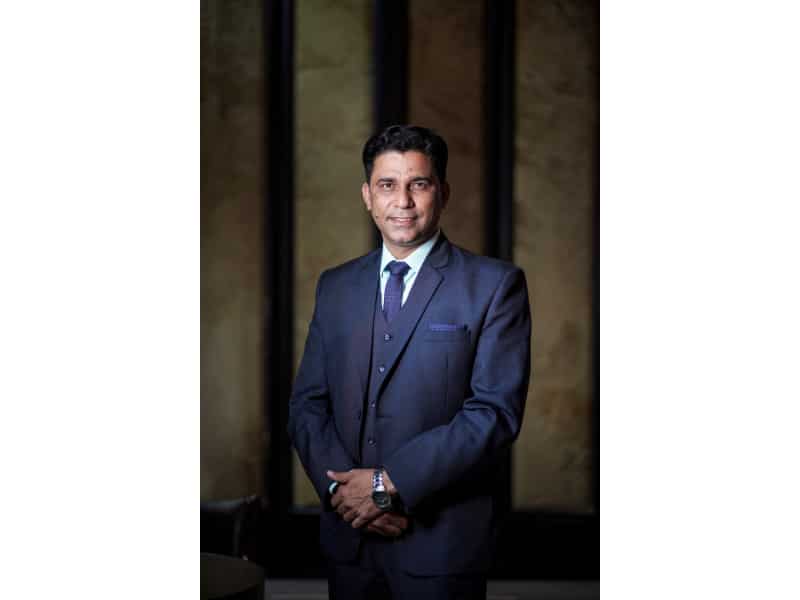
Azran Osman-Rani is the CEO of AirAsia X, a part of Air Asia, the world’s lowest unit low cost airline. AirAsia X (a venture with the Virgin group), is the group’s long-haul airline and has started flights to Mumbai in its A330 planes with a Re1 air ticket in May. Delhi follows in August.
The group’s entry into India is through three separate companies. The Sepang-based parent AirAsia Berhad plans to service Kuala Lumpur-Hyderabad, Bengaluru-Chennai in stages this year. Trichy, Kolkata, Kochi and Thiruvananthapuram are already connected. Thai AirAsia (a joint venture with Shin Corp) will start with flights from Bangkok to four points in India later this year. With six new routes being introduced between April 28 and August 4, 2010, AirAsia will offer 148 flights a week from Malaysia to India.
The carrier is looking at flying to 15 Indian destinations by the end of 2011 once it gets approvals.
Osman-Rani belongs to the most dynamic airline in the world. AirAsia has been chosen the world’s best low-cost airline for two consecutive years (2009 and 2010). In the annual global survey conducted by London-based aviation consultants Skytrax, almost 18 million travellers polled worldwide, chose AirAsia as the World’s Best Low Cost Airline.
Tony Fernandes acquired AirAsia in 2001 for 25cents and led the airline in its transformation from a loss-making Malaysian airline into the ASEAN airline that it is now. Today one expects great things from Air Asia.
In only eight years, AirAsia grew its fleet from two aircraft to 95, its staff from 250 to 7,000, and its routes from one to more than 132. It has to date flown more than 92 million guests. AirAsia claims to have 68 employees per aircraft, among the lowest ratios in the world. AirAsia X, particularly connects the region with destinations in Asia (China, Taiwan and India), Australia and Europe (through the UK). Low fares, a huge network of destinations and flight frequencies have charged the region’s aviation industry.
Connecting to the world via social media and heading one of the most thriving airlines in the world makes one think that Osman-Rani is never not working.
TGI: You are said to be spearheading a revolution of low cost carriers in India. Comment.
The revolution started well before we came into the market. Now, there are many domestic carriers and people are aware of the internet. What we aim to provide is a service for the existing gaps – for instance, flights from South East Asia to Australia or from India to the Middle East. We work with many tourism boards. In Australia all tourism boards are very keen to attract the Indian tourist. We have already launched a number of campaigns in Victoria, Malaysia and Singapore.
TGI: You have a blog, you are on
twitter and on facebook. Tell us about us your online strategy.
An online strategy is a lot more cost-efficient and works for our target customer who is a professional, young person.
It is our way to take the relationship beyond a transactional one. Instead of just “come, buy from us,” we tell the customer to “share with us” and “talk to us”.
I have a reasonably sized following on twitter [956 followers]. When I write, I find that my articles on AirAsia and AirAsia X become the most popular [There were 208 comments on his article on AirAsia X’s experiments with seats, which ended with the world’s first lie-flat bed seats in a low cost carrier].
TGI: How do you cope with high
airport costs in India?
High airport costs are an issue, but not an issue that would stop the development of low cost carriers. The size of the demand is huge. We have 777 seats to fill and we will go to airports that will provide us with catchment areas of people willing to use them in sufficient numbers. If an airport is located in a rural area and it takes two hours to get there, it is not a good idea.
We are always open to new routes and destinations if these new
airports are willing to work with us by giving us incentives to operate
the route.
High airport charge is definitely an issue airports in India need to address if they are serious about driving growth.
TGI: Could you elaborate on your plans for Tier II and III cities for the coming months?
Cities that are small by Indian standards are not small for us in South East Asia. Trichy, Kochi, Thiruvananthapuram and Kolkata are large in terms of population. Any place with more than a million people is good.
We have launched so many flights this year. We want to focus on making sure that things work and we add more cities next year.
We are looking at other secondary cities such as Coimbatore, Madurai etc, but that will be in our next phase of expansion.
We are not looking at developing small destinations in Malaysia. There isn’t that much traffic.
TGI: South India is more heavily represented in terms of airlines and routes despite the fact that Punjab is seeing many new airport projects. What is Air Asia’s strategy?
Our A320 aircraft range which is able to fly 4.5 hours enable us to fly to most cities in the South of India. South India is also more heavily represented due to the fact that we are able to capture different types of traffic on the South Indian market: VFR traffic, as we have very strong ethnic connections to South India; education traffic due to the medical colleges; business traffic due to textile industry; as well as tourist traffic. In fact, 67% of total Indian traffic captured by Malaysia originated from South India in 2009.
In North India, our target markets are Delhi and Mumbai. We use wide-body aircraft to operate to these two routes from Kuala Lumpur with more seats and on selective routes. Our targets are markets with high population, high middle income group with high disposable income.
North India is a market of new
travellers. In our second stage of development we are looking at Ahmedabad and Amritsar as possibilities. We are interested in Amritsar due to the demand for this route owing to ethnic connections. However, it will, most probably, be operated from Bangkok as we are able to operate with our A320 aircraft.