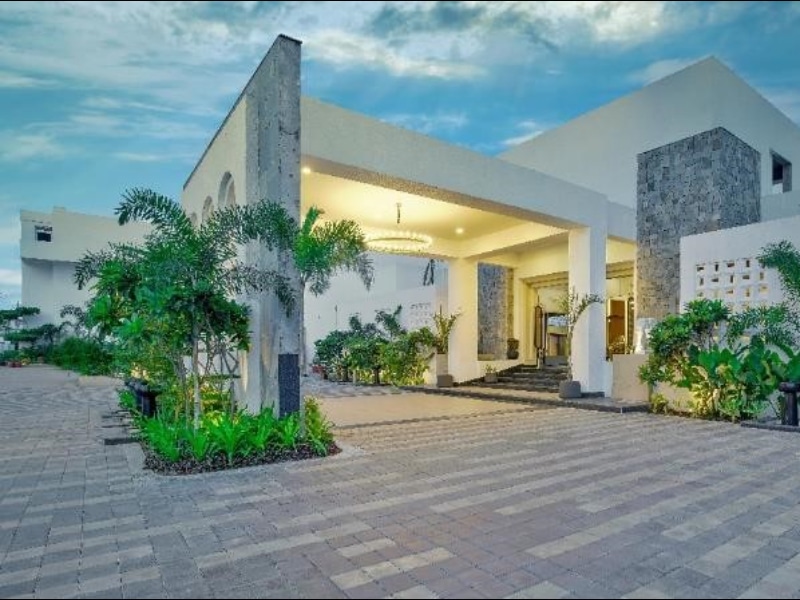
From mood lighting to creating a particularly warm ambience as well as being environmentally friendly, Hotelier India explores the trends in lighting in hotels.
Walk into any hotel lobby and the first thing you tend to observe is that it is brightly lit (even in the day). Look more carefully and you can easily observe the numerous forms of lights all around – whether from the chandeliers on the ceiling to wall fixtures and lamp shades.
Undoubtedly, the place would lose most of its charm if the lights were switched off. Clearly, lighting plays an important part, in not just being a practical necessity in a hotel, but also to create an ambience that is hard to match.
The Hotel Connect
Luellyn D’Souza, GM, Vits Hotel Mumbai, opines, “It is usually in places like hotels and restaurants that people give a lot of importance to lighting. This is because a lot of creativity can be done with the light effects in such huge places.
It would be different in a riverside restaurant after sunset and you would see how exactly commercial interior lighting can win you over. The lights play a very important role in restaurants.
It is all about creating the right kind of a mood and ambience. When it comes to lighting, bright lights are often used a lot and it is completely opposite to the kind of light effects we would create in our homes. Commercial lighting is all about creating a focus and trying to catch the attention of the people. Commercial lighting is very important because it is a mood setter.”
Havells Endura Lite and HID Lamps and Anchor’s Viola series of switches are the latest products in lighting. Around 70% of the installed lighting in hotels is energy-inefficient.
Philips offers energy efficient and sustainable lighting solutions to hospitality players and helps them in reducing their carbon footprint by switching to energy efficient LED lighting.
Philips offers retrofit lamp solutions such as Novallure LED candle and MASTER LEDspot LV MR11, to enable hotels to easily convert to energy-efficient lighting. Philips also offers lighting control systems that can instantly alter intensities, lamp combinations and colours. One can change the mood of a general purpose room from ‘party’ to ‘conference’ at the flick of a switch.
Technology
Technology has made many inroads into the lighting space especially evidenced by the use of control panels for energy saving. Lighting is rapidly transforming from analog to digital and the industry is shaping up to be the most innovative in the mechanical and engineering space.
“LED is the latest technology available in the lighting market. LEDs are fast becoming the revolutionary technology and are one of the most energy efficient and green lighting solutions available today. Hence these are witnessing rapid popularity across the world.
LEDs are digital, highly versatile and provide many new avenues and options in terms of creativity and design across applications. Unlike traditional light sources, LEDs provide the option of intrinsic coloured lighting and directional lighting.
These provide greater control in any lighting application. Lighting controls are also a big phenomenon and are finding much greater use in the hospitality sector today,” says Jitendra Agrawal, director Professional Lighting Sales, Philips Lighting India.
After creating a lasting first impression, lighting in a hotel should then ensure that the guest feels at home. Hence, it is imperative for lighting to be intelligent and to create a relaxing environment that also compliments the guest’s mood.
Lighting can be easily adapted to suit different moods and occasions. Lighting control systems can alter intensities, lamp combinations and colours instantly. And with miniature and highly-efficient LED light sources you can create the right ambience in both white and coloured light.
New lighting technologies help in creating dynamic effects with colours and movement, while minimising the amount of light spilled onto other nearby buildings. Ketan Sheth-Goldmine Projects Consultant, says, “Energy-saving lamps will be the main trend products.
Dome light, table lamps, wall lamps, floor lamps and other kinds of light, are matched to the room in the style of lighting, colour and materials to maintain unity. “LEDs are of three types, OLED (Organic Light emitting diode), PLED (Polymer Light emitting diode) and the conventional Semiconductor LED.
Technologies on OLED & PLED as of now, are not commercially available. In guest rooms today the accent is also on comfort – allowing guests to switch off all lights easily.
Another big trend is having a multifunctional control unit, which operates lights, blinds and the AC, allowing guests to individually adjust the lighting and therefore the entire room effect.
Likewise, another advantage inside conference rooms are lighting control systems that call up pre-set lighting scenes such as presentations and conferences with controls of blinds, sound and video at the press of a button.
Philips Dynalite control solutions ensure lights are only used when needed, at a level that minimises energy consumption, without jeopardising your guests’ comfort.
All Dynalite dimmers incorporate voltage regulation and soft-start technologies, protecting lamps and dramatically increasing lamp life, and ensuring lower operational costs.
Trends
The challenge in a hotel is that different kinds of lights are needed in different areas. Hotel entrances today have adopted an LED walkway lighting system.
Common areas like the entrance lobby, lift lobby and living room should be lit in such a way that it provides a warm feeling to the visitor and creates a welcoming ambience.
“For ceiling chandeliers in the guest room, hanging light, mirror optic light, compact fluorescent light (CFL), T5 slim tube light create the right impact. On the wall, use picture lights to highlight frames or artifacts.
LED lights and slim tube lights in niches and alcoves provide a diffused look. The lighting should be soft and subtle so that it suits the mood of the occupant hence I recommend cold light like LED light for it. We use a ‘Dimming System,’ which can control the intensity of lighting illumination as per the required mood,” says Sheth.
“The hotel entrance should be highlighted to give a warm look to the area and the reception should be highlighted more than the space around it. Guest rooms need indirect lighting for a cosy effect. Conference rooms need all kind of lights – white light for discussion and dim light for presentations.
In the outdoors and swimming pool areas, white light works best whereas in the spa and wellness areas, yellow light brightens up the space for different activities,” says Akash Kakkar, CEO, Eurolite.
Clipsal Automation is the latest in technology as is Blu LED Technology – another venture of Spradecom Electro Controls (SEC), a creation of futuristic thinking, intensive research and development.
Bhavya Upadhyay, lighting designer, Jaquar Concept Lighting says, “Trends in bar lighting is mostly soft mood lighting, so one may come across no strong intensity of light, whether it is created by a crystal chandelier or tables/floor/wall lighting.
Conference/ meeting spaces will comprise of task lighting with the white/ warm white gradients of light output, mostly using the ceiling mounted fixtures such that minimum shadows are created. Wellness areas will use lighting to create calmness.”
Going Green
With environment consciousness at the forefront of any aspect of a hotel, energy efficiency has become a primary focus area. Products in the lighting space are being launched with green features due to increasing customer preference.
LED light itself is a green option, which saves power and solar power lighting systems are also popular. Sensor lighting in lounges and passages that turn on lights to the required level only if they sense a person’s presence, are other green options.
Likewise in utility/washroom areas PIR sensor- based relays save energy when the area is unoccupied. Automated control technologies combined with LED-based solid-state lighting (SSL) and efficient fluorescent lamps are the new trends and products that can reduce electricity usage by 60%, whereas lighting accounts for 20% of total electricity usage in commercial buildings.
Amrendra Gupta, manager Technology, Hotel Sahara Star, says “Currently we are initiating an energy saving project in which around 2000 existing halogen lamps of 20W and 50W will be replaced with 7W LED lamps after paying the operating lease rental, which is less than our annual electricity consumption charge by these lamps with absolutely no initial investment.
Besides this economical impact, it gives us an environmental impact like carbon footprint reduction, reduction in hazardous materials such as mercury or lead to the environment and reducing CO2 emissions.” Hotels are clearly seeing light, and one hopes that others do too!
By Bindu Gopal Rao