
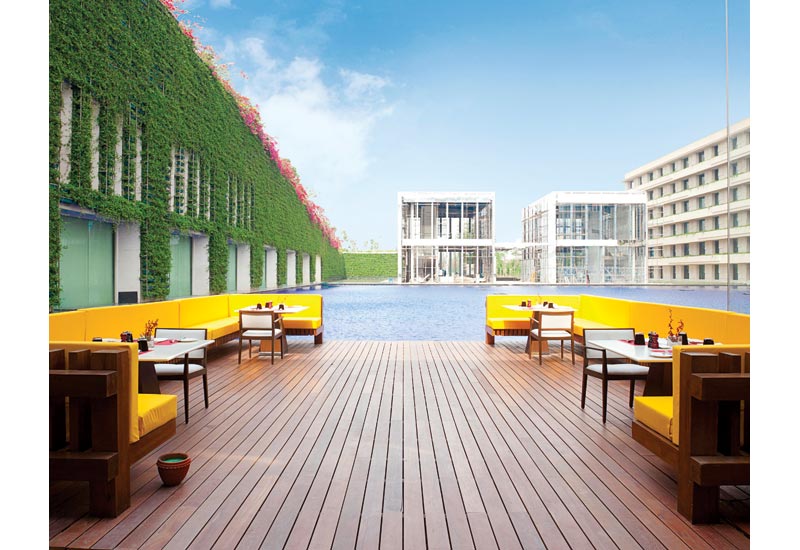
While the world celebrates the environment this month, we have put together a guide to help you to achieve sustainable operations. We’ve differentiated between the steps that can be taken by existing properties and new properties and have worked with the most basic operations one can make a difference with, including design, architecture, energy, lighting, water consumption and waste management. We have also highlighted the importance of the role of green teams and the many government subsidies that are available to those protecting the environment. Hotelier India reports.
Even before hotel procurement managers and engineers could decide whether sustainable products are high-capital and low-maintenance, the clinching argument in favour of going eco-friendly seems to be here. Reports say that today’s tourist will choose accommodation that not only suits his budget and aesthetic sense, but that also keeps his conscience clear. In the latest Kuoni Corporate Responsibility report, sustainability ranked among the top 10 considerations, alongside pricing, location and accessibility for a traveller when selecting a hotel. Over 20% of travellers listed it as a top consideration.
Hoteliers say that it is common practice for corporate travel managers to request for information on the sustainability quotient on Request For Proposal forms (RFPs). Global distributor Lanyon announced that members of the Green Hotels Global programme, will be identified to its corporate clients as leaders in environmental responsibility and disclosure. Room-night and event-related environmental metrics from each property will be available to travel buyers for online sourcing and management of hotel suppliers.
Hotels, which already offer guests the option to be green, say guests clearly show a preference. The Orchid, for instance, is equipped with a green button in each room, which allows the guest to choose an eco-friendly stay vis-à-vis his electricity consumption. “The green button has been immensely successful. On an average 75% of guests press the green button,” says Vikram Kamat, executive director, Kamat Hotels India.
Similarly, ITC Hotels has found that the guest is concerned with these initiatives. “CSR and eco-sensitivity are important to the guest today. ITC is carbon-positive, water-positive and solid-recycling positive. The guest doesn’t leave a carbon footprint and this is an important aspect of responsible luxury,” says Dipak Haksar, COO, ITC Luxury Collection and WelcomHotels.
Markus Oberlin, managing director of Farnek, which provides Green Globe and LEED auditing in the Middle East, says, “Hotels are obviously very interested in the savings part of sustainability. After all, an initiative must make money for them to justify it.”
The questions that need to be addressed are how does one differentiate between truly green products and greenwash? Can’t we be sustainable in our back-end processes without affecting the guest experience? Must it be an all-at-once process, which requires investment approvals from the owners? Or can we inch closer to our goals over a period of time?
How do existing hotels become sustainable?
For lighting, it’s a myth that LED lights cannot be fitted into halogen circuits. When your halogen light is exhausted, you can replace it with an LED light,” says Deepa Sathiaram, executive director, En3 Sustainability Solutions.
For cooling, other than replacing old air-conditioners with the new age energy efficient ones, one can add over deck insulation to roofs or make use of reflective tiles and window panes.
To reduce water consumption, aerators can be retrofitted into existing water fixtures unless they are over 10 years old.
How can a new hotel ensure it is going to be green?
Most consultants and architects insist that sustainability begins at the drawing board (do they use recyclable paper?). “Green must be integrated into your design from the very start,” says Sathiaram.
Across consumption areas the first step is to record usage. “We have installed meters and sub-meters. A dedicated team keeps a check on meter-readings,” says Param Kannampilly, chairman and MD, Concept Hospitality, which manages “environmentally sensitive hotels/ecotels”.