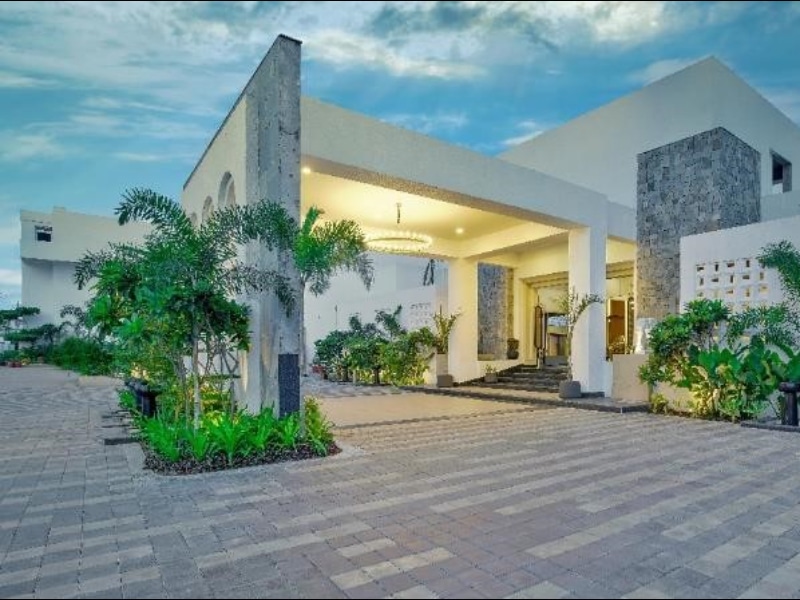
The hospitality industry is making great strides in innovation with state-of-the-art building materials, design, systems, services and more
By Shristi Nangalia
A hotel building is constantly active; it is a space where guests seek comfort, luxury and convenience. It is also required to serve as an efficient workspace for its staff and employees enabling them to ensure smooth flow of services. Designers, developers and manufacturers have to therefore constantly try and come up with innovative ways to improve this infrastructure and create an arrangement that is environmentally-responsible and technologically at par.
The hotel industry is witnessing an increasing number of buildings that are built to achieve the ‘net-zero energy building’ status. Although this requires a higher initial investment, the stakeholders see better value in them as it has direct impact on reducing recurring cost at later stages, making for a healthy bottom line. The sustainability factor also works as a strong marketing tool. M Balaji, CEO, Clarks Exotica Convention Resort & Spa, Bengaluru, believes that innovation is important to sustain in the industry – saving water, electricity and energy without compromising on guest experiences in a mandate today. Illustrating his statement, he cites an example of innovative solution deployed at his property, where German-made wall acoustics and thermal insulators were installed for reducing cooling loads, and were further teamed up with Fundermax panels for the elevation and domal structure on windows, to shape a quality and economical setting.
Site demographics, foot traffic, accessibility, building infrastructure, budget and other utilities must be considered while choosing building materials and services. Sachin Surkar, assistant manager engineering, Double Tree by Hilton Pune, Chinchwad, shares, “Every space, product and service is an opportunity to offer a personal hotel experience. Simple and innovative solutions like natural light, solar panels, organic cleaning supplies, five-minute hourglass timers in showers, and repurposed furniture address and support the purpose of sustainability. Furthermore, indoor waterfalls, multilevel terraces, rustic wooden furnishings, walled gardens and vegetation enable guests to connect with nature and enjoy beautiful surroundings at all times, creating unique and authentic experiences.”
Innovation in each sector has provided a smarter and better managed system coupled with state-of-art solutions. While more hotels today are installing automatic lights and solar panels in an effort to be eco-friendly, others are relying on recycled building materials and organic cleaning supplies. In most of these cases, opulence is backed with efficient services to keep guests comfortable. Prashanth Rao Aroor, CEO of IntelliStay Hotels elaborates, “Our Saptha Patha approach to sustainability envisages using local materials for masonry combined with light natural material like bamboo. The underground air tunnels in our hotels carry fresh air from intakes placed in the lush greenery and carry them to the rooms, supplying not just clean, but also cooler air, reducing temperature and air conditioning loads. Our roofing and facade fins capture solar energy and make these resorts energy positive. Water is harvested both on the surface and fed to natural aquifers below ground.”
One can make a huge difference to the impact a property has on its site and its cost of operation through sensible selection of systems and a good design. Hoteliers have a significant opportunity to reduce negative environmental impacts associated with guest rooms, common spaces and facility spaces by factoring in measures such as energy efficiency, water efficiency and waste reduction so that the final output is more reasonable. Given this, we look into some of the most major aspects of design and innovation in hotels.