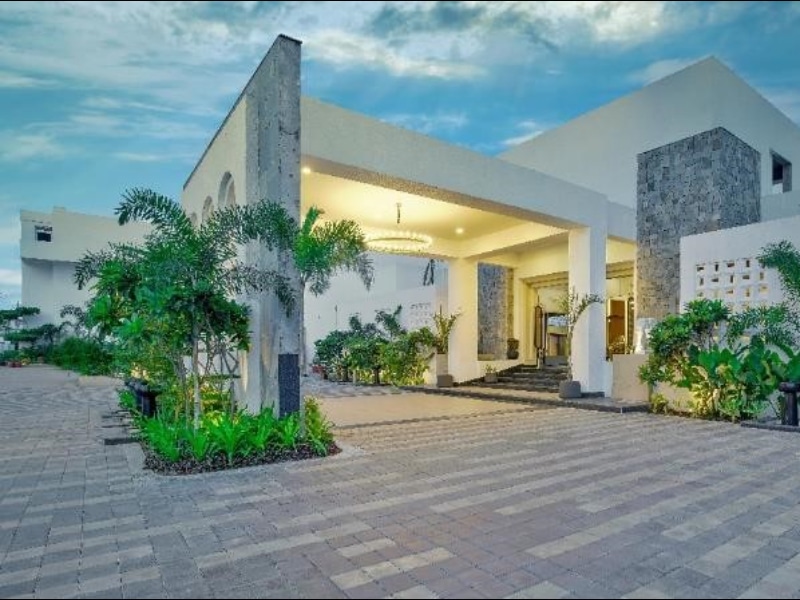
Some of the best practices and technologies available in the Building, Electricals, Air-Conditioning, Maintenance and Safety (BEAMS) sphere that orchestrate the dynamics of excellence.
BY BABITA KRISHNAN
The pursuit of excellence is what leads the industry to innovation in the various areas that come together to become a successful hotel property. As a warm-up to the B.E.A.M.S. 2015 conference to be held on September 5 in Mumbai, we talk about all the elements that ensure that not only is a hotel built well but also has all the processes in place that will result in an excellent performing property. We look at some of the best practices and technologies that are available in the Building, Electricals, Air-Conditioning, Maintenance and Safety (BEAMS) sphere that are being followed by most brands across the country.
When building a hotel, one needs to properly plan for BEAMS, as it is impossible to change things later. Consistent service delivery depends on its proper execution. “You often find hotels not performing well due to bad planning or execution of BEAMS. This is why at ZiP Rooms, we are focussed on ensuring that we help our hotel owners in properly planning their BEAMS,” says Keshav Baljee, CEO, ZiP Rooms.
“The key is to establish an early shared vision for the property together with the owners and the operators based on its context,” adds architect Khozema Chitalwala, principal, Designers Group that has many successful properties in its portfolio.
“It is equally important for the property to have a robust and appropriate BEAMS infrastructure to ensure that this vision does not get compromised during operations,” explains Abhishek Mathur, director Studio HBA, which has been associated with many brands globally.
CONSTRUCTION
Understanding the design brief and interpreting it correctly so as to incorporate the same in the operational parameter and combine with aesthetics as required for marketing and customer comfort, are the key to creating a property that performs excellently feels Chitalwala. However, there are processes that hoteliers share with the architects. “We require consultants who are competent in their field and capable of integrating mechanical services and addressing the need for maintenance and safety as desired by individual hotel companies. Currently we find lack of expertise in this area,” rues architect Shekhar Patki, principal at PG Patki Architects.
Mathur, however, ensures that they incorporate consultants’ suggestions right from the kick-off meeting stage pertaining to allocation of BOH space to ceiling heights, etc. “We also try to minimise the energy footprint by judicious use of planning principles and employing appropriate material palette. We adhere to the operational requirements given to us and most of our designs are compatible with the prevalent green building certifications,” he adds.
Both Chitalwala and Mathur believe that the use of local materials and cultural references contribute a long way in making the designs more sustainable and context driven. This approach percolates to the issues of BEAMS where the use of technology can go hand in hand with the innate wisdom of the local craftsmen. Their projects are often examples of local material palette to provide an authentic flavour while reducing the energy footprint of a building.
“Our hotel is expected to be LEED certified and we have considered energy efficiency and environment protection from the day the hotel was planned. We have also ensured the sustainability of natural resources at the time of construction by buying products which were made from recyclable material,” says Maqsood Jalikati, director, engineering, Shangri-La Bengaluru.
Duet Hotels have introduced process innovation by way of deployment of a 3D, real time and dynamic technology platform for seamless integration of all the stakeholders in the project – eliminating any kind of re-work at site.
MAINTENANCE
Focus on BEAMS is an integral part for smooth functioning of a property. One needs to make sure that coordination workshops between the services consultants and designers happen at early stages to avoid any abortive work later. Individual services are required to be disciplined, correctly coordinated and handled to achieve the desired result – both operationally and aesthetically.
Safety is increasingly given prime importance; and properties now have very advanced fire detection and fire fighting systems which cover the entire facility. Most hotels, also conduct strenuous training for fire and life safety. Hotels like Shangri-La Bengaluru have installed technologically advanced systems that ensure that all BOH services run smoothly and with least load on the cost and environment.
State-of-the-art fire, life and safety systems by way of deployment of “Fire Survival Cables” with a rating of three hours for fire alarm and PA system in addition to the standard regulations ensure that the safety of both guests and staff at the properties, explains Babul Ganguly, COO, Duet India Project Development Services.
Many times, it is the small things that irk a guest and, hence, affect loyalty. Baljee cites an example, “Getting hot water to a guest is very complex as it requires many processes, and each process must be appropriate for the size and type of hotel. We help our hotel owners select the right technology involved to ensure proper hot water is provided to each guest to ensure maximum satisfaction.”
Using new technology in hotels enables better services and stronger operations. It works as a catalyst in improving customer experience, operations and several other aspects, which are essential to the hospitality sector. Whether it is engineering equipment or security measures or, for that matter, IT software, advanced technology has a real impact in improving the way the guests are served.
TECHNOLOGY
As customers are becoming more technology driven, it is eminent for hotels to address this change in behaviour. Hotels are also constantly thinking about new technologies and experimenting with them to develop a competitive edge and to offer best-in-class solutions to customers in an attempt to win them.
“Be it pioneering the concept of multi-device and tiered bandwidth solutions to cater to unique Internet requirements of our guests, limited free WIFI in rooms and unlimited in Business Centers, our online strategy to attract direct bookings through the website (with free WIFI) or our engagement with customers on the social media to drive key messaging and reputation management, all are attempts to enhance the guest experience in our environs,” says Rattan Keswani, deputy managing director, The Lemon Tree Hotel Company and chairman, Carnation Hotels.
Today, hotels are working towards providing tech-savvy guests with state-of-the-art digital technology in rooms and throughout premises. “We provide complimentary internet access, one of Shangri La’s signature offerings worldwide, throughout the hotel,” reveals Jalikati. Although there has been a steep rise in the introduction of new technologies in the building sector, an important development has been the increasing use of Building Management Systems for complex buildings which is extremely desirable.
Possibly the most important feature in a hotel is the WIFI service. Delivering proper WIFI takes a lot of back-end effort: firewalls, load balancers, redundancies in internet connections, and ensuring proper authentication systems. It has become mandatory for properties to work on all of these to ensure maximum customer delight in WIFI – the most important service in hospitality today.
“I think one of the major concerns regarding BEAMS is for brownfield projects. It is always a more challenging task to retrofit an existing structure and bring it up to speed with the latest in the industry. This is a big market but we do not seem to have as many good examples of this compared to new-build projects. Most times, these alterations and additions are not integrated seamlessly with the overall design,” feels Mathur.
“While we do not have a formal BEAMS software in place, our cost focus is reflected in our design, CAPEX and OPEX ratios. We widely research and emphasise on facts and figures recoding all the system parameters, based on the system performance, which helps in determining the process improvement or system need upgradation,” Keswani reveals.
The practices that have evolved over years of understanding the system of architectural and building coordination is the base and it remains so to the point of absorbing and integrating the dynamically changing design and specification as demanded by new-age properties. The basic fundamentals of project coordination remains the nucleus around which the practices evolve to achieve the best design.
The Hotelier India B.E.A.M.S. 2015 conference is aimed at highlighting these very aspects of the industry that are essential for a property to function at its most efficient and highly productive performance.