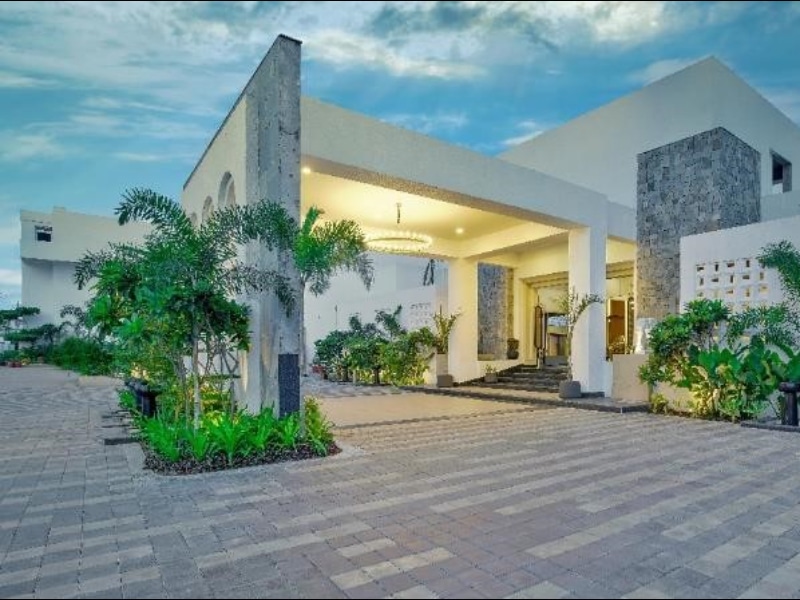
Green means go, in all walks of life. And while many hotels are increasingly publicising their green construcion methods and daily practices, there is a whole extra dimension to the eco world that many neglect – green interiors.
With eco-tourism one of the current rising trends in hospitality, hoteliers can no longer afford to ignore this green value add. So what are the key areas in which you can turn your interiors green?
Flooring is one area where designers can add some serious green credentials by utilising manufactured hardwood, and artificial or reclaimed stones. Ajit Singh, vice president, marketing, Sogo Ceramics, says about vitrified tiles: “These have practically replaced natural stones and marbles, thereby ensuring that there’s a reduction in environmental depletion.”
Cork, and recycled vinyl flooring, are making their mark felt as hard floors, while recycled rubber flooring is prevalent for fitness centers due to its non-slip properties. Floors made of recycled glass tiles are rising in popularity as they not only make the space environment friendly but also look stylish.
Other products include gypsum boards that contain phosphor gypsum – a by-product of the fertiliser industry – and plastic waste which is recycled to be useful for flooring, waste containers, fences, and outdoor benches. Kumar Menon, product manager, Saint Gobain explains: “Gypsum floor tiles and partition are 100% recyclable, lightweight and have low thermal and sound insulation too.”
As architect Niteen Parulekar says: “Earlier, there was a general perception that materials with recycled content were inferior in quality. However with increased awareness, and their undeniable advantages, the trend is rapidly changing.”
Hotels are seeking eco-friendly options for interior woodwork too. Recycled wood made by compressing wood chips, shavings, and agricultural wastes, are being utilised in a wide range of applications, as worthy substitutes for wood-based products.
The Ecotel Rain Tree, Chennai, has skillfully used sustainable, medium density fibre wood (MDF), for indoor purposes. Reclaimed wood is another eco-friendly option of sourcing original wood from old furniture or houses.
Interiors made out of reclaimed or salvaged wood is all the rage with designers for its seasoned look.
Orchid Hotel, Mumbai, has a specialty restaurant Vindhyas, where the entire interiors woodwork has been made from wood recycled from old buildings, according to Akshay Gavai, environment officer for the hotel.
Likewise, sustainable woods such as bamboo, mango, rubber wood, and cork, are finding innovative applications in interior furnishings, as well as outdoor landscaping.
Natural fabrics like silk, cotton, and wool, are not only rich in appearance, but, when dyed with natural dyes instead of being treated with chemicals, minimise indoor pollution.
Floor coverings too are backed with natural fibre backing material for additional hygiene.
Ravi Mehra, marketing manager, Shyam Ahuja, confirms the growing demand for customised natural material furnishings in hospitality.
Even the wall paper being used in hotel interiors comes vinyl-free, and paper-based with an eco-friendly adhesive to complement the green interiors.
In fact, eco-friendly carpets made from sustainable resources such as jute, bamboo, cotton, wool, or recycled fibres and other materials are durable, stylish, and fast replacing carpets that are manufactured with petroleum-based synthetic fibres and toxic glues.
States Puri: “To obtain eco-friendly carpets, we recycle them by aligning ourselves with companies that recycle and reengineer fibres to create a new carpet.”
Green furniture made from recycled wood, wicker, cane, rubber wood, cork, wheat board, and so on, are popular alternatives to conventional furniture.
Says interior designer Bhavna Lal: “Contemporary sustainable furniture is a good alternative to wooden furniture, without compromising on style.” Combined with eco-friendly foam (soy foam), natural fabrics, cushions, and non toxic finishes, green furniture gives an organic look both to the indoors as well as outdoors.
Moreover, hotels are increasingly buying locally manufactured products to reduce the carbon foot print required in transportation of the furniture.
Hotels are taking indoor air quality and environmental hazards seriously too. Hence, they are seeking products that not only provide luxury, but are better for the environment and create an organic experience for the guests.
Many hotels now employ non-toxic furniture finishes, wall paints, adhesives, and sealants, with low or zero volatile organic compound (VOC) levels, to provide ecologically fresh rooms.
Says Ketaki Narain, director, corporate communications, The Oberoi Group: “At The Oberoi Amarvilas, power is generated with the use of propane, the cleanest fuel available worldwide, to ensure no harm comes to the Taj Mahal, which is in proximity to the hotel.”
Other green technology for hotels includes interactive TV in the rooms that can be used to send/receive messages and clear bills, thereby saving paper; CFC free mini bars in the guestrooms which sense the load inside the refrigerator and cool it accordingly; and a unique feature known as the green button on the control panel in the guestrooms that, when pressed by a guest, steps up the thermostat of the air-conditioning unit by two degrees, thereby saving electricity.
In fact the most recent hotels of the Oberoi Group are equipped with a computerised Building Management System to minimise idle running of equipments.
Other than using eco-friendly materials in construction, the quintessential of any green hotel is conservation and recycling. Energy conservation can be achieved through thermally sealed windows for lower air-conditioning or heating costs, and use of solar panels and heat reflecting paints.
RY Chaudhari, director, Novota Industries, says that heat reflective paint can reduce the internal temperature by up to 30%. Additionally, low energy lighting, energy efficient appliances, automated room lights, and key card activated air conditioning as well as motion sensor lights, too contribute to energy savings.
As Vipin Tanwar, business development manager, Adrett Homes, puts it: “Lighting automation inherently reduces energy consumption.” Low-flush toilets, low-flow faucets, motion sensor fixtures, and highly efficient vacuum drainage systems, which use 80% less water, are some of the steps to realise water conservation.
Tarun Kumar, manager (sales), Jacquar-Grohe, says: “Water saving bathroom fixtures is one of the new trends in the market.”
Investment in rainwater harvesting, drip irrigation, recycling of water, and sewage treatment plants, is also synonymous with green hotels. Ashima Sukhani, public relations executive, ITC Maurya, says that the ‘WelcomEnviron’ programme of ITC-Welcomgroup Hotels has their hotels rigorously practice recycling and conservation to create an ecologically balanced environment for the guests.
What’s important to note is that, making environmentally savvy choices not only makes a difference to the planet, but contributes to a guest’s health as well. With the expectations of hospitality customers continuing to rise, and the growing demand for eco- friendly travel accommodation, businesses are taking heed now more than ever.
AddsNew Delhi architect, RM Srivastava: “Adopting some of the simplest of green initiatives can go a long way in making hotels ecologically sustainable in the long run”.
Indeed, many hotel chains are starting to change their environmentally wasteful ways by not only designing ‘greener’ buildings, and going in for ecologically friendly building materials, but also utilising energy saving measures in their operations.
The Glass is greener
The ecological consciousness picking up across the globe is also reflected in the ever-increasing number of green construction products available.
One such versatile product is glass, which, being relatively inexpensive, recyclable, and non-toxic in nature, is considered indispensable for green buildings.
Also, as Anish Sharma, regional manager, Asahi India, says: “The use of high performance glass has increased in commercial buildings, as they can reduce the ingress of heat by 40% and, at the same time, allow higher penetration of daylight reducing dependence on artificial lighting.”
The Vits Ecotel, Mumbai, is designed with guest rooms facing the internal atrium of a double layered skylight dome, that provides natural sunlight resulting in considerable energy savings; “This is an aspect we kept in mind during the construction stage,” says Shahrukh Daimsai, marketing manager of the hotel.
Besides glass, other building materials used in green construction are recycled building materials fabricated with 20-40% recycled contents. Materials such as Portland Pozzalana cement, fly ash bricks, hollow blocks, and autoclaved aerated concrete for walls, are energy efficient and have a better sound absorption coefficient too.