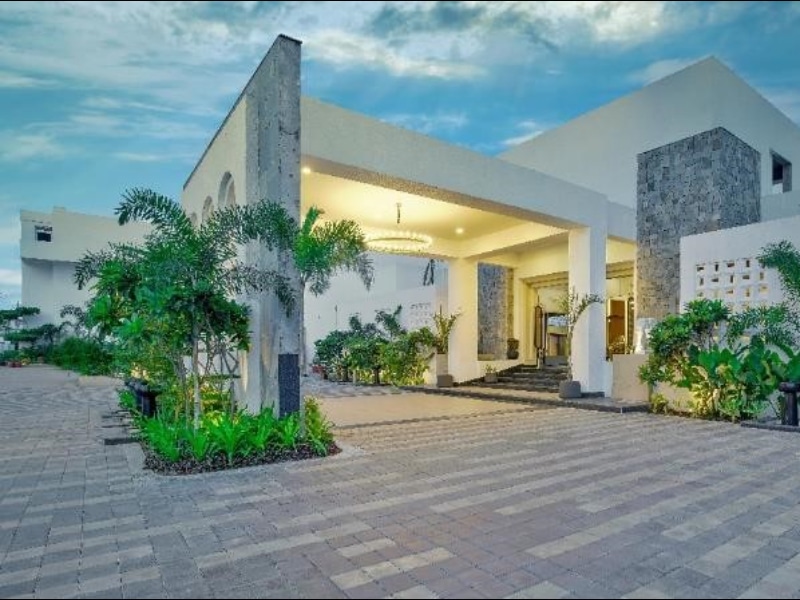
Hotelier India investigates how drywall presents several benefits to hoteliers at a small premium over the traditional plaster method of constructing walls and ceilings.
Drywall refers to construting of walls or ceilings from a prefabricated material, like plasterboards or panels. A drywall system has four key components – a metal framing system, a plasterboard usually made of gypsum, jointing and finishing and the special framing needed for taking the load of planned and unplanned loadings.
A variety of solutions for hoteliers
One of the key factors that suppliers consider while identifying products for the hotel industry is fire ratings. “Partitions can be designed to achieve up to four hour fire rating,” says Olivier Chaudet, CEO, Lafarge Boral Gypsum India. However, requirements are most often below this limit.
“Usually hotels require one or two hours fire rating,” explains Venkat Subramanian, managing director, Saint Gobain Gyproc. Suppliers are also keen to make hoteliers aware that the panels offer acoustic insulation.
“Usually, hotels have insulation requirements of Rwdb (weighted reduction index, or the human ear’s response to loudness, expressed in decibels) rating of 50 – 60 for these walls,” says Subramanian.
Chaudet explains that products with NRC (Noise Reduction Coefficient) properties are used for big spaces such as conference rooms where sound quality is important.
Distinct solutions for moisture intensive areas such as bathrooms are also available. The most common drywall system hotels opt for is a one hour fire rating solution with a 56 decibel acoustic system.
Short cut to completing construction
“Gypsum plasterboards are nearly four times faster to install compared to the traditional plaster method due to the complete elimination of wet construction practices the most important criteria for a hotel,” says Chaudet.
The installation of plasterboards, suppliers agree, is slightly more expensive than the brick and plaster method. They, however, argue that it proves to be far more cost effective in the long term.
“Imaging the revenue generated by opening a hotel six months earlier – drywall offers hotels this chance to earn revenue by way of time saved,” comments Subramanian.
In the long term too, drywall solutions deliver more value. “Drywall panels offer flexibility in dividing spaces,” Subramanian says. Further, the process offers convenience in terms of renovation. “Being a dust free construction process, hotels can be renovated without having to close the hotel down,” he points out.
Chaudet adds that drywall panels in fact need to be renovated less often. This is because, as a material Gypsum is stable and hence is free from expansion and contraction versus materials such as cement and plywood.
“This makes the surface free from cracks and other problems that arise with time. Additionally, as drywall and dry ceiling systems can be provided with expansion joints, it becomes additionally durable with the capability to absorb normal deflections that take place in the buildings,” Chaudet elaborates.
Benefits go beyond budgets and time saved
Suppliers underline that drywall solutions also address a key issue from a hotel owner or developer point of view. “Gypsum drywall systems are close to nine times lighter resulting in reduced construction load,” says Chaudet.
According to Subramanian, the fact that drywall solutions are so much lighter than masonry constructions becomes especially significant as structures get taller. This in turn leads to further budgetary benefits.
“Adding the savings emerging from decreased structure load to the savings incurred in terms of time, we have been able to demonstrate a total of 15% savings,” Chaudet adds.
As hotels become more eco-sensitive, drywalls present a green, recyclable product. According to Chaudet, drywall solutions can contribute up to 14 points to green buildings – points pertaining to improved indoor air quality.
“It also eliminates the need for sand and water, which are precious natural resources,” he says.
Subramanian cites another small yet important benefit in terms of design. “Drywall panels allow the hotel’s interior designer to choose different finishes – from laminates or paint to wall paper,” he says.
Hoteliers warm to the idea
Chaudet says that Indian consumers as well as hotels are showing openness to the concept. “The application areas have also increased – going from simple ceiling work to complete drywalls separating room, bathrooms and corridors in hotels for example,” he explains.
While acknowledging that the process of drywall is in its nascent stages in India, Subramanian too feels like suppliers are making good progress. “Courtyard by Marriott, Hyderabad; The Leela, Delhi; Crown Plaza, Kochi and the Shangri La, Mumbai have all used drywall solutions and this has resulted in many more hotel chains are looking at switching over to drywall,” he says.
Architect perspective
“The main benefit in drywall construction is that it eliminates wet work and is therefore quick, easy and clean. A key benefit is that compared to other methods of construction using bricks (or even the new age lightweight hollow blocks), cement and mortar drywall methods result in construction that is close to half as heavy.
From an architect’s point of view, the straight and linear finish of drywall panels eliminate the need for finishing to be conducted on site.
A very interesting facet of drywall is that they also provide solutions for bathrooms. Additional benefits for the hotel owner would be that cracks do not occur in drywall as they would in the wet method of construction.
Especially in cases where you need to construct on top of an existing structure, this is far safer than using the cement mortar and bricks as the entire construction becomes lighter since the weight of water is minused from the equation,” Kartik Punjabi, chief executive, Vijay Punjabi Consultants.