
With the stupendous increase in the number of hotels mushrooming in India, Laundry Management is one of the key elements garnering attention for the role it plays in the smooth functioning of a hotel. Hotelier India speaks to Laundry Managers from a select few hotels.
What eco-friendly measures have you introduced for your area of work? Are they feasible and have they been implemented?
SHANKAR D: Some of the eco friendly steps suggested were with regard to the fuel used for running the boiler as well as the treatment of water that has been used for washing. We decided that we will use coconut shells for the boiler fuel and we are in the process of installing an automatic water treatment plant so that we gain back 90% of the water consumed, which we can then use for gardening and other purposes.
JAGDISH BHATT: We use chemicals from Ecolab which is one of the reputed companies involved in manufacturing of Laundry Chemicals. The chemicals from Ecolab are Eco friendly and contain natural organic elements. These organic ingredients are not harmful for skin as well as for the linen. The detergents are also free from optical brighteners and are very mild. They are safer for the septic tanks as they do not cause oxidation and rusting.
AABHA DOGRA: As a part of the switch to “Go Green” and protect the environment almost all the latest laundry detergent are available in small bottles and in concentrated form, which helps protect the environment by introducing less plastic into it. Using a more concentrated formulation increases the number of washes per bottle and that further reduces the amount of carbon dioxide emitted.
Through some online forums, we have learned that automation and machinery are in some cases reducing the job opportunities in laundry departments? Has this been your experience and what is your take on it? Would you like to suggest a fair way forward?
SHANKAR D: Automatic machines ensure standard quality and working with them is easier. But laundry management is an art and it takes skilled manpower to play their role in specific stain removals. More specific training will help in using quality resources which can carry out the same tasks as automatic machines in getting high quality output.
JAGDISH BHATT: To some extent the answer to this question is yes as due to automation and the introduction of new sophisticated machineries, the job opportunities in laundry have reduced, but considering the other factors like rewashing of linen which subsequently leads to the increase in discarding of linen, we have maintained our manning to the optimum. We utilize our manpower in spotting and quality checking of linen regularly to maintain the high standards and also under no circumstances we would want to compromise on these aspects.
AABHA DOGRA: Looking at the actual figure it has been noticed that job opportunities have actually not gone down as more technical people are required to operate the machinery to run the laundry department.
From your hands-on experience, what must suppliers of linen, chemicals and equipment pay heed to while selecting/developing products to market (or best suited) to the hospitality industry? Egs: Fabrics which are easy to keep white, chemicals that do not discolour/fade colour, while effectively removing stains?
SHANKAR D: Wellco international is good for the room linen such as bed sheets, duvets, hand towels, face towels, bath mats, pillow covers, pillows, duvet covers and cushions. We use only quality chemicals from JDS, and the best equipment from Ramsons.
JAGDISH BHATT: The manufacturer of linen should produce linen either in cotton or poly-cotton material as both these fabrics are user friendly and are provide comfort to the user as well and also the life of both the fabrics is high and can be washed in different temperatures with ease. As far as the colour of the linen is concerned, white is the colour that is recommended as it is universally used and also with white colour we can experiment with different chemicals for spotting and removing stains safely, which is not the case with other colours as there is always a risk of the fabric getting faded.
How do you ensure the supply of water is of the best quality so that it doesn’t harm the fabric?
SHANKAR D: Water softener is important in any laundry. To ensure good quality output, we have installed an 80,000 litre softener plant for all the washing. It gives less than 15 ppm to see that whiteness is maintained.
JAGDISH BHATT: We have a Reverse Osmosis (RO) plant for maintaining the water quality. The RO plant also ensures that all the water parameters (for example: Ph, Chlorine, Iron, TDS) are maintained to the level best and provide better quality of linen.
AABHA DOGRA: In hard water areas a greater amount of detergent must be used to get the same effect as when soft water is used. However as an alternative, this could be better countered with a special additive instead of simply using more detergent. Another option is the formulation of detergent differently in different areas but this has proved difficult for logistical reasons because areas of hard and soft water can be much localised. Water problems can be overcome by adding sodium carbonate (washing soda) at lower cost rather than using extra detergent.
What are the challenges you face with regard to energy efficiency?
SHANKAR D: The challenges we face in energy efficiency is proper load planning. When utilities like the boiler is on, we always see to it that all the equipment runs concurrently so that different loads get processed simultaneously.
JAGDISH BHATT: We try to optimise our resources in order to save energy as the boiler operating cost is very high. Even though the laundry is operational in the night to provide specialised service to the guest, our boilers are switched off and are used only in case of emergency. We have also installed heat exchangers, which help to conserve the heat wasted from the rejected steam.
AABHA DOGRA: The focus of laundry has been consistently shifting from low capital cost towards more energy efficient systems as well as automated solutions to keep up with the highly demanding market place. A water recycling system has been installed and recovers up to 95% of the hotel’s total water use. We also believe in shutting off the laundry in case of low occupancy.
What percentage of the hotel’s annual budget is assigned for laundry management?
SHANKAR D: As per current standards, it should not be more than 4% to 5% of the total hotel revenue.
JAGDISH BHATT: 1.5% – 2% of the hotels annual budget is assigned for laundry management.
What are the latest trends, methods, chemicals, textiles and equipment in the laundry and dry cleaning industry?
SHANKAR D: The latest trends and methods are certain chemicals such as ink stain removers and ethylene white petrol – these are from JDS. We also have a variety of companies, such as the laundry chemical distributors Swan and Microx, and washing, dryer and spinning machines from Ramson. We also use a calendaring machine besides having a dry clean machine, steam pressing, cotton pressing, suit pressing, heavy iron box and soft iron box.
JAGDISH BHATT: Tunnel washers have tremendously reduced the extra amount of time and other resources wasted in processing the linen as different loads can be processed together and also the capacity of such washers is very high. The only disadvantage with the tunnel washers is that it needs to have huge amount of linen for processing as under-loading of washers is not recommended as it does not make business sense. Double buck machines used for pressing shirts are also very efficient as it saves time and energy.
AABHA DOGRA: The latest trend in laundry is convenience, moreover the present laundry systems do not release any toxic chemicals, and there is usage of eco friendly chemicals for better results.
How often do you upgrade the machinery and organise tests/check ups on equipment?
SHANKAR D: We maintain our machines every fifteen days so that they work more efficiently.
JAGDISH BHATT: We have periodic a preventive maintenance schedule to ensure that our equipments are in best working conditions. We also maintain the stock of important spare parts to reduce the equipment breakdown time and thus save a lot in energy by keeping the equipment’s in best working conditions.
AABHA DOGRA: An annual maintenance contract has been made for the upgradation of laundry machines, this process is carried on an annual basis. The maintenance of the machinery also depends on its operating condition in the hotel for which regular training classes are being given to all concerned.
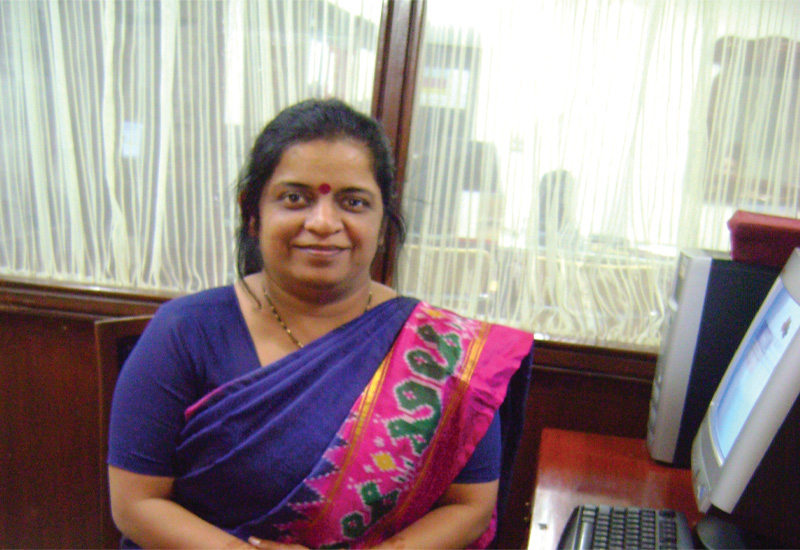
Aabha Dogra
MANAGER HOUSEKEEPING
THE LALIT NEW DELHI
Having completed her BEd from MD University (Rohtak), she has a total work experience of 20 years. Having started her career as a housekeeping supervisor with Intercontinental, The Grand, New Delhi, she has also been associated with organisations like Hilton Projects, Bristol Hotel, Max Healthcare, Metropolitian Hotel and Jay Pee Vasant Hotel. Her last assignment was as an executive housekeeper with Hotel Ramada.
Shankar D
DEPUTY HOUSEKEEPER
HOTEL CLARION
Prior to joining the Hotel Clarion in August 2010, Shankar has worked for Hotel Pride as assistant manager housekeeping, with Hotel Chancery as senior housekeeping executive and with the hotel Basil Ikon as a senior supervisor.
Jagdish Bhatt
FOUR SEASONS,
MUMBAI
Prior to joining the Four Seasons in May 2010 in the position of a Laundry Manager, he was working at the Park Hyatt Goa as a Laundry Manager.