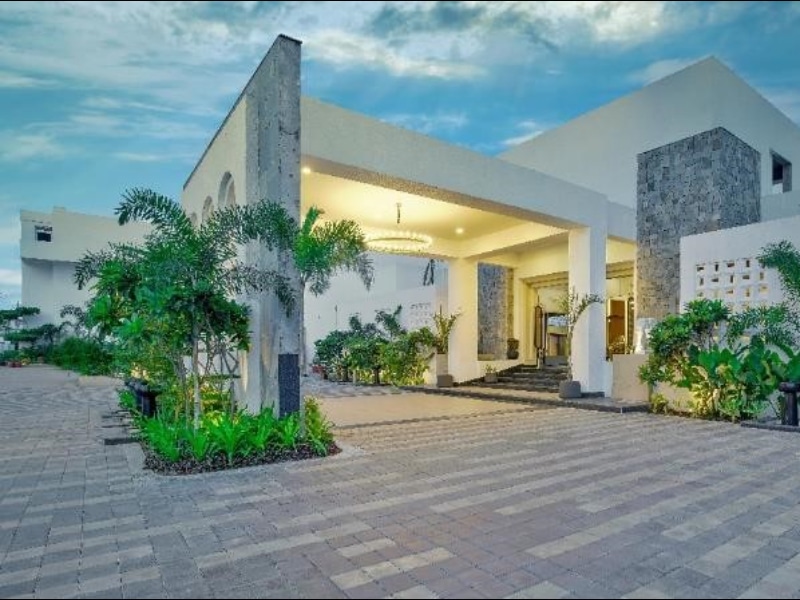
Gone are days when hotel public spaces were considered no man’s land- vacant uninviting areas with glossy floors. The hotel design is currently driven by connectivity, communal activities, and multifunctional spaces. Hotels are embracing open and flowy lobbies, interactive lounges, and eye-catching beautiful atriums that last impressions on users. It is time to reinvent urban hotels to stay relevant to changing times by providing radically different public experiences. Ar. Anil Badan, Principal Architect of Studio B Architects, shares his views on reimagining hotels as social hubs, that offer an interconnected and interactive environment.

It is essential to make them a part of the local community by instilling some local touches. It can be in the form of architectural elements, materials, lighting, colour schemes, or even decor pieces that directly reference the destination.
Ar. Anil Badan, Principal Architect, Studio B Architects.
An Urban Connection
Successful hotels not just provide high-standard guest rooms but an experience that ties the guests with the vibrancy of the city. To enable this, such hotels need to have strong connections to their context, both in terms of the experiences they offer complementing the neighbourhood amenities, as well as in terms of the design of the hotels themselves. Hotels always seek an urban connection, and so they shall be designed as a social and cultural representation of the city. It is essential to make them a part of the local community by instilling some local touches. It can be in the form of architectural elements, materials, lighting, colour schemes, or even decor pieces that directly reference the destination.

Lifestyle Lobbies
Hotel lobbies are progressing in a new direction, towards the idea of a lifestyle lobby. The lifeless lobbies in the past are swapped out with energetic interactive spaces and amenities designed to especially cater to the convenience of young, tech-savvy millennials. These days, most hotels include opening up the lobby with aesthetically appealing sight lines and exaggerated heights; open and fluid environments where one area blends seamlessly into the other. Further hot design elements include moveable furniture, and communal tables, encouraging people to gather and interact with each other, which was the real purpose of the lobby, years back. The result is an interactive lobby, a social hub, which is known by the designers as a “coffee shop” idea. Residential touches are also in fashion, with lamps, shelving, and moveable furniture giving guests the choice to create their seating areas. Instead of solid benches, opting for pods allows people to come around the side and interact.

Providing Holistic environments
For architects and designers, hospitality projects offer exciting opportunities to create holistic environments that are accessible to everyone. In recent days, work, life, and leisure are interchangeable and it leads to more flexible and multifunctional spaces. With increasing digital nomadism, work-life is no longer confined to offices. Therefore, urban hotels also need to evolve into places that provide environments to live, work and play amidst the bustling city centers. These spaces should become places to spend time in, shop, socialise, work, relax and rejuvenate. Hotels are expected to provide more and more public spaces that include coworking spaces, galleries, lounges, coffee shops, retail, auditoriums, etc. Hotels are also expected to put wellness on the agenda and make it available for guests. It is increasingly demanded to be embedded into the design and function with concepts like biophilic design.

The Future of Hospitality
Hospitality design is perceiving a change and today, hotels are moving beyond conventional expectations to provide highly efficient townhouses in the hotspots of a city. New-age hotels need to function as a space for the neighbourhood, embedding themselves in their local contexts. The future of hospitality is striving towards efficiency, an overall sense of aesthetic hygiene, and the creation of environments to live, work and play offering guests a holistic lifestyle.

Urban hotels hold prime localities on the cityscape and have the opportunity to utilise these benefits in varied ways beyond providing private rooms for guests. It should become a public sphere and an active hub in the neighbourhood, further tying the hotel into its urban context. Ar. Anil Badan always strives to make his design more open and accessible to everyone. He suggests future hotels should function as inclusive spaces striking a balance between public and private, allowing the two realms to cross and overlap, becoming accessible to all.