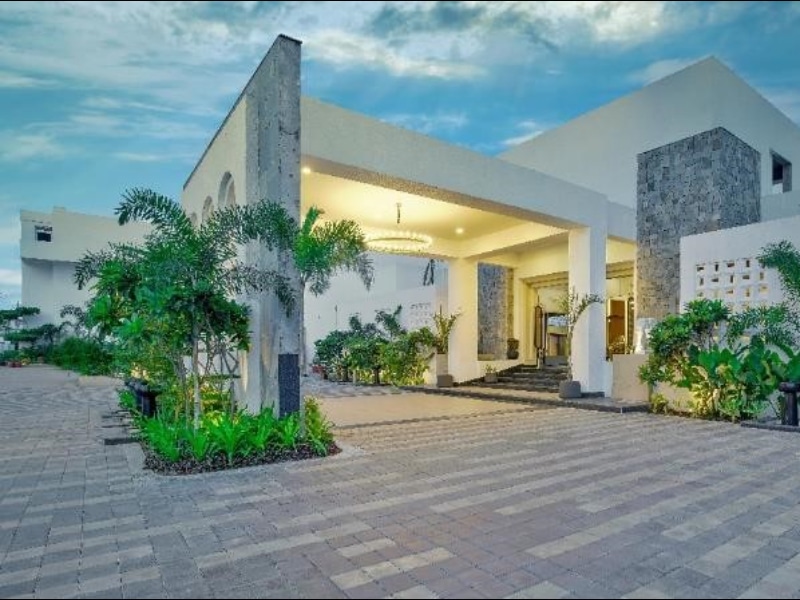

When travelling to a new destination, our experience of the new city, country or culture often only begins beyond the walls of the hotel. The hotel functions as a facility for stay, not adding value to the travel experience.
Post the global pandemic, the hospitality industry has been trying multiple ways to reinvent itself, to stay relevant in the long term. I think that while we are in this space of reinvention, we, as designers, have great potential to transform the hospitality experience into one that ties into the holistic adventure of discovering a destination.

Hotels require to be designed to global standards, abiding closely with planning guidelines. While it is essential for hotels to uphold these standards, offering guests state-of-the-art facilities, I believe that it is now equally important for hotels to craft a memorable identity that represents the legacy of their location. In order to craft this identity in an authentic manner, architects and designers need to explore the built heritage of the area to design culturally relevant spaces that draw from tradition but are contemporary and global in their expression. One way in which this can be accomplished is by tapping into the region’s traditional craft.
Moving away from our desks and exploring these crafts as designers can help us understand their multiple influences and expressions and inform our designs. Local cultures offer us a wealth of knowledge with built traditions evolving over generations. A deep understanding of this can steer us away from kitschy imitations or referencing, resulting in meaningful design with a strong sense of place. Travel can also lead to opportunities to collaborate with local artisans and craftspeople with whom we can devise new ways of keeping crafts alive and relevant.
Modern architecture and contemporary design can often feel rootless and generic with no indication of the space’s larger context. But contemporary design is also flexible and malleable, lending itself well to local influences.

For example, at our refurbishment of the iconic Soaltee Hotel, Kathmandu, we drew deeply from the vernacular Newari architecture of the region to create a contemporary space that was yet rooted in tradition. The design uses motifs and patterns derived from these elements to make rubber moulds for the casting of cement tiles to be used for a feature wall along the central corridor. These gestures were instrumental in creating a bespoke and distinct expression for the hotel’s interiors, paying homage to the region’s rich culture. The scheme also brought together modern construction with traditional patterns finding new relevance for local craft. In this instance, learnings from local craft helped shape a space that cannot be found anywhere else.
In an increasingly globalised world, identity and culture are regaining meaning and importance. Social media celebrates unique experiences, and using local craft in hospitality design could also work to reintegrate traditional visual motifs into popular visual sensibilities, with these spaces being shared, posted and spoken about. Hospitality design also creates possibilities for crafts to explore new expressions and stay relevant.
Hospitality design needs to move beyond offering guests facilities for stay. Instead, it needs to create for itself a memorable identity, and this can be achieved by integrating itself into the social, historic and built context it inhabits. Local craft is a tool that we as designers can leverage to lend our designs a strong sense of place and identity.