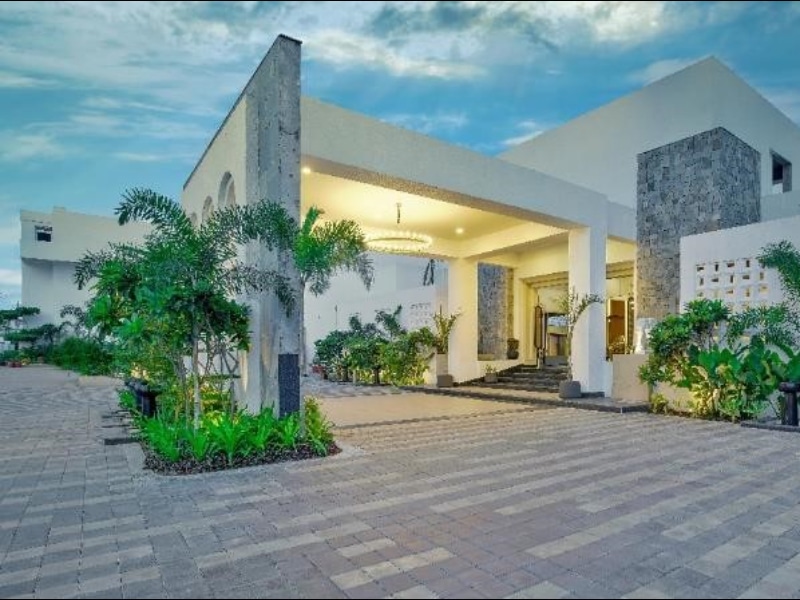

Hotelier India speaks with Subhendu Ganguly, Country Head, Technal about aluminium and the important role it plays in the world of hospitality building solutions.
Why is aluminium preferred as a building solution in hotels? What are the benefits of using aluminium solutions in the construction of hotels in terms of durability, costs, ease of installation as compared to other building materials?
Subhendu: Aluminium is one of the most preferred materials for architectural applications in the hotel industry.
The reason being it is innovative and it can be adapted to various shapes during extrusion processes to meet the varied innovative designs that hotels are coming up with.
The benefits are that its high strength-to-weight ratio makes it possible to design light weight solutions with exceptional performance and stability, which all world class hotels look forward to.
Aluminium provides architects with the means to meet the required performance specifications, while minimising expenditure on foundations. Thanks to its inherent strength, aluminium window and curtain wall frames can be very narrow, maximising visibility.
What are the key, emerging trends in aluminium technology?
Subhendu: With more and more appealing architecture, aluminium is a natural choice in most constructions, particularly when quality and sustainability are the defining criteria.
Aluminium’s flexibility and formability guarantee virtually unlimited design potential. It can be shaped, welded, screwed and cut into dynamic 3D shapes.
The emerging trend is sustainable and environment-friendly construction. Aluminium is well adapted to this need, so we expect to see more energy neutral and green building applications of aluminium in the future.
What are the different things to keep in mind when opting for aluminium in a hotel’s construction?
Subhendu: The things to keep in mind in hotel are elegance in aesthetics, energy efficiency and acoustics performance of the end products. Sustainability and maintenance-free construction are also key factors in the decision making. All these lead to ultimate comfort of the guests who stay in the hotels and reduced lifecycle cost.
What are the latest creations and innovations Technal has come up with in the recent past? How do they affect the way aluminium is perceived as a building solution?
Subhendu: We keep on adding new innovations in products and technologies catering to a large range of door, window and facade solutions in our Technal brand.
One of our major focuses is energy neutral building applications. New products in Technal have been created with ‘eco-conception’ in mind. We are doing energy efficient and intelligent facade construction with Technal.
In India, per capita aluminium consumption is still very nominal compared to the developed world, but the demand trend looks optimistic. New smelting and downstream capacities are being added, which means that aluminium can be perceived as a very formidable building solution in the future.
How does Technal manage its carbon footprint? Does the company have any green initiatives? How does this affect Technal’s business?
Subhendu: Climate change is a key factor and we go further to address this very important issue by making buildings energy efficient with our brilliant technological innovations and excellence.
Our own test centre in Germany is carbon neutral. It not only produces its energy requirement through solar integrated facade systems but also delivers surplus energy to the grid. It actively manages heat and light to minimise energy consumption. Our goal is to enable this kind of installation to create buildings of tomorrow.
We can contribute effectively if we are involved at an early stage of design.
After 50 years in the business, what are the major learnings Technal has experienced as a brand?
Subhendu: To be close to customers and bring responses to local markets.
What are the company’s success mantras that it performs with?
Subhendu: Excellence in technology leading to reliability and high performance and elegance in aesthetics have been the company’s success mantras.
How has the company grown in the last 50 years?
Subhendu: In 2010, Technal celebrates 50 years in business which is an important milestone for some of our customers and architects all over the world who have used our brand in numerous projects for decades.
Technal was invented by André Bos in 1960, simple and quick to install, the system appealed to manufacturers in France and the rest of Europe, from Belgium and Switzerland to Portugal and Greece, via Spain and Italy.
Ten years later, André Bos formed Technal International to stabilize these markets and to expand into the United Kingdom and other continents. During the 1980’s, Technal marketed its ranges and completed some stunning architectural projects in Africa, the Caribbean and on the Indian Ocean islands.
Technal Export was established in 1989 to manage Technal licensed companies in Chile, Greece, Lebanon, Turkey and other countries.
Technal Export also creates separate legal entities and forms partnerships with local players. Today Technal is also present in South East Asia, the Middle East, China and India.
What are the milestones ahead that Technal is keen on achieving?
Subhendu: We want Technal to emerge as the leading brand of aluminium building systems market in India. We want to celebrate this achievement by growing our market presence to become the most preferred solution provider to specifiers and end users.
Would you please share a list of the various hospitality projects where Technal products have been used?
Subhendu: Technal has huge references in hospitality projects around the world.
Practically most of the leading hotel chains like Hyatt, Accor, Taj, Radisson, etc have used Technal solutions. Projects like Grand Hyatt in Thailand, Park Inn & Radisson Hotels in Abu Dhabi – U.A.E., Radisson Blu Dakar, Senegal, Bahrain Mercure Grand Hotel, Novotel Montparnasse Hotel in Paris, Marseille Radisson Hôtel in France, Sheraton Pretoria Hotel in South Africa, Airland Hotel in China, The Palm Villas – Jumeirah, Dubai, UAE, Crowne Plaza Hotel Lebanon, Hotel Four Seasons, Singapore, Hotel AC Forum, Barcelona, Spain, Gulf Hotel – Manama, Bahrain, Pélican Hôtel, Sint Martin Caribbean Islands, Metropolitan Hotel, Lebanon, Melaka Holiday Inn Hotel in Malaysia to name a very few among a plethora of hotel projects all over the world.