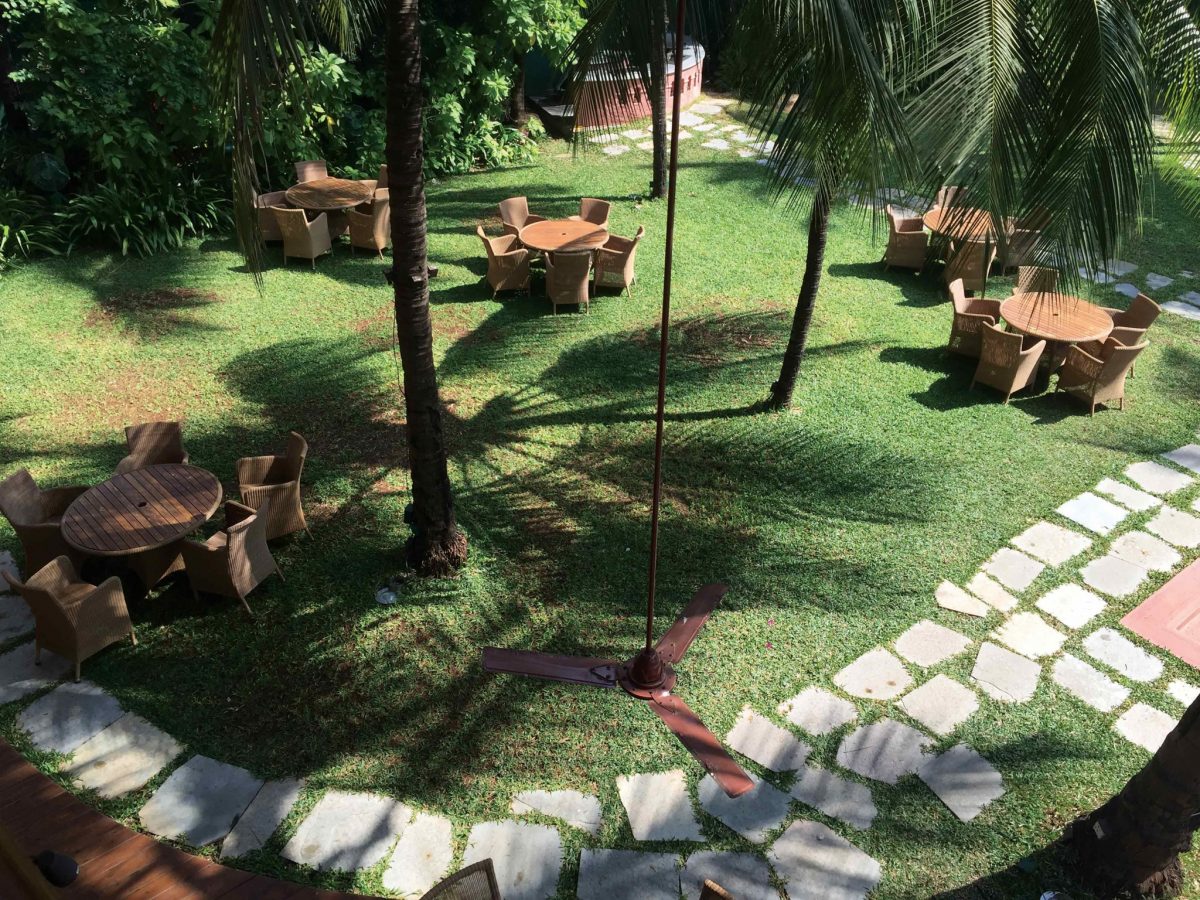
From those faux leather chairs to tea wood upholstered sofas, from wrought-iron lamp stands to chic and colourful rattan and wicker seats, al fresco areas in hotels are finally having their ‘haute’ moment in the sun
By MADHULIKA DASH
For
a long time, an outdoor space inside a hotel premises was considered that extra real estate which was “used when needed.” In fact, in the larger scheme of things (read design), these spaces were rarely included unless of course, there was a garden next to it. In which case, there would be a wooden chair and a few seating arrangements, mostly wrought-iron chairs and a glass top table, hurriedly put together. The only exception to this indolent attitude was the pool side, where the furniture received extra care and a thought. The reasons: one, it was an area that guests used frequently; and two, furniture recycling was allowed once in 10 years, which meant if bad/substandard varieties are chosen the hotel staff had to make do with it.
Not today though. Call it the rise in competition, where the hotel has to utilise every inch of its real estate to engage guests and stay in business, or the lack of outdoor space that has brought al fresco areas back in vogue, outdoor spaces inside hotels have suddenly
gained prominence.
A good example of this is Jyran in Sofitel Mumbai BKC. Designed with a large and equally impressionable al fresco seating complete with a life-size metal elephant, Jyran. With a waterbody surrounding the wooden floored outdoor seating, this was among the first few restaurant to have the same design theme, both on the inside of the restaurant and out. “The idea,” recalls Shilpa Kosambia, executive housekeeper, Sofitel Mumbai BKC, “was to create two identical spaces, each with its own high notes (the colourful steel suitcases are a highlight inside) yet with a harmony that makes them part of each other.”
Designwise, she adds, “The most crucial decision was choosing the furniture. It not only had to look stylish, but also be all-weather proof and multifunctional.” Eventually, Jyran made its debut with the al fresco area decked with weather-treated teak, rattan, wicker furniture made of sturdy aluminium frames in neutral shade of black, brown and chocolate and perked up with turquoises and oranges on their cushions and pillows matching hues of the artefacts inside. The gamble paid off, and in little less than a year, Jyran became the numero uno choice for diners looking for that extra something when they dined out — even during warm evenings.
How a cleverly chosen outdoor furniture can change the fortune of a hotel was realised much before Jyran — at The Park, Calangute Goa. Unlike the other properties of The Park brand, this beach-facing property is, in fact, an old house turned into a hotel. This, while gave the hotel the paucity of indoor space, it also gave the property its biggest highlight: all the leisure spaces — the pool, all-day dining and the bar — are outdoors,
and have been styled likewise. Be it the fully upholstered beds and cabana that are kept in the bar and the pool side, or the braid-and-rope wicker lounge chairs that are in the pool area and rooms — all are washed in white with faux leather cushions and bean bags of different hues to impart vibrancy.
Says Saurabh Khanna, GM, operation, The Park Calangute Goa, “This mix and match of furniture styles not only gives the place a fun element, which is quintessentially Goan, but also is easy to maintain and be multifunctional, which is important given our proximity to the sea.”
In fact, one of the successful F&B initiative of the hotel called ‘Dinner by the beach’, done for couples, just shows the effectiveness of good outdoor furniture. “We can customise the table for our guests’ right down to their last whim,” adds Khanna, who finds the easy maintainability and durability along with style as the three elements that define the current trend in outdoor furniture.
Agrees Rohit Bajpai, GM, Radisson Blu, Paschim Vihar Delhi. “Gone are the days when people would visit hotels to either eat, stay or for a function. Today, a guest can walk in just to relax or enjoy a cup of coffee in his favourite place in a hotel, and 8 out of 10 times it is an outdoor area like the pool, garden or the al fresco area of a coffee shop that overlooks a green patch. So choosing the right furniture becomes crucial as it has to be just that right mix of comfort, style, durability with that extra plus of being multifunctional. Which means that you can move the furniture inside and it still looks a part of the design scheme.”
According to interior designer Minnie Bhatt of Minnie Bhatt Designs, “These are eclectic pieces of furniture that can be strewn together to create something that works with the design of the space.” In case of Radisson Blu Delhi, this translates into plastic wicker-finish furniture that gives it the right balance of style, comfort and durability. For Radisson Blu Guwahati, on the other hand, this trend is more of a mix of wicker, rattan with elements of teak/cedar that lends it the ability to change appearance — from informally cool to stylishly rich — with the change of daylight. The combination works beautifully, as the outside zone remains the oft-visited area by resident and walk-in guests alike, given the year-long balmy weather of Assam.
“Such combinations are, in fact,” says Mirko Habek, deputy managing director, Sun and Shades, a leading outdoor furniture supplier in the Middle East, “the current trend across hotels worldwide. Combining aluminium frames embedded in synthetic wicker comwith elements of teakwood is what designers like the most. Our latest haute couture 2015 collection, has a lot of such very elegant and beautiful designs. Also, outdoor fabric like the synthetic skin materials is getting popular. Highly resistant to any weather condition, such fabric looks very elegant on any upholstery and comes in a large variety of designs and colours.”
Concurs Bhatt, who has seen a rising preference for outdoor furniture even for inside a restaurant. “Be it interesting designs or easy maintenance and durability, having outdoor furniture inside is seen as the new cool,” says the designer who has to her credit popular spaces like Nom Nom and the Radio Bar.
The all-day dining café at the Waterstones’ Club, a part of Waterstones’ Hotel, is an excellent example of how well this reverse trend has worked. Says Saket
Gupta, GM, sales and marketing, “While the interchange has added an element of fun to the café, it has also made more economical sense, as these furniture are more durable and easy to maintain — the two things that count, as the recycling of furniture happens in about 10 years in a hotel.”
This brings us to the pertinent question: what is the process of selecting outdoor furniture?
Says Bajpai, “More often than not, the designer selects the furniture, keeping in mind the design theme of the hotel. Once that is done, the choice is often between a combination of rattan, wicker and teak or furniture made of individual material.”
Like in the case of The Westin Mumbai Garden City, Shikha Khanna, housekeeping manager, explains, “Most of our outdoor furniture are selected from a wide collection of all-weather wicker casual furniture made of 100% high density polypropylene wicker extrusions , which are hand wrapped on powder-coated aluminium frames accompanied by vinyl strap seating. The most portable, durable and easy-to-clean al fresco furniture begins with a frame made of stainless steel or aluminium with a weather-resistant coating.”
Habek elaborates, “Furniture made of either teakwood or recyclable synthetic wicker are today a popular choice, because of the subsidies that hoteliers get for using such eco-friendly products, plus they are safe too. Although classics like synthetic rattan furniture are equally good option as they are easy to incorporate into any design and extremely durable are still very much in demand.”
“With wood becoming the latest eco-trend,” says Shikha Khanna, “Cedar and oak are good choices too. They are lightweight, making moving around furniture easy, and cedar’s natural oils preserve it from moisture, insect damage, and decay. Teak, on the other hand, though doesn’t decay easily, is dense and hence not easy to lug around.”
Yet, adds Gupta, “The sheer rich warm look that wood lends to a certain space makes it a popular choice, especially since wood is so versatile and fits into multiple themes, including Tuscan, contemporary, and casual.” Kosambia feels that the key is to find materials that are resistant to extreme heat and humidity.
Saurabh Khanna adds, “Wrought-iron furniture is relatively heavy but can endure harsh conditions —just be sure the surface has been weather-treated. This is the reason that many hotels like The Manor Delhi, use wrought iron in their furniture as well as in lighting fixtures like chandeliers and sconces. The fact that they look vintage and play well to light — natural or fixtures — adds to their charm.”
The same holds true for fabric, points out Bhatt, whose prefers chenilles and jacquards over velvets, as they are not conducive for Indian weather. On seats, woven synthetics or solution-dyed acrylic fabric upholstery can add more comfort when metal slats or mesh needs a softer touch.
Yet another factor that determines the choice of material for furniture is lighting that lends a space its characteristic vibe. Lights hidden between foliage and plants lend romance to the ambience, while those reflected through waterbodies can give it a Zen-like appeal like in case of Radisson Blu, Delhi and Waterstones’ Club, Mumbai. Safety is another important consideration. For instance, glass top wrought-iron tables, considered an outdoor classic today, came in vogue only after tempered glass was introduced with the ability to withstand changing climate and pressure.
Habek adds, “It is the case with teak and aluminium as well, which became popular only after precautions were taken to make them less susceptible to corrosion and other climatic concerns that may harm the guests. Likewise for upholstery, fabric have to be treated so there is minimal possibility of tearing and fading.”
With al fresco spaces becoming extensively popular, outdoor furniture is going to get more modern and technologically advanced which will make the building and handling much simpler and easier. In a world which is already tech savvy, soon enough even furniture might be remote controlled and that is a trend that one can now look forward to.