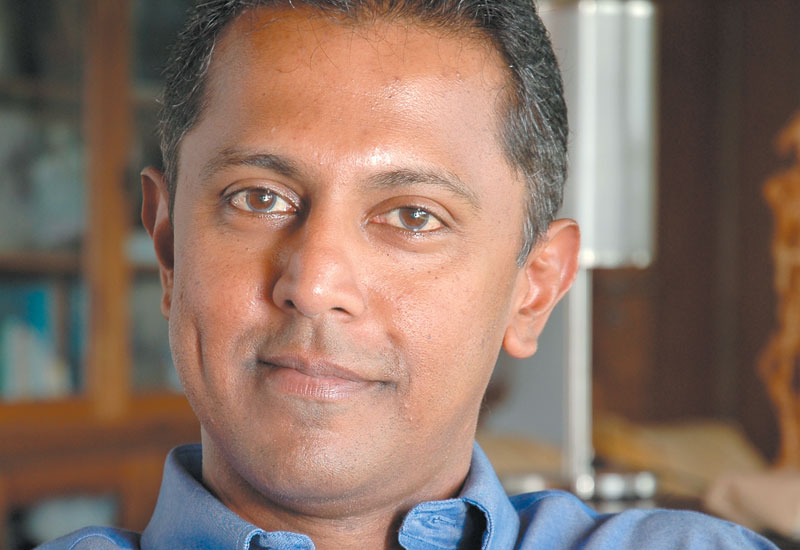
Tourism must spread the word of peace, Hiran Cooray, chairman Jetwing Hotels, Sri Lanka, as also the newly appointed chairman of PATA, tells Punam Mohandas.
Having already ventured into other Asian countries such as Cambodia and Laos with your hotel group, what are your plans for India?
Well, as of now, we are looking at Chennai because of the proximity to our country and the ease of language; for a small Sri Lankan company, it is a stepping stone into massive India.
We are collaborating with an Indian partner who is investing in a luxury as well as business property, where Jetwings will provide the management know-how. We are also in discussion with the Chettiar family to lease one of their mansions for a boutique hotel; we will probably end up spending one a half million dollars.
How can hoteliers create more awareness and be more responsible for the environment?
The best way to create ecological awareness is by walking the talk. A perfect example is the Leela here (in Mumbai), where Captain Nair has done a lot. If we don’t practise what we preach it will just die down.
Should hoteliers take the initiative where infrastructure is concerned?
Oh most certainly, governments do like (to do) this but they have other responsibilities like economic development to keep in mind. We as hoteliers have to work with the local government, it certainly happens in Sri Lanka.
What is your business model?
We think we’d like to be the best in what we do – not necessarily the biggest. Our values are humility and tenacity. We like to do things that are small and sustainable, linking the community and environment
Your company has taken some radical approaches toward working with the local populace and sustaining livelihoods…
Definitely, it has. If you embrace people you can work with them; it also makes life easier for you to operate the hotel. We did have the radical idea of building a hotel elsewhere and then transporting the shell to Cambodia, as I did not want to damage the eco-environment. To be honest, it didn’t work out as the investors found it too costly, so instead, we scaled the development down drastically.
You are the new chairman of PATA. How will this new role benefit Sri Lanka?
I’m lucky in a way that I’m taking over PATA when Sri Lanka too is taking off. There’s absolute stability now, the government is doing a lot of work in the north and east. We get about 10-15% of our business from domestic tourism. Our spending power is less, as also the population. Opportunities to promote the destination as well as PATA will be more. Tourism has evolved a lot in the last 25-years everywhere else, while ours stood still. Tourism must spread the word of peace all over.
The other main role I have is to involve more youth in tourism. I also want to make the strategic information that PATA has, available to hoteliers. Also, PATA has task forces which is one of its core strengths. We are planning to revive that.
How do you plan to eradicate the unsavoury image Sri Lankan tourism has earned?
The unsavoury activities are more hyped than actually happens. There was a time when Sri Lanka was known for gay or paedophile activities but very stringent measures were taken and it isn’t as bad now as it was 15-years ago. All countries have some nefarious activities going on at any point in time.
In your new role, how closely will you interact with India and promote tourism?
India is just taking off – it has the potential for 25-30 million tourists a year. Indian hoteliers are lucky there’s so much money within the country as domestic power. So they have two main markets – overseas leisure and domestic. One thing I must say – the visa formalities need to be streamlined.
PATA can act as a catalyst for this and we will do that for sure. For example, you can decide overnight to go to Colombo and there are no visa problems, Thailand has adopted this too, but for us Sri Lankans to come to India, you need a three-month gap between visits. Travel and tourism is a very fragile industry; if India wants tourists to come, she has to streamline. Terrorists don’t expect a visa to come to a country, because they don’t expect to exit it!