Shantha de Silva, head of South West Asia, InterContinental Hotels Group, believes that his job is to make people happy – colleagues, guests and owners
By BABITA KRISHNAN
With over 5,000 hotels, InterContinental Hotels Group (IHG) is one of the largest hotel companies in the world spread over 10 brands and operating in over a 100 countries, catering to the needs of a large cross-segment of customer needs. What is today one of the most well-known brands in the world started as a family hotel and the idea grew out of an incident in 1964 from a road trip.
As IHG celebrates its 70th year, Shantha de Silva, head of South West Asia, InterContinental Hotels Group shares the brand philosophy and the way ahead in India. “In 1965, we were the first international brand to come to India in partnership with the Oberoi. We have a rich heritage of brands, catering to a wide section of customers and we have been around for a long time,” says de Silva. IHG currently has a portfolio of four brands in 14 cities with a robust pipeline of 42 hotels (predominantly Holiday Inn hotels) which will come to light in the next couple of years. This, explained de Silva, is due to the growing middle-class and the growing young population in India, “Our growth will be concentrated around Holiday Inn and Holiday Inn Express because we see an opportunity for that segment of the market growing. On the other hand, we also see a niche opportunity for our InterContinental brand and we want to see it in key cities in India.”
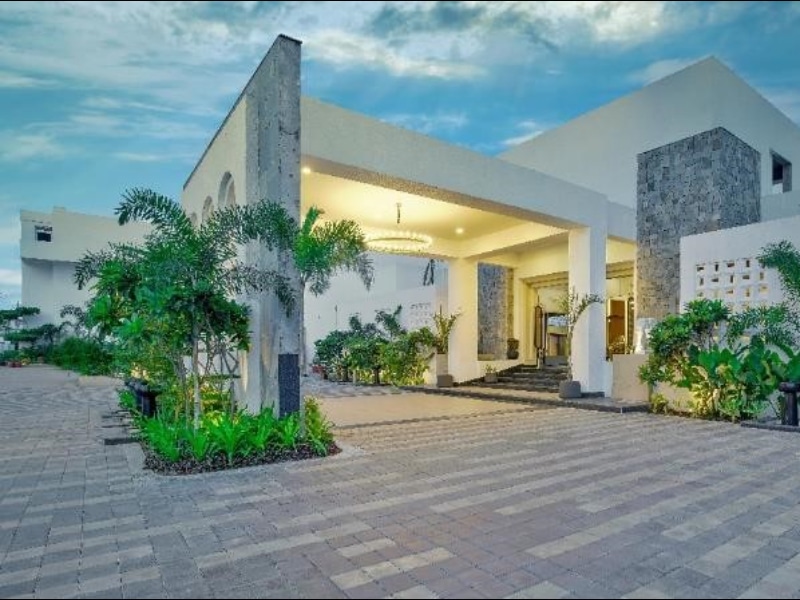
While IHG has placed its various brand offerings – InterContinental Hotels & Resorts, Crowne Plaza Hotels & Resorts, Holiday Inn Hotels & Resorts and Holiday Inn Express – in strategic markets, he is convinced of the steady growth strategy that aims to consolidate the brand presence in the country. “We just opened our second InterContinental in Chennai and it is doing very well. As much as we are growing in secondary and tertiary cities with the Holiday Inn brand, we will look at key cities where we can introduce our InterContinental, and in between these two is Crowne Plaza which is well-positioned in India. We have 10 hotels across our portfolio and we are targeting the upscale market. Our growth will predominantly come from Holiday Inn and Express and niche growth in selected areas within InterContinental,” he explains.
Being a “people focus” company, IHG gives people the opportunity to grow within and across its brands. Citing himself as an example, de Silva reveals that he has worked his way up at various positions across different brands within the company to reach the helm of South West Asia operations today. He believes that it is a combination of both the opportunities and a personal endeavour that results in professional growth. “We put our people through a strong induction and preparation programme so they become familiar with the brand philosophy. The expectations of the customers from various brands are different and we need to make sure that we give them the right brand orientation so that they can deliver the brand value,” he explains. It is important to identify with the values of the brand you want to belong to, he says.
With a predominant interest in to how it can grow its people, IHG has an active training programme for the associates at various levels. Faced with the challenge of getting people together in a classroom, especially for short training courses, it has transferred a lot of the training into online videos where the people can do it at their convenience and get certificates. These programmes are uniform across the system in the organisation because it’s a brand image. “We also have a partnership with Havard Management, where our colleagues get opportunities to do those courses,” he discloses.
IHG is also quite focused on gender diversity. “We have two female general managers in our portfolio of hotels which is great to see and we are encouraging more women colleagues. Not only in India, but in every part of the world, we want to see a great gender diversity,” says de Silva. The I-Grad programme run by the organisation for graduates to join IHG and go through the accelerated growth to become managers, has a good balance and gender diversification which the mangement is very happy about. “Just to give you an idea of the scale of that, even our regional operating committee has six men and six women and these ladies are not just in lucky roles. They are strategic decision making roles,” he shares. He adds that at the property level there are many benefits that are driven by local compulsions for the women colleagues across levels.
Brand awareness is another focus area for IHG and it has strategic partnerships for the same across various verticals, one of them being with Mahindra Racing. “We are part of their e-racing team’s sponsorship. If you look at the electric car Grand Prix, it will have IHG on their cars and driver uniforms. That is one way that we are promoting IHG, especially in markets like India,” de Silva shares. Apart from that, constant research on the brand recall is also an ongoing exercise with the company and has shown that Holiday Inn shares a prominent market share and is one of the most preferred brands in India. “The Holiday Inn brand family continues to be well-known in India as well as globally,” he says.
Though IHG is looking at introducing more brands when the opportunity is ripe, currently the opportunities have been within the four existing brands and their consolidation. Though de Silva feels that there is space for other brands to come in, they will be considered at the right time with the right partner. He believes that in the hospitality business, it is important for all the stakeholders to have shared objectives. This, according to him, is the reason for the great relationship IHG shares with its owners as they take a lot of pride in how the brand has grown as a company. “Being a global company, our ability to deliver the business to those hotels have been great. The owners are satisfied that they have partnered with the right brand who will work with them for mutual growth,” he adds. The last year-and-a-half has been a great journey for the brand where it has grown together with the owners as the portfolio grew by 30%.
The IHG Rewards Club is probably the largest in the world with 90 million members. It is also an authentication of the loyalty that the brand enjoys globally. One of the reasons for this, according to de Silva, is that IHG is in sync with its guests and evolves with them. “Based on our customer behaviour, we introduce new programmes. The IHG Rewards Programme is able to give our guests what they want specific to their needs rather than a blanket. That is unique about us. We are creating more customised offers for our guests,” says a proud IHG stalwart.
He believes that the IHG growth story will continue. “Today India is the third largest growth market for IHG globally, after US and China, and India will continue to play that part in IHG’s world where we will have one of the strongest growth in terms of double digits within the company.” With technology emerging as an important game-changer, IHG is gearing up and preparing to support and embed the changes in the industry. With nearly 20% of the business coming from mobile devices, IHG has developed its own app, which has become one of the most downloaded app – generating about 12% of revenue for the brand.
A pioneer of sorts in many areas including environmental and CSR perspectives, IHG encourages its properties to be energy efficient and reduce impact on the environment under the Green Engage programme. The objective, shares de Silva, is to reduce the carbon footprint and water consumption by 12% in the next five years. InterContinental Hotels Group gave India its first taste of international hospitality services more than half a century back, and then it brought Santha de Silva to head its operations, whose job profile quite simply is, “to make people happy, that includes colleagues, guests and owners.” We are not complaining!