

Hotels are consciuosly taking steps to conserve energy and water – their contribution towards saving the planet
By Mini Ribeiro
Every unit of energy saved is revenue generated. This mantra is being taken seriously by hotels today, as sustainability is undoubtedly, the catchphrase. Whether it is energy or water conservation, hotels are taking steps in all areas to save these and contribute to the planet.
Suman Majumder, director of engineering, Hyatt Regency Delhi, agrees, “In today’s competitive world any saving in any sector gives an edge over the competitor. Hotels are no different. The energy and water cost, cumulatively, is one of the largest costs of operation, next only to manpower cost, in the descending order. The conservation of energy and water has double impact. First, conserving these two, reduces the carbon footprint, as well as the ultimate ground water depletion. The second and direct impact, is financial. More the conservation, lower the bills!”
Hotels use huge amounts of energy, therefore, investments in more efficient energy use can lead to significant reductions in energy consumption, operating costs and energy bills. Areas where energy is consumed in hotels are generally, HVAC, lighting and cooking. Simple practices, such as energy-efficient lighting, contribute in cost controlling, as well as environmental sustainability. Training of hotel managers and staff can lead to better understanding, energy saving and consequently increased profitability.
ITC Grand Central Mumbai goes a step further and apart from the actual steps taken, spreads awareness too. Ravindra Singh, chief engineer, explains, “We have a board in the BOH area, where we write the daily energy consumption for the unit and cost associated with it. We believe in educating all our guests, associates and partners on good environmental practices – an initiative that reiterates our commitment to energy conservation and environmental management.”
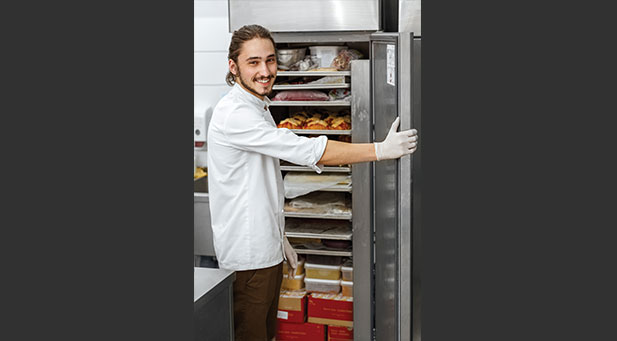
Each area of the hotel makes a contribution and together they reinforce sustainability. Cutting-edge technology in F&B equipment, combined with operational expertise, helps in creating a platform to perform efficiently in key operational areas, especially the kitchen. The latest trend in hotel kitchen equipment is, sleek, fast, energy-efficient and user-friendly equipment. Manufacturers are adhering to these requirements and gradually moving on to a more innovative range. The ease in functionality and quick ROI on such equipment, are regarded as essential factors governing their purchase and more importantly, reducing energy consumption.
The use of induction cookware, combi ovens, in kitchens, for instance, goes a long way in reducing carbon footprint. Moreover, air washers and air scrubbers are also used to help reduce the temperature of fumes (from 200°C to 50°C approximately) emitted into the air. Some hotels are investing in ozone units, which also mitigate carbon in the air. For energy conservation, appropriate loading and unloading systems are made use of, that help in optimum and efficient use of all equipment.
Using renewable energy reduces local air pollution, maintain destination quality and enhances the guest experience and many hotels are opting for it. Some ensure that part of their power supply comes from wind-turbine generators of 250 KW each. Furthermore, stickers are pasted, giving units and cost per hour on high energy consuming appliances for chefs to be vigilant and control the usage hours. “For energy, installing PowaSava units to reduce at least 7% of the total unit consumption and doing power purchase agreement with Green Power Generator (hydel power), helps tremendously,” informs Majumder.
Technology plays a very important role in energy conservation and it is used by most hotels to extend in-room comfort while reducing the consumption of energy. “Switching over from CFL or incandescent bulbs to LEDs, automatic online management of the air-conditioning system (chillers, pumps, cooling towers), monitoring the air-conditioning, lighting system, meter readings through BMS, etc. are some examples of how technology helps in day-to-day conservation of energy,” reveals Singh.
Moreover, technology now allows the deployment of “intelligent thermostats” which, when tied into a room motion sensor, can detect whether or not the room is occupied and maintain either an “occupied” temperature (the one which the guest has set) as well as the right humidity and air quality, or an “unoccupied” temperature (a temperature set by the property management). The resulting reduction in energy consumption is not only immediate, but significant.
Subhabrata Roy, General Manager, Four Points by Sheraton, Navi Mumbai, adds, “We follow practices like replacing all old bulbs by LED, usage of STP water for cooling tower, replacing old chiller with the latest version which is more efficient and using alternative energy from the windmill, to do our bit.”
Operating costs and environmental impacts are influenced by water use as well. And hotels realise that. Industry estimates suggest that implementing water-efficient practices can decrease operating costs by approximately 11% and energy and water use by 10 and 15%, respectively.
High-performing water-using equipment and fixtures are now available that use 20% less water than conventional models. Hotel owners can also benefit by employing water-efficient practices through operational improvements and upgraded equipment.
At Four Points by Sheraton, Navi Mumbai, steps are taken to save water at every stage. Says Roy, “We have started pre-soaking utensils and dishes before cleaning in the kitchen, because, this saves the use of running water. We also wash vegetables and fruits in a sink of water rather than a running water rinse.”
Recycling water is a practice today most hotels are adopting. Singh elaborates, “We have undertaken various measures, some of them being dual flush systems for guest rooms, i.e. 3 and 6 litres each. We also use recycled water for guest room flushing. As part of the Zero discharge endeavour, the hotel has deployed an effective solid waste management plan. The bio degradable and recyclable products are converted into high grade organic manure using Organic Waste Converter (OWC) installed within the periphery.”
Hyatt Regency Delhi, too, does their bit for water conservation. Putting aerators in taps and regularly maintaining it, bringing down water flows in the building as per Hyatt ERMS (Engineering Recommendations and Minimum Standards) and reducing the flow of water in the staff lockers up-to an optimum level, are some examples.
Rajesh Nair, executive director and head, Jaldhara Technologies P Ltd – Greywater, opines, “Hotels consume a large quantity of fresh water and also generate equally large quantity of waste water. The consumption of fresh water and hence their dependency on sources of fresh water, can be reduced considerably by treating sewage and waste water and reusing the treated water. Today, availability of water has become a major problem. While steps are being advocated to conserve or reduce the usage, it is far more important to look at treatment and reuse of waste water and implement the same.”
Rooms, too, are an area, where the housekeeping department goes that extra mile to ensure luxury, but in a responsible manner. Says Mahendra Pargaonkar, Director of Engineering, The Ritz Carlton Bengaluru, “Considering the environment and its sustainability, we request guests not to send their towels and linen to wash every day unless required. We have sustainability cards placed in every guest room to request linen reuse, thereby preventing wastage of water and saving on energy for pumping water.” He adds, “We have already started utilising low flow aerators which has reduced our consumption of water from all guest rooms and public areas faucets: washbasins, bath tubs, shower heads and rest spouts.”
At Four Points by Sheraton, Vashi, half consumed water bottles, that are left behind by guests, are collected in buckets, centralised and used for floor cleaning purposes.
Hotels unanimously agree that no amount of measures taken with regard to sustainability are ever enough and it is an on-going process. The Ritz Carlton Bengaluru plans to install SPC heat pipe in the treated fresh air unit to reduce humidity and moisture in the air being supplied in the rooms. This improves air quality and further reduces dampness in air-conditioned spaces, thereby reducing 33% of energy cost,” avers Pargaonkar.
Measures may be taken to conserve water and energy but monitoring, to ensure one is on the right track, is equally critical. Majumder admits, “We are monitoring the consumption daily with electrical, water and gas meters in every possible place. We have an energy management system, by which we can monitor instantaneously, every 15 minutes, hourly, daily monthly and yearly. The water meter readings are also registered daily for the different sources.”
Hotels work only with the best vendors like Mitsubishi, Ingersoll Rand, Siemens, Schneider, Danfoss, who understand their needs and deliver unfailingly.
Energy efficiency and conservation practices by a hotel, not only impact its bottom line, but also enhance its reputation among guests and stakeholders, who are concerned about reducing global energy consumption and the effects of climate change. Either way, it is a winning situation for hotels.