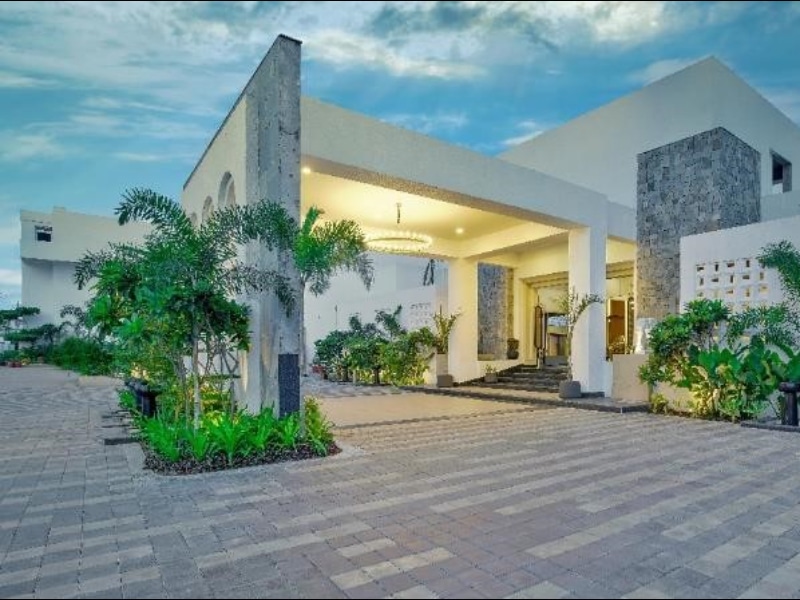
With an international airport on the cards, and a lot of big hotel chains investing in the city, Chandigarh is set to consolidate its position as the Gateway to the Punjab.
Chandigarh is the first planned, modern city of India; the union territory includes the satellite cities of Mohali (Punjab), and Panchkula (Haryana). The hospitality demand drivers here are the liberal government policies, economic reforms, and the interest from the IT sector, which have largely supported economic growth in the city.
Currently, the hospitality market in Chandigarh is at a very nascent stage, with very few branded hotels – as of date, the only one is Taj, Chandigarh. The unbranded segment here constitutes over 60% of the total room inventory.
Most of the hotels are concentrated in the City Centre in Sector 17, near the Secondary Business District (SBD) in Sector 34, Sector 35, and nearby areas like Panchkula.
For long, the hotels operated by local hoteliers catered to the bureaucrats visiting the city for business purposes, apart from catering to the transit tourists heading towards Himachal Pradesh or Shimla. For this reason, the city has had a dearth of branded hotels for all these years.
The two hotels managed by Chandigarh Administration, namely, Hotel Mountview and Hotel Shivalikview, belong to the upscale category, and capture the major market share till date. The city also has several midscale hotels like The Piccadilly, The Aroma, and Hotel Sunbeam, to name a few.
The overall performance of the hospitality industry in Chandigarh until 2009, when compared to that of 2008, saw marginal differences in room rents. The city has been able to maintain high ARR’s (Average Room Rates), despite the current slump in the market; however, the occupancy across the city witnessed a drop from the previous year.
Category wise, the 4-star hotels witnessed an increase of 20% in ARR from 2008 to June 2009, while the 3-star hotels recorded a one per cent increase.
The city is expected to have 1,834 additional rooms by 2011, of which 57% will be in upper upscale, 18% in upscale, and 25% in midscale segment. These new developments are expected in and around Sector 35, Sector 43, Sector 17, and emerging nearby areas like Zirakpur, Panchkula, and so on.
Certain undeniable challenges face the hospitality industry of the city the city. While good air connectivity has its advantages, it has, over time, increasingly led to day trips by business travellers, thus reducing the requirement for hotels.
Further, the city lacks adequate infrastructure and facilities required for hosting conventions; a similar fate is met by most non-corporate banquet requirements that are compensated for by farm houses.
There are several other segments which fail to realise revenues owing to lack of facilities in the existing hotels, namely, spas, shopping, and the serviced apartment segments.
However, the city expects to meet these shortfalls in future with the expected inflow of branded hotel operators in the market One key challenge faced by hoteliers or promoters in the city, are the strict building by-laws that result in building lesser rooms, with strict regulations for the facades, which can, at times, also hamper the image of the hotel brand.
Nevertheless, the outlook remains bright for the city – Chandigarh is likely to witness deployment of concepts like mixed-use development,that is, clubbing retail with hotel projects, that enable utilisation of additional floor space index to make more sustainable and economically viable products – an idea that seems to be fast catching up amongst the hoteliers in the city.
With this trend acceptance, the hotel also benefits from premium locations at relatively lower costs, and assured footfalls even on leaner days/season.
Another paradigm shift in the hospitality industry of the city has been the growing interest of hoteliers and developers in the midscale market.
The diminution in land and construction costs has indeed drawn everybody’s attention towards the viability of developing midscale hotels. Consequently, the segment is on an expansion spree to impound the sprouting demand for relatively cheaper hotel rooms, generated as a result of the slowdown.
Further, since Chandigarh Tourism is promoting the city as a golf destination, hotels in the city have come up with promotional packages which include 10% deduction in room rents, complimentary pick-up and drop facilities to-and-from golf centre, free-of-charge visits to the same, as well as various other complimentary activities.
It is believed that strategies like these will certainly increase the bar for ARR’s comparatively from the preceding phase, and lend the flavour of a leisure destination to the city.
Data provided by Cushman & Wakefield:
Founded in 1917, Cushman & Wakefield is the world’s largest privately held premier real estate services firm, with 230 offices in 58 countries. It caters to every stage of the real estate process from strategy to execution, offering solutions to occupiers, investors, and developers, across the commercial, hospitality, retail, residential, and industrial sectors.
The firm also provides a wide range of consulting services for hotels, resorts, serviced apartments, and mixed-use developments. For more information visit: www.cushmanwakefield.com