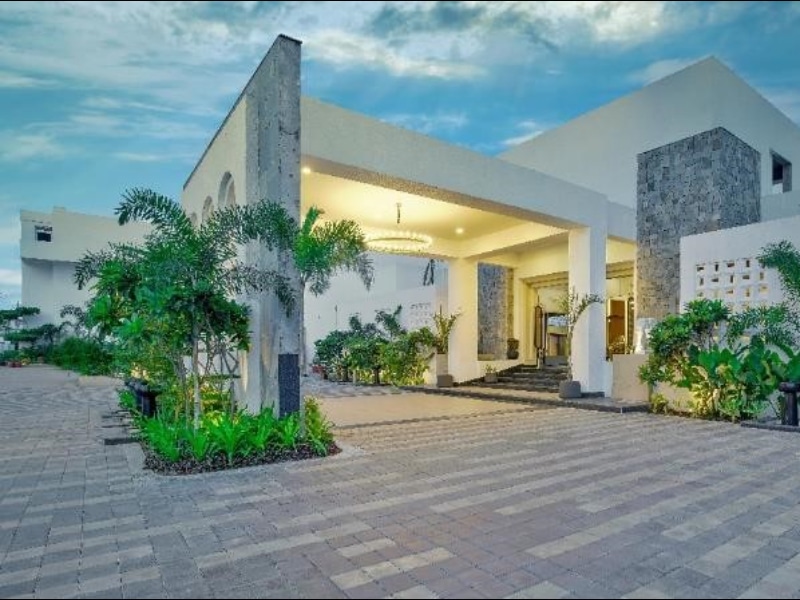
Experts discuss Assam’s strategies and initiatives for bringing tourists to the North East.
TGI: What’re Assam’s tourism plans?
Himanshu Shankar Das: We have a central government scheme for 30% subsidy for properties which are two-star and above. There’s also a scheme for reimbursement of VAT and of luxury tax. For other properties, such as small guest houses, we’ll give subsidy from the state government for the same percentage.
For those who want to set up hotels away from the mainland, it may get expensive to draw up a power line. So we subsidise that. If someone needs an access road from the main highway for a resort, we’ve a subsidy for its construction and improvement.
Apart from that, if an investor needs land, the government gives a lot of co-operation. We’ve started the Assam Tourism Council. It has been notified this year.
In this council 50% members are private stakeholders – tour operators, travel agents, hoteliers. The remaining 50% are government functionaries from departments connected to tourism – the state electricity board, forest department and PWD etc.
Kaziranga National Park was running on 11kb power line until two years ago. Come evening and there were so many tourist lodges with very low voltage. We have converted that to 33kb line from the council. The tourism budget is 45crore supplemented by budgets for infrastructure development by other departments which have a bearing on tourism.
Prabhulal Joshi: Everyone cannot afford to fly. The train service to Assam is not very good – the trains are dirty, there is often no water and the not everyone prefers the. Why not run the train via Kolkata? And can we also have tourist police?
Das: Although a number of trains are there but the services are not good. Our CM has formally written to the railway ministry that we are not asking for more trains yet. But do improve the quality of services.
Last year we have introduced tourist police to Kaziranga and Manas. We’ve already started this in five places. All guesthouses in Kaziranga have a police tourist helpline. Any tourist can dial the number. Kaziranga has a tourist police outpost.
TGI: What about safety concerns?
Das: From tourist point of view the safety issue is not worth mentioning. Even though there have been political disturbances in Assam not a single tourist has ever been harmed. During the agitation a lot of harm was caused to the wildlife.
It was a poachers’ paradise. Now that the Bodo rebels have realised what they have done to the areas and they have come to the mainstream, many of them have, in fact, formed NGOs, some are tour operators. The government is helping them. Tridib Sharma: Assam has now changed – it is very peaceful. The signal from the government is absolutely clear.
We want Assam to be a tourist state. We want to create a tourist-friendly environment. If there is a problem, the solution is tourism. If we have to eradicate unemployment, there is tourism. If we have to have better understanding between the people of Assam and the rest of India, it’ll be through tourism.
TGI: Assam saw 3.9million domestic arrivals in 2009. How do you plan to increase the number?
Das: There are daily 14-15 flights from places such as Delhi from airlines such as Jet Airways and Kingfisher. Druk Air is coming in as well.
Guwahati is the sixth busiest airport in the country. We have train connections from Cochin, Bengaluru, Hyderabad, Mumbai, Delhi, Kalka.
TGI: Who is your target?
Das: There are two types of tourism – one is mass tourism. We cannot have 10,000 tourists in Kaziranaga every morning. We have fragile eco zones. We’d like to give the best facilities in these zones – comfort and security for good returns.
For mass tourism we have told our forest department to create a zone like that in Singapore. They don’t have to go to Kaziranga for 10 hours and not see any tiger. They can experience it in an hour or two.
These are not spending tourists. But we cannot ignore them. In core Kaziranga we are targeting upmarket tourists from Mumbai. If we can have 1000 tourists in a day in Kaziranga, we’d like to have 1000 richest tourists, who’d like to escape, such as industrialists. They won’t expect a discotheque in a wild life sanctuary.
TGI: Does Kaziranga have a fantastic five-star resort for such tourists?
Das: There are such resorts in Kaziranga and in Manas. There is one in Balipada on the Bhutan, Arunanchal border with a tariff of about `8000 to `10,000 a night. They’ve had guests from Hollywood. These will pay even `12,000 a night but they are very clear that they do not want any publicity.
TGI: How is wildlife tourism?
Das: I have a very positive answer to that. From 12 rhinos in 1905, there are now more than 2200 rhinos in Kaziranga. According to the latest census, the tiger population in Kaziranga is increasing and has already crossed one hundred.
TGI: What is your strategy now?
Das: We had a very paltry budget up until four or five years ago – only `4 crore to `5 crore. More than 50% of that would go for salaries. Now we are more comfortable.
This is the first time we are in Mumbai and we would like to promote the destination here. On the other hand, we would not like to overdevelop. We’d not like to publicise and then fail to deliver.
LS Changsan: Just as Incredible India has become a catchword, we are looking at how to market Assam. So far, the activity has been limited to a few efforts by the public sector in a very sarkari way.
Weaving it into a common fabric, we are in a process of making a brand presence. We will be soon having workshops involving all our stakeholders.
Joshi: Even though I am from the industry I don’t know much about Assam, so one cannot expect the public to know much. You should think of incentives for tourists, such as LTC.
At the moment out of 90 travel agents in our association in Mumbai, only about four sell Assam.
Das: In 2007, at the all India tourism meeting in Sikkim, we made a proposal to the then ministers to promote the North East. We proposed that through NCERT we should acquaint children with the region.
We made a proposal to allow LTC tourism which includes children with parents. LTC tourism to the state was introduced then and it is quite popular.
We have an Assam Bhavan in Navi Mumbai from where we’ll start a tourism office. That should be our contact point if you have any problems.
TGI: What should a private sector player do to work with the public sector?
Changsan: We are serious about public-private partnerships. We want people to come and invest with us. The state will join hands with them, maybe in form of land and other equity. We can partner with them right from the concept to the ideas and development of infrastructure.
We are getting feelers from companies as far as Singapore who want to build new kind of amusement centres – floating on the Brahmaputra with fast food, fine dining and marriage halls.
Monlisa Goswami: We are facilitators. We don’t want to get into things that the private players are in a better position to do.
Phookan: We are from the private sector and have had a very good understanding the government of Assam. I speak for the entire private sector – we have upgraded tea bungalows, lodges. The cruise company that we started put India on the international cruising map. That would not have been possible without the government.
Our cruise initiative is a joint venture – we have British partners – and we started in 2003. And with great support from the shipping ministry and the government of India we opened the waterway on Highway Two, the Brahmaputra. This year we start the Ganges cruise which is the Waterways One, also with government support.
The government helped us with infrastructure. The government built a jetty. This is the first time that the waterways have been opened up since Independence. Now there must be 30 vessels, even small dinner cruises even in Upper Assam.
Das: The government has leased out the government barge which they have converted into a cruise liner. That was the beginning and now they have we have at least 30 cruise liners. Some are floating restaurants, discotheques and restaurants.
TGI: You are the pioneers in cruise tourism in India. What is the learning here for other states?
Das: We allow the private sector to tell us what the infrastructure gaps are since they are the ones running the liners. The private sector said that they wanted dredging at particular points on the Brahmaputra to tackle the minimum water draft situation in some months, which is affected by salination. There are particular points where the river is bit slow.
The second demand was for a proper, clean jetty. They said that they would be bringing foreign tourists who will be paying $300 per person per night. The third thing they said was night navigation facility. We are taking it up now.
Joshi: Has the transportation improved? We feel the need for good buses. In Assam when we send tourists, we find that luxury cars are not available. Air travel remains expensive.
Goswami: We’re trying to work out a package with Jet Airways for discounted fare which will be tied to a stay in Assam. Already this is in process. We’ll, in turn, assure them volumes.
Sarma: The government of Assam and the tourism department has already given subsidies to about 500 people for purchasing luxury vehicles such as Innova and Travera in the last one year.
Das: The scheme is that they can choose which vehicle they want to buy, which can be used as a tourist taxi. The government gives them a 40% subsidy for a cost up to `4 lakh. The person has to invest 10% himself. For the other 50% we have bank tie ups.
TGI: Is Assam also a gateway to the other North-Eastern states?
Changsen: We want to project Assam as the hub state. A tourist may not want to restrict himself to the tourist attractions of Assam state.
From Assam he can go to Meghalaya, Cherapunji, Shillong, Tawang, Bomdilla… We have prioritised having a heliport in a hill station in Assam, Halflong. There are helicopter services between Guwahati and Itanagar, Shillong, Tawang and Garo Hills. We want to expand these.
Joshi: Mumbai customers want their food, sometimes vegetarian. We run our own kitchens. Would that be facilitated?
Das: In Kaziranga there are many pilgrim tourists from Bengal. They go to Kamakhya and take a bus to Kaziranga. We have made arrangements for them to cook their own vegetarian food.
You don’t have to cook inside Kaziranga, but two km outside and the government is planning picnic facilities, once the council decides. You can go in a 60-seater Volvo, park it and have a picnic.
Sarma: I own a resort. In the past we have given our resort bookings to people from Mumbai and Satara in Maharashtra. They had taken the entire resort and we had given them kitchen facility.
In principle we don’t give the kitchen but as special case to these two groups we had given them the kitchen as well. So if the quality of groups is good we will compromise on that. And it is not only me, as she said, other properties will also consider this definitely.
TGI: What is the room inventory like?
In Guwahati city, one five-star is coming up and four are on the way. In the city, so far we have 1000 hotel rooms of three and four-star categories. In Kaziranga we’ve 1200 beds coming up in the next two years.
We are now talking of a legislation to restrict the growth of tourism industry in Kaziranga. Kazirnaga is stretched across 95km. The forest department controls that. But the moment you step out of Kaziranga, you step into revenue land. You can just go to the patwari get a NOC and open a four star.
Assam best-sellers
1 Wilderness
Two World Natural Heritage Sites, five national parks, 18 wildlife sanctuaries, one Ramsar site, 46 birding areas. World largest population of one-horned rhino, Asiatic buffalo, highest eco density of tigers, 500 species of birds, elephants, last surviving population of Eastern swamp deer.
2 Pilgrimage
Kamakhya in Guwahati with Ambubachi festival in June. Poa Makkah built by Pir Giasuddin Aulia. Ajan Pir Dargah is a sufi centre. Dhubri Gurudwara was eastablished by the ninth guru, Guru Tegbahadur. Namphake Buddhist temple draws pilgrims too.
3 Culture
The state has colourful tribes and sub tribes, various festivals and warmth. Rongali Bihu, Bhogali Bihu and Kathi Bihu mark April, January and October.
4 Shopping
The largest weaving village in Asia is the hub of Assam silk and muga. The Manchester of the east, Sualkuchi is only 30km from Guwahati. Souvenir shopping is rich with weaves and bamboo.
5 Golf and Tea
Over 850 lush tea estates, 21 with attached golf courses, old world bungalows.
6 Heritage
Siva Dol in Sivasagar is Asia’s tallest Shiv temple. Rang Ghar is Asia’s largest amphitheatre. Talatal ghar is a seven-storey palace. Charaideo Maidam, burial vaults of the royal family of Ahom, are similar to the pyramids in Egypt. Madan Kamdev temple is mini-Khajuraho in Assam.
7 Food
Diverse rural lifestyle and cuisine from different ethnic groups.
8 Connectivity
Six operational airports (Guwahati, Tezpur, Dibrugarh, Jorhat, Silchar, Lakhimpur), connectivity with metros with airlines such as Jet, Kingfisher, GoAir, Spicejet, Indigo.
9 Cruise
World class cruise liner for rides on the Brahmaputra.