

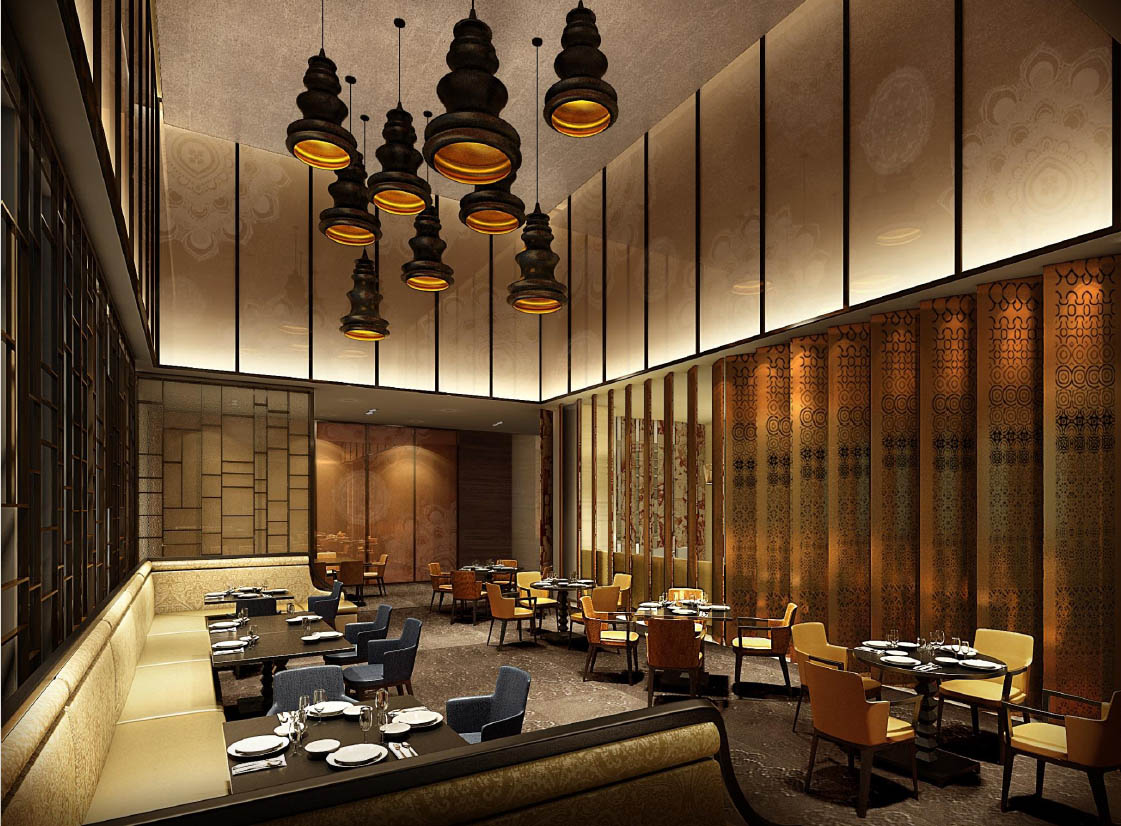
Lighting is intended to accentuate the built environment by adapting to the different characters that a space embodies. Lighting for hotels is designed to be multi-functional; versatility in light is important for such spaces. The aim is to create lighting that is visually appealing, warm and inviting, targeted towards the experience and eventually aims to increase footfall in the hotel.
As hoteliers recognize the effects of well-designed lighting in their spaces, there is awareness that the wellbeing of a customer can be a result of elevating the ambience through various tools. . There are different purposes for lighting each of these spaces and a specific function they adhere to. The intent is to have visually rich and illuminated environments and not solely create brightly lit spaces.
This intent varies through the different spaces of the hotel; for example- restaurants are illuminated a certain way to make the space look warm, inviting and make the food look appetizing. Lights of assorted lumens and functions are used in tandem to create a setting, which is operable with the click of a button. This technique is used in various scenes in hospitality projects to create contrasts and emphasize the colours and textures of the space.

The journey starts right at the hotel portico drop-off and continues up to the guest rooms and washrooms. A hotel’s ability to provide its customers with unique curated experiences, becomes its USP. In a highly competitive hospitality industry,it is imperative to be creative with visual and immersive experiences, which must reflect when it comes to hotel lighting especially. In order to do so, lighting must compliment the materials, themes and fabrics by abiding by the same colour tone as the interiors of the space. Such spaces need to be dynamically lit and allow for flexibility in functionality as the day progresses. Daylit spaces in the mornings and early afternoons allow humans to be naturally energised, comfortable and active. Natural light also fills the room and makes it look larger and open. The same physical space can be transformed to relaxed, intimate and quiet by playing with ambient and accent lighting, which draw the eyes to targeted zones rather than general illumination. The space need not look large, since it is lit for a different purpose.
Ideally, these controls and the duality of lighting in the same room should be controlled via a single command or through the advanced technology of automation. The trend of minimal commands is something which is only going to adapt to the needs of the consumers at the time, and is never going to go out of style. When lighting becomes user-friendly with minimal complications, there are increased chances of it being used and understood. Lighting and art are now combined to simple and sophisticated concepts, which are easy on the eye and succeed at forming interesting visuals. A point to note is to avoid connecting multiple lights to a single switch, which could lead to over lighting the room and wasting energy.

Hotel rooms are a sanctuary of rest and rejuvenation. The lighting must be multi-faceted and have multiple sources to create a setting for the customer to feel pampered. A combination of overhead reading lights, lamps, great vanity lighting and natural window light is a wholesome way of providing sufficient illumination without overdoing it. Another way in which a hotel can improve the guest experience is to integrate user-controlled dimmer lights, so that the guest has full control of the level of brightness they have in their room. When it comes to layering ambient lighting and luxury fixtures, ceiling chandeliers and statement pendant lights are great options, and are getting more innovative with passing trends. Light and art can be integrated to highlight frames or artifacts, and can be equipped with LED profile grazers to throw a uniform wash of light on the wall or accentuate through museum grade fixtures with certain inbuilt optics.

Lighting is starting to become the starting point of conversation, when designing a hotel room. It can make or break the ambiance of the space, which, in turn, will make a difference in the guest experience. To elevate the guest experience, invest in proper lighting. The need of the hour is for hotels to be equipped with energy-efficient lighting.
Of all the options available in today’s day and age, LED’s have proved time and again to be the most economical and effective means of light, and are a drastic improvement as compared to traditional, yellow-toned halogen lights. They are quick to light up with the click of a button and safe to use in the long run, owing to the fact that they do not heat up as quickly as its alternatives. They mimic natural light the best when used with the right colour temperature and when well-positioned in a room. Most fluorescent lights do not provide a dimming option, a feature available with LED’s. The latest technology in LED lighting is minimum energy wastage, with maximum efficiency output. They can maintain the right ambiance in a hotel room, while also lowering energy use and energy costs; a desirable output for hotels.
Investing in wireless lighting controls has seen more action in recent times as it is a means to combine lighting controls simultaneously with occupancy sensors. Advanced lighting control systems provide an instant change of intensities, combinations and colours. Including these provisions, a multifunctional control unit tweaks settings pertaining to blinds/curtains and AC system, integrating it with lighting presets. Such technologies save time and costs associated with concealing wires behind walls and ceilings, and makes it easier to reconfigure spaces in the future.
The takeaway is to curate a space with required lighting levels and colour temperature, sustainable in the long run using sensible fixtures, and one that provides the user with a feeling of complete relaxation and comfort.


