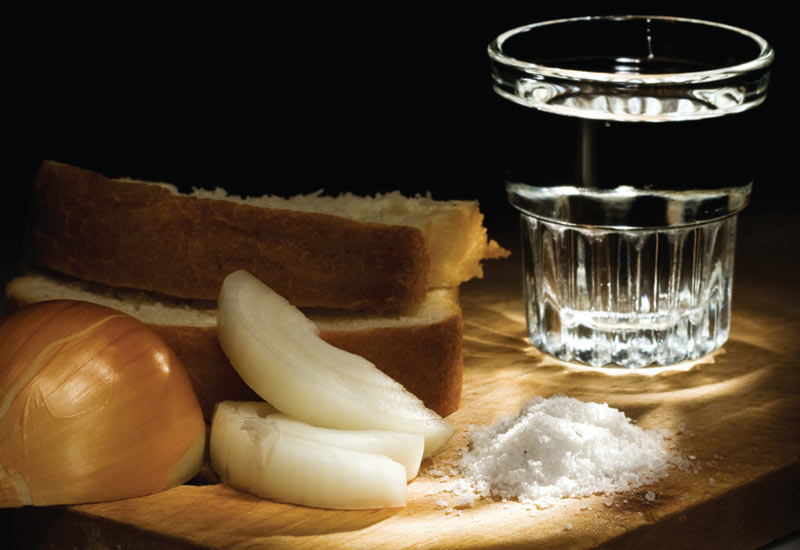
Vodka may not have made much of an impact at first, but is today the chief component of trendy cocktails, and can literally leave you breathless, says Romil Ratra.
The Slavic people of the north, and their Scandinavian neighbours, took alcoholic drinks very seriously. This seriousness to produce a great alcohol led to the invention of vodka.
Vodka (from the Russian word ‘voda’ meaning water) was originally used to describe grain distillates that were used for medical purposes. As distilling techniques improved, vodka gradually came to be the accepted term for beverage spirit, regardless of its origin.
Vodka is created through a process during which simple sugars derived from a mash created by vegetable or pale grains, is fermented, and then distilled. The container used during the distillation process is critical to the final product.
The varieties that come from a column still will be colourless, clear, and will have a neutral flavour. Those created in a pot still will carry a slight note of flavour from the crop that was used to produce it, and may even have a higher percentage of alcohol, since many batches are redistilled.
It is somewhat unusual to see a vodka that has been aged for long periods or stored in a wooden cask, although some brands will use these methods. And what is becoming more popular today is adding flavours to vodka, such as spices, fruits, and herbs – vodka’s neutrality makes it the perfect vehicle for flavourings.
Europe has been drinking vodka for several hundred years, but it has only been in the last century that vodka has opened up to a larger market, thus boosting its popularity. Vodka may not have made much of an impact at first, but by the 1950s, it was gaining the love and recognition it deserved. Relatively unknown in the United States before the 1950s, vodka is now the ‘Best-Selling’ spirit category.
Not only is vodka the chief component of many of the most classic and trendy cocktails, it is increasingly consumed straight, or even, paired with food on upscale tasting menus. The category’s meteoric rise and current domination of the bar scene is due to several factors.
Primarily, the white spirit’s neutrality is a draw for many, replacing gin and other liquors in traditional drinks such as the Martini. Multiple distillation and filtration remove strong flavours and many congeners – the impurities believed to cause hang-overs.
Of course, vodka’s easy drinkability appeals to younger consumers, as they drink more copious quantities than the senior generation.
In the second half of the 20th century, vodka owed its popularity in part to its reputation as an alcoholic beverage that ‘leaves you breathless’, as one ad put it; no smell of liquor remains detectable on the breath.
The newest trend is consumers ‘trading up’ to boutique niche brands. Value-priced vodka has been replaced by premium brands, which have been overtaken by super premium labels.
These include Chopin, Belvedere, Ciroc, Grey Goose, now, even the botanical Pinky, or the nine-times distilled Jean-Marc XO, the designer Roberto Cavalli vodka, and a Kauffman Vintage 2003 aged vodka; the list is endless.
To cater to the ever-demanding customer and his constant quest to upgrade, even the stalwarts of vodka have now expanded their range to include the ‘premium’ category – Absolut has Level, Stolichnaya has Elit, and Smirnoff has the Silver Private Reserve. High-end producers claim ultra-smoothness and subtle character are achieved through multiple distillations and filtration techniques.
All I can say is, Salut, or better yet, “na zdorovyeh”. Here’s to a really great drink.