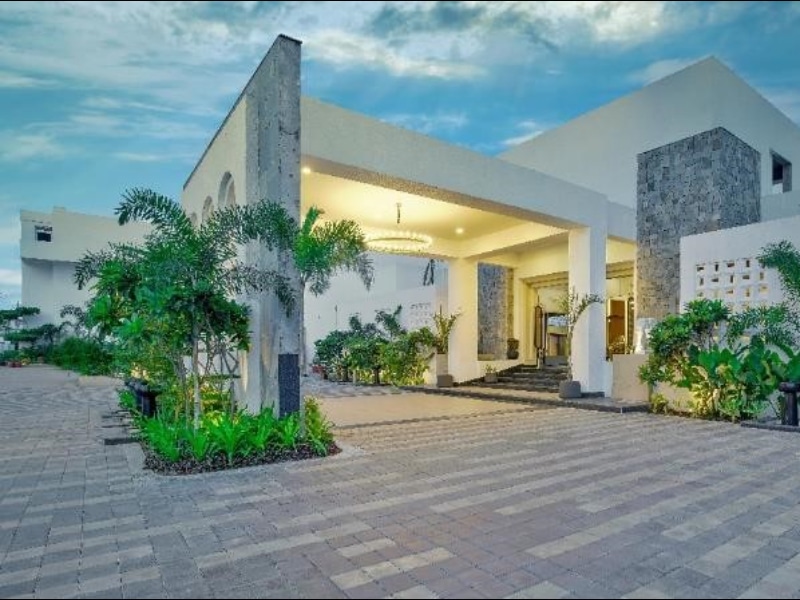
The immaculate, minimalistic resorts that cover the pages of the design magazines are dream destinations for some or an intermission from the bustling sounds of city life for others. Presently, the hotel industry is at crossroads with the pandemic. Before the visuals become the flashbacks to the good old days of merriment, we have to answer the question “How will people live when they travel around the world in a post-COVID scenario?”
The imagination of a designer and experience of the traveler are inextricably linked; the latter specifies and inspires the architectural pursuits, and the former shapes the built environment. The pandemic has changed these dynamics and informed the disciplines of wellness as the new force interconnecting design strategies in the wake of repercussions. It is time to harness the crisis to bring about positive changes.
The design of spaces adhering to the safety norms for halting the spread of COVID-19 requires a comprehensive and interdisciplinary approach, especially at the hotels and resorts of the future. A rather significant change in the hospitality industry predicts transformations in planning, design and operation.
Mapping Movement
When designing for the built environment and surrounding spaces, the movement of people through and between is paramount to the successful functioning of spaces.
Within buildings, these spatial relationships should translate to improved health, wellbeing and productivity. It is essential to provide tangible narratives to the people on how to socialize or function at hotels, restaurants or resorts as well as define their movement. Spaces as signage providing practical and
comfortable connections between people and spaces can ensure better investments and possession of an
area, with all the economic and social benefits the process of designing entails.
However, to achieve this degree of social distancing is more comfortable at the urban level. In contrast, buildings are affected by a host of different factors, such as the distribution of focal points of interest or the irregular and dynamic movement patterns of people leaving and entering spaces at hotels. The layout
of a space directly impacts subjects’ movement and experience in an evolving configuration. When designing hospitality buildings or projects, quantifying a space and assess how complicated or straightforward a layout proposal when it comes to connections and distances between spaces. We can determine areas of high connectivity or isolation and subsequently, integration and segregation.
Building Momentum with Technology
Technology is the front-runner in the current situation. Automated activities such as web check-ins, sensor-based sanitizers, and automatic self – kiosks will be the new standard. Guests would be given a preference either to use the booth or meet the receptionist.
All systems would be Bluetooth Low Energy (BLE) enabled, with the mobile phones tapping guest health, entrance and room accommodation. Automatic revolving doors or sliding doors in the arrival lobbies will facilitate no physical contact with door handles.
The wider hotel drop-off and plaza will ensure social distancing. Segregated residential guest and banquet guest entries will have different luggage scanners. Entrance matting system with under-sole disinfection solution and thermal detectors, antibacterial Nylon carpets, sensor-based sanitizers at regular intervals along the path will help in avoiding physical scanning of the guests.
There will be considerable changes in the hotel room sizes. Sanitization and housekeeping measures will
multiply to twice every day. We have already been observing the use of digital menu cards with more extensive buffets and disposable cutlery.
The cloud-based mapping systems will identify traffic around corridors, lifts and lobbies in hotels. Major modifications in the HVAC systems for improving the indoor air quality will perhaps involve upgrading the air handling units (AHU) with advanced filtration of minimum MERV 13. (Preferred would be MERV 16). Secondly, installation of Ultraviolet germicidal irradiation (UVGI, disinfection method that uses shortwavelength ultraviolet) lamps in the HVAC ducting can prove to be an effective way of inactivating microorganisms at a large scale.
Are vernacular architecture and traditional edifices effective ways to shape the hospitality industry post-COVID 19?
Perhaps, it is time to re-innovate and re-invent! Since their parallel beginnings in the 19th century, modern and vernacular architecture have maintained a collaborative relationship. When looking at the works of practices worldwide, it is clear that the influence of vernacular architecture and its capacity to imagine future cities can generate architectural innovation. In India, this relationship has always been as strong as ever, and vernacularism continues to be the primary medium through which architecture is publicized and made known. Perhaps, the hospitality industry seems to have been more critical, considering its direct relationship with the visual tectonics, tourism industry and creation of experiential design at vast scales.
Constrained by various reforms and with the Atma Nirbharata (self-reliant) movement of the present government, concepts of vernacularism or localization have started adapting the distinct strategy of utilizing local materials and products in India. The discourse of indigeneity in our country is rooted in critical thinking relating to different aspects of community living. However, there is a historical transformation of indigeneity discourse, with sustainability and technology as the main subjects for contemporary explorations.
In the times of COVID 19, vernacular architecture can harness the situation in two ways; firstly it will boost the national economy and pave ways for local artisans and people in business to globalize their products and have a better reach of the market.
Secondly, it seems that in the conditions of a cosmopolitan society developing in the times of the pandemic — utopian, aboriginal thinking will formalize in broader perspectives of construction, architecture and engineering.
This in a way will lead to more sustainable development and also may assure a safe and contactless experience to the occupants in the post-COVID era.