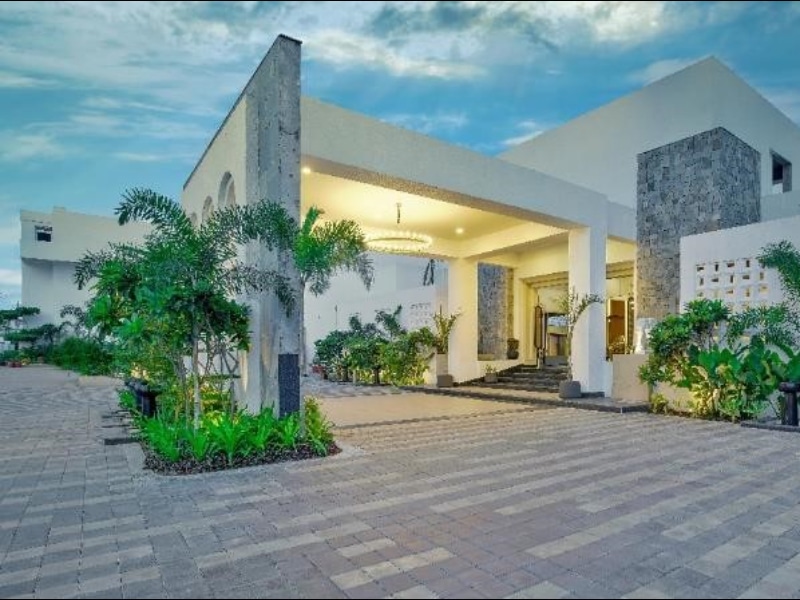
Illumination is fast becoming a tool to showcase architecture and design in a different perspective altogether, rather than just its original form and function.
While designing lighting systems, the size and shape of the space, traffic pattern, function or task requirements of each zone, all together decide the particular type and intensity of luminaries to be installed. Lighting accounts for more than one third of the electricity usage in any hospitality application. Maximum energy savings can be achieved only when both daylight and control systems are integrated with the lighting design in a planned manner.
There is a need to balance the three types of lighting requirements- ambient lighting, task lighting and accent lighting in any habitable space. All these contribute less or more to the overall ambience of the space. The ambience enhances the design scheme and makes the material and elements employed to decorate the interiors and exteriors more prominent. A sensible day lighting design can be achieved through proper placement of windows, skylights, light shelves, atriums, etc. For integrating and controlling daylight in the interior space- shading devices, glazing materials, reflective surfaces, etc. must be in check. Using efficacious and efficient luminaries cater to improvised sustainability.
Double Tree by Hilton, Pune The hotel has replaced every Conventional lights with low power consuming LED lights. With an aim to offer personalised services to its guest the rooms are equipped with hotel room controllers that manage multiple lighting circuits that can be adjusted as per individual preferences. Smart panel switchboards also help the hotel achieve savings and increase reliability in both new and existing building. In addition ot artificial light, the building uses abundant natural light to light up its spaces.
From the guest rooms to the outdoor spaces, each area has its own unique lighting need. Lighting not only fulfills the basic demand of illumination but also stimulates the psychology and interest of the users. However, it is usually designed even before the furniture is finalised, and as a result, the accentuating aspect of a lighting system is lost. In case of all semi-public and public spaces in hotels, natural light should be balanced with adequate shading and artificial lighting. While the LED movement has taken over the complete lighting sector, there are many innovations being plugged in to further economise this vertical.
Elaborating on this, Rambo Zhang, country head, Opple Lighting, stated, “LED lights, today, come in numerous variants; they are also available with the USP of being wireless. Lights with no wires are the latest trend these days. The internet of things is basically used to describe activities that are controlled especially by your computer or the smart phone. Manufacturers nowadays work on creating technologies that are inbuilt and that don’t require any lamps or modules.” He added that geometric lighting fixtures are amongst the hottest lighting trends now. These lights invoke a minimalist aesthetic and are not just for modern and contemporary interiors. They are priced economically and are available in the market with a renewed focus on quality, a must-have in the hotelier industry.
Style Code has its in-house LED commercial brand called MARVELO. This detachable LED offers retro fit design, ease of replacement and inter changeable internal LED bulbs. These lights are cost- effective provide the benefits of adjustments in degree, beam angle and colour temperature.
With the prominence now given to al fresco spaces, outdoor lighting too play a critical role in defining the landscape of a hotel property. K-LITE Industries, through their innovative outlook, have showcased an all new product portfolio under Architectural Lighting criterion. The application includes facade lighting, pathway lighting, in-ground luminaire, uplighter, up-down lighting, billboard lighting, vertical light bars, wall washers, area lighting poles and above all, the popular sleek polar lighting solutions. “The flagship item of the series viz., the Sleek Polar lighting solutions is a contemporary design that is compact with hidden mounting equipment and optimised integration. Its design is in perfect continuity with the geometric lines of any square column that widely seen in hotels today,’ added Sharmila Kumbhat, director, K-Lite Industries.
Various lighting controls are making way for smart, energy efficient equipments. Following the innovations in this area, control systems now allow users to adjust lighting levels, balance surface luminance and reduce glare. They have also increased the longevity and efficiency of lights, lamps, etc., attached to it. Keeping aside the most common on-off switch, the technology-driven innovation have bred daylight sensors, occupancy sensors, clock switches, dimming devices and centralised controls. Occupancy sensors can operate through different mediums- infrared, ultrasonic or both combined. These sensors have different coverage patters according to their mounting configuration. These solutions bestow massive energy savings for common areas and areas with periodic usage. They work great in layered lighting designs, where more than one type of light source is been employed.