
Driven with a clear focus on its purpose, ambition and intent, Sarovar Hotels & Resorts portfolio is adorned with some of the most stellar properties that exemplify its holistic hospitality experience. Founded in 1994, a couple of years after India’s economic liberalisation that had opened up the country’s realm of possibilities, the company’s clear vision was to bring world-class hotels to the country’s judicious and prudent travellers. With this goal in mind, the company today has carved an undebatable niche in the mid-market segment and continues to be at the forefront in the Indian hospitality arena.

The building blocks
The company opened its first hotel in Goa, and within just two years, in 1996, they started managing the iconic hotel in Mumbai, Marine Drive – Hotel Marine Plaza, a year that remains a landmark for all the right reasons. Sarovar Hotels unveiled its first institutional hospitality engagement in 2000 with one of the most prestigious business schools, and currently operates nine such institutions in India.
Continuing to expand its horizon, Sarovar Hotels introduced three new brands in 2007 – Sarovar Premiere, Sarovar Portico, and Hometel.
In 1998, Sarovar Hotels won the ‘Global Award’ at the World Travel Market (WTM) 1998 in London in recognition of its development of mid-market hotels in India; and again received the award in 2013 for the second time, making it the only Indian company to receive this coveted award twice. In 2017 Sarovar Hotels became a part of Louvre Hotels Group, the second largest hotel group in Europe, which has six brands Golden Tulip, Royal Tulip, Tulip Inn, Campanile, Kyriad and Premiere Classe.

Today it is with great pride that I see our dreams have become a reality. There was a need for a mid-market hotel chain in India, and we pursued our vision by filling that need and then moving far beyond that. There are few cities in India in which we are not present, and we will continue to grow until we are in every city.”
Anil Madhok, the Executive Chairman, Sarovar Hotels Pvt Ltd.
Looking back
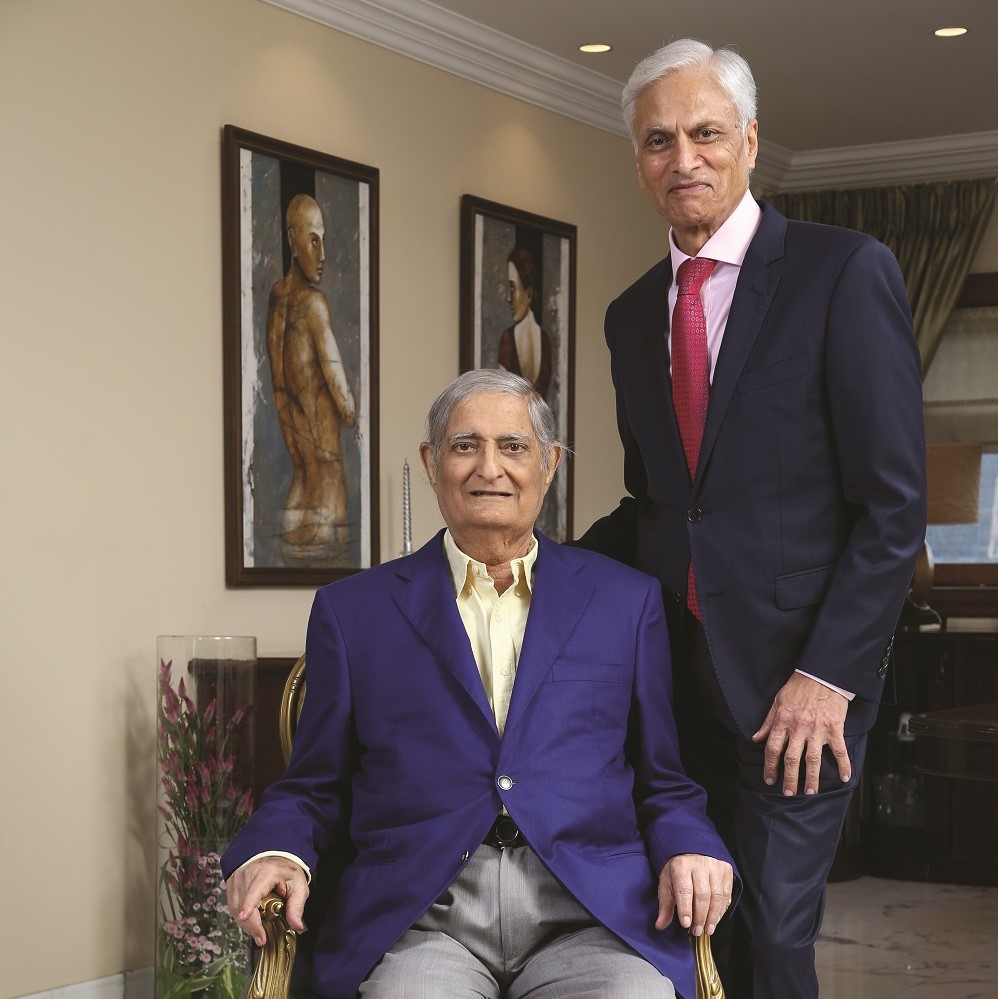
Being a hotelier in 1966 was something largely unheard of. But Anil Kumar Madhok, Executive Chairman & Founder, Sarovar Hotels Pvt Ltd., who started his career with the Oberoi Group and worked in Sri Lanka and Singapore, was always someone who did things differently. When the entrepreneurial bug bit him, he started his brand in 1994. Madhok reminisces, “When we started, there were no funds, and I was alone for the first year until Ajay (Ajay Bakaya, MD, Sarovar Hotels and Resorts) joined in 1996. We initially went through a tough time, but Ajay pursued this with all his heart, and that’s how we started our journey.”
Bakaya admits that they took it one step at a time. “We did not have a master strategy. We had a vision and the ambition to fill in a space that did not exist in India then. It was the mid-market segment, which is about good quality hotels, and that is what we set out to do. We had the initial advantage of the Park Plaza brands. But eventually, gave that up when Carlson bought the brand, and we continued to set up our own brands. We have evolved as a strong company in the mid-market vertical and are an even stronger company compared to any of the players within the tier-II and tier-III towns.”

Landmark milestones
The flagship brands for the company have been Sarovar Protico – with 60 hotels, Sarovar Premiere and Hometel – with 10 hotels each.
Apart from this, Bakaya adds that “We are still managing over ten-plus hotels under the Radisson brand because the owners have a lot of trust in us as managers. We are now also the custodians and developers of the Golden Tulip brand, and in the next five or ten years, we aim to build it up as one of the strongest hospitality brands to work with in India.”
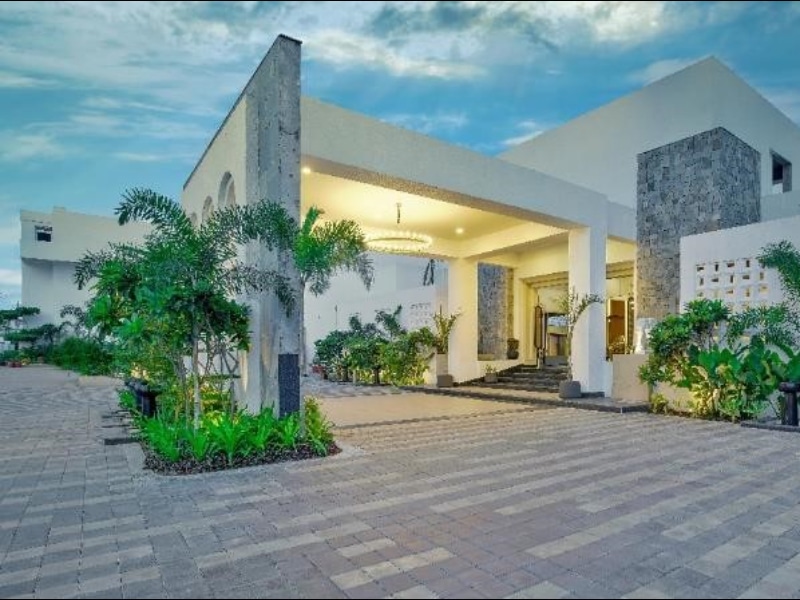
The year 2022 marks a milestone for the company as they are all set to open their 100th property in India, in Pondicherry. And with this landmark milestone, the company also aims to open 50 more properties over the next five years.
Madhok professes how proud and good he feels about this achievement and the fact that they chose to work with some of the best hotels and brands, where their experience and knowledge came in handy.

Continuing on the same thread, Bakaya states, “We planned strategies pertaining to our growth as we evolved. Hotel management contracts are one of the most difficult business models, as this involves a third party trusting us with their capital and making money for them. Under this model, every single hotel must deliver. And I think we delivered brilliantly on that count, which is the most important aspect for us as an hospitality brand.”
Six years ago, Louvre Hotels Group, the second largest in the hospitality industry in Europe, bought a majority stake in Sarovar Hotels in India. Bakaya reveals that there is much international interest in the company now, and this bolsters its goal to augment the brand’s global footprint.
Advantage Sarovar

To get a competitive edge, the brand has always focused on building the ability to bring in business to their hotels. This was done by building a steadfast sales and marketing network that has been consistently growing. Sarovar took up this onus at the brand’s own cost, and no other company offers this in the world. Madhok explains, “We had seven or eight workers in the first year of operation, and we first put them in sales and marketing. Today we have people in engineering, food and beverage, finance and experts in every field as required by industry standards.”
Apart from the sales and people aspect, what has augured well for Sarovar is its relationships with its owners. “We have always encouraged owner’s offices in hotels, and we encourage owners to nominate financial and purchase heads too. The aim is to build long-term relationships,” adds Bakaya.
Post-pandemic changes
As the hospitality industry was hit the hardest in the pandemic, the Sarovar team decided they would not cut anything that impacted the guest experience. However, they had to undertake measures to trim down their staff. While the company admits that this was something that had to be done in the face of the economic crisis, and they had no choice since there was no initiative from the Government either to help out the hospitality industry.
One of the key lessons the brand learnt through this experience was to develop the agility to make adept decisions, respond quickly and cut costs. Bakaya says, “In the future, there will be greater sensitivity when it comes to dealing with people. The challenge the industry faces today across the world is that there aren’t enough people to serve your guests as the people who left will not return to this business.”
“We changed our working model to an extent, as we had to pay employees and took on technical services work,” added Madhok.
During the second wave of the pandemic, Sarovar took up the initiative for a nation that was buckling under the pressure of insufficient hospital beds and medical treatment centres. In response to this, the company converted one of its hotels to a hospital, teamed up with NGOs Eldercare and I am Gurgaon, and the Fortis Hospital, Gurgaon to hire doctors, nurses and ward boys to cater to the ailing. They also ensured the availability of the much-needed oxygen cylinders that were in severe shortage at the time. With this gesture, the company helped save several precious human lives.
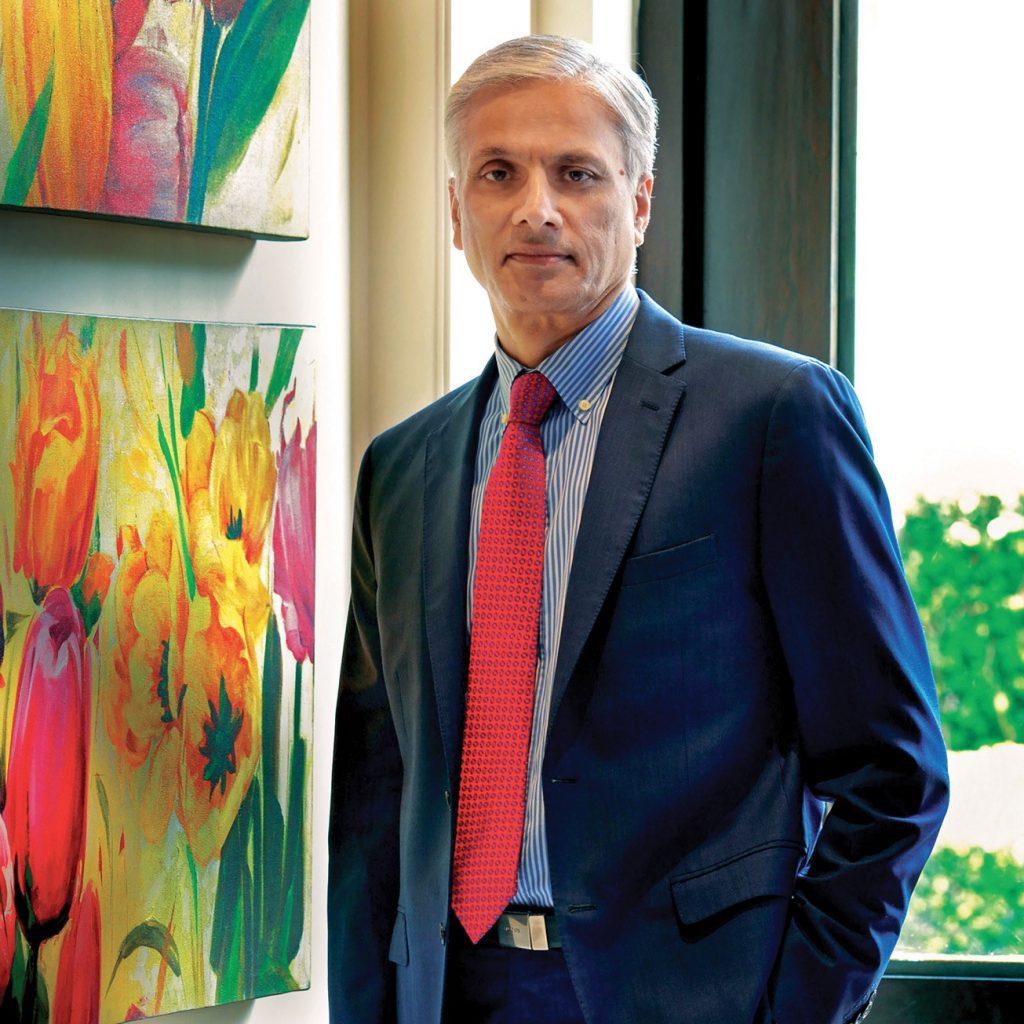
We planned strategies pertaining to our growth as we evolved. Hotel management contracts are one of the most difficult business models, as this involves a third party trusting us with their capital and making money for them. Under this model, every single hotel must deliver. And I think we delivered brilliantly on that count, which is the most important aspect for us as an hospitality brand.”
Ajay Bakaya, Managing Director, Sarovar Hotels and Resorts.
Manpower matters
Sarovar takes its manpower needs and training very seriously by ensuring they walk the talk in this aspect. They have also moved on to an electronic platform for training, where employees can learn at their own speed and are location-independent. “We are now working very actively on an apprenticeship program with the Government of India on skills development and training in the kitchen, restaurant service and housekeeping domain. I very strongly believe that if you bring in raw people and train them, they go on to be one of the best sources,” says Bakaya.
Taking a call
With a vast portfolio of hotels in its kitty, the Sarovar Group is highly centralised on aspects of policy, principle, and philosophy. The Group values integrity as a fundamental value and a certain level of sincerity from their team.
“Our guests are very important to us, and any comment or complaint from them is attended to promptly, irrespective of the time or place. Though our core principles are dictated by the management, decision-making beyond a point is strongly decentralised. We have different regional directors handling their groups of hotels, and general managers have enough authority and delegation powers to make their own decisions as long as they are working within a certain spectrum,” says Bakaya.

Overcoming challenges
As hospitality adapts to new formats and grows, existing players have their own challenges. Airbnb, for instance, is one of the strong competitors, despite being less touted and spoken about. Bakaya explains, “Although Airbnb has their presence in several premium locations, two of their biggest challenge is security and maintaining consistency and uniformity since they have different owners with no cohesive framework about the quality of spaces and services.”
While there are other chains in the space, the team at Sarovar has invested heavily in technology to get the edge over potential competition. The team has worked extensively in Africa and hopes to bring in some of the learning in terms of service standards to its India and the Middle East operations.

Green cues
Today the customer decision in selecting hotels is based on sustainability. As a group that believes in walking the talk, one of Sarovar’s hotels has recently invested INR 22 lakhs in a bottling plant within their hotel in Bengaluru. The brand has done away with plastic across all its properties. All rooms have glass bottles with properly treated water certified by the hotel. The garbage and waste are treated with vermiculture and composting. “We are also moving towards alternative sources of energy – green energy such as solar and wind. With Government helping out by providing the needed support and subsidies in most states, its made it very easy for everyone to set up sustainable energy sources,” says Bakaya.

Betting on Technology
While many properties are going touchless and using robotic technologies, Sarovar as a group believes that while technology is important, they do not want to digress from salient Indian hospitality traditions.
“When you check into one of our hotels, you will not have to stand at the counter as you can be seated in a lounge where the staff will bring you a tablet, and you can check in. But when the guest is sitting, we will still have a staff member chatting with them and asking them what they can do to improve the experience. We are not looking at robotics in India now, but we are looking at several touch points to make it easier for the guests to walk in and out with complete convenience. We are also doing a lot behind the scenes. We have WhatsApp groups to track guest requests and complaints; and issues that have not been addressed for more than half an hour are escalated immediately. So we do use technology quite strongly and will be moving on to a technology platform on our central reservations, which will be similar to an airline system where any room booked from anywhere in the world will be updated instantly. We have a global distribution platform where we are linking the Indian software to the mainframe in Paris for distribution around the world. We have another technology leap in terms of customer service, which we will announce a month or two from now,” reveals Bakaya.

Future perfect
While focusing on its key strengths, the brand is clear that expansion will happen using the same strategy of mid-scale hotels in smaller cities. The first mover advantage of being in the mid-scale segment is what the Group hopes to capitalise and build on. This is also because mid-market hotels provide the advantage of lower capital cost with lower impact by any major downturn, as they continue to run.
“We see great potential for growth in the existing brands and might also add to the existing portfolio. But our focus remains on the three to four core brands of the company, and we will build them in a larger number,” says Madhok.
On a concluding note, Bakaya avers, “We will remain strong, if not the strongest. We know what our strength is and will build on it. We also plan to dabble in the luxury and upscale space; however, the bulk of our hotels remain in the mid-segment, where we want to be strongest in this country.”
The Group is also working on expanding its Golden Tulip brand, which was originally developed by KLM Airlines. Given that its a very strong European brand, it is well recognised in Europe and China, and will have a good presence in India as well. In all, the Sarovar group has made its mark on the country’s hospitality scene by ensuring the guests are given the top preference, which has augured well for the brand.