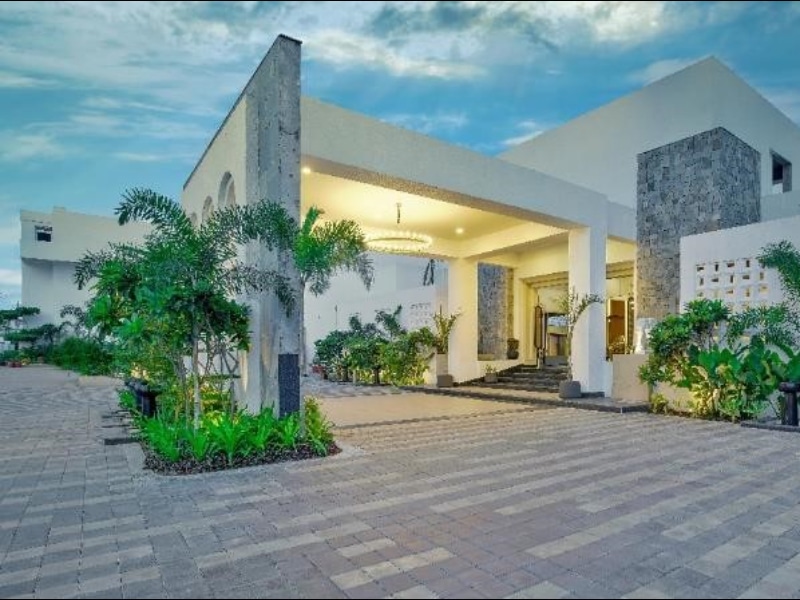
Narayan Poudel started his hotel corner with hard work and became a professional hotelier within 12 years with a way in bellboy, room service, supervisor, Indian chef, event manager, food and beverage manager, and general manager; and is now running his own 4-star Hotel Mahabir Palace at the heart of Kathmandu.
He worked at Taj Ahmedabad, Paras hotel, and McDonald’s. QTC Welcome hotel, Abu Dhabi national exhibition center, Dreamland gold resort, and Hotel Palm International.

1. Tell us about your hospitality journey at Mahabir Palace Hotel in Kathmandu?
My journey was a rollercoaster, and I am very grateful for all the success that came my way. With successful working experience, I started this company previously over-loved by the Fern group from India.
2. What curated experiences does the hotel offers to its guests?
Traditionally, most people saw their hotel as a place to rest after exploring the city they were visiting. In today’s tourism climate, hotels are noticing a shift from a need for a place to relax after a day of experiences to an influencing part of the experience. They are looking for ways to connect with their residents in order to change this stereotype. Hotels are improving their services by incorporating new touchpoints.
As a hotel offers different facilities like room, gym, spa, food, beauty, event upto 200 persons, I plan to build Big Ball Room where I can simultaneously serve 1500 to 2000 persons even with a swimming pool facility.
The reclamation of concrete from buildings that are currently being torn down, carpet and other textiles made from recycled plastic bottles, and even roof-top greenhouses that supply ingredients for the dishes being prepared that day demonstrate full circularity of products, products that come from and return to nature or are re-purposed from other uses. The story behind these products and how they are highlighted gives these hotels a sense of luxury.

3. What are the sustainability practices followed by the hotel?
Using the three R’s – reduce, reuse, and recycle – is an important way to create an eco-friendly environment. Let us have a quick look at them.
Reduce – As the name implies, you must reduce the amount of waste your hotel produces. It is preferable to avoid using environmentally unfriendly materials. Furthermore, you can prepare an appropriate amount of food to minimize waste.
Recycle – When I say recycle, I don’t just mean plastic or glass. You can recycle various items, including fused bulbs, cans, cartons, and cartridges. Waste treatment is an additional option for materials that cannot be recycled.
Reuse: The most basic of the three R’s, reuse is something everyone does. Every home, for example, has polythenes on hand for garbage disposal, product storage, and other purposes. You can reuse paper, toner cartridges, and linen (if the room has the same guests staying for a few days).
My family taught me to practice sustainable things since childhood, so I avoid most things like polythene packs, degradable waste is separated daily, and wanted food is used. We use electricity most for cooking rather than CNG, etc.
4. How did the hotel manage its revenue during the cold times?
Hotels have faced unprecedented trials and tribulations in recent months, and these issues appear to be ongoing for the foreseeable future. Traditionally, autumn and winter have been considered low seasons for hospitality businesses, but now, more than ever, hoteliers must do everything possible to maximize revenue by encouraging guest engagement.
The first thing is to reduce all the possible costs, making the staff allocation alternatively. And by taking government-facilitated small funds & starting an online delivery system to manage revenue,

5. As a determined hotelier, what challenges have you faced so far?
In the hotel industry, there are numerous operational challenges. Reservations management, guest service, all front-office operations, maintaining cleanliness in hotel rooms and grounds, and more.
The cost of daily necessities, food, and other supplies has risen dramatically in recent years. While this has affected all industries, it accounts for a significant portion of the issues and challenges faced by the tourism and hospitality industries.
After COVID, a country like Nepal faces many problems in hospitality, like there is very little traveling. It is quite expensive over there due to a lack of government strategy. In tourism, now we are facing a lack of funds from financial institutions, etc.,
6. Where do you see yourself taking Mahabir Palace Hotel, Kathmandu, in the next 3-5 years?
I have always been optimistic in my life, and I still wish to have the same affirmation in my life. I will look for opportunities to expand my responsibilities within this role to achieve my goal. I am eager to take on new challenges and to devote five years of my life to a career that I find extremely interesting and motivating.
Within five years, I have plans to establish five big chains all over Nepal, one with the biggest casino in Asia. We hope to inform people about the meaning of hospitality at Mahabir Palace at the national and international levels.