Sustainability has become a ubiquitous topic across all industries, and the luxury industry is no exception. Sustainability is made up of three pillars, the economy, society, and the environment. This power panel reflected on how things have changed over the last few years and unearthed the sustainability opportunities that lie ahead for brands. A confluence of construction, hospitality, and architecture leaders brainstormed on this relevant topic.


| Panel Speakers | – Anuj Puri, Chairman, Anarock Property Consultants. – Atul Chordia, Chairman, Panchshil Realty. – Arjun Malik, Principal Architect, Malik Architecture. – Anuraag Bhatnagar, COO, The Leela Palaces, Hotels And Resorts. – Boman R. Irani, CMD, Rustomjee Group. – Sanjay Sethi, MD & CEO, Chalet Hotels. – Sanjay Puri, Principal Architect, Sanjay Puri Architects. – Sandeep Runwal, MD, Runwal Group. – Nandini Sampat, Principal Architect & Architectural Interior Designer, Somaya & Kalappa Consultants. – David Cooper, Head of Global Projects, Hansgrohe Group. – Gaurav Malhotra, MD India & Regional Lead Key Accounts, Hansgrohe India. |
Collaboration cues
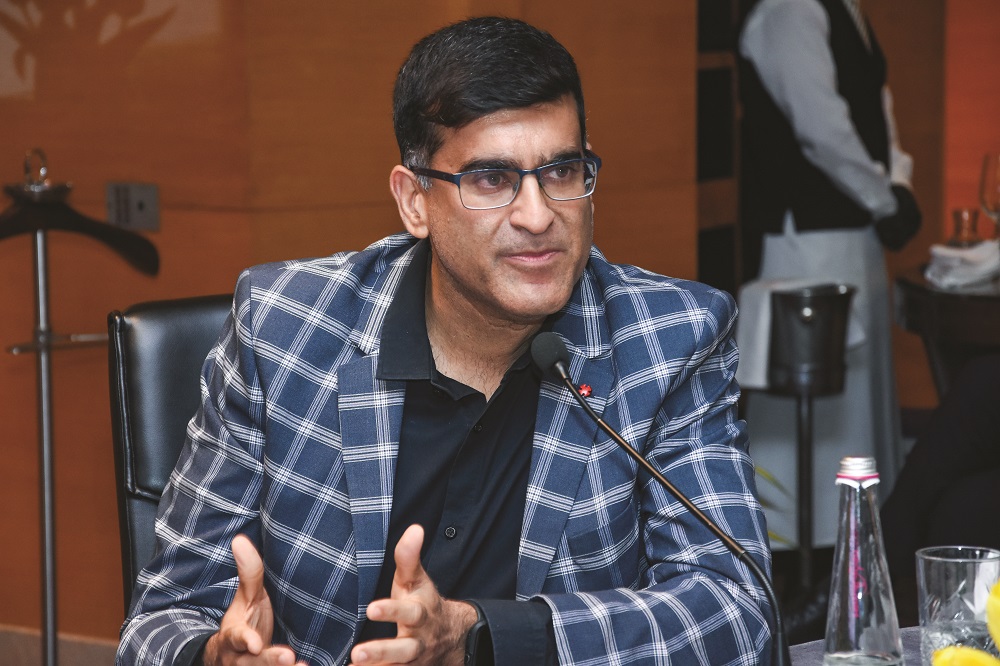
The panel discussion of initiated by Gaurav Malhotra, MD India & Regional lead Hospitality Key Accounts and GP Sales Excellence Asia, Hansgrohe Group, who stated, “As a company we work with hoteliers in all their roles whether as owners, designers or operators. Hence we engage with all stakeholders as part of our outreach program and sustainability is a key part of our products and their design.”

As moderator of the session, Anuj Puri, Chairman at Anarock Property Consultants, explained, “While sustainability and luxury may seem like oxymorons, but when you delve into the details and put ethics and aesthetics together, it goes together.”
He further adds, “The residential side has seen a 230% jump and luxury sales have increased to 19%, and GenZ is driving sustainable luxury, and a Nielsen report says that they are ready to spend 73% more money if it is sustainable.”
Green buildings

Atul Chordia, Chairman, Panchshil Realty, who established one of India’s finest luxury real estate brands, avers, “We have been very conscious of green power in all our projects, including commercial spaces. Though the commercial developments have been at the forefront of driving green practices, all the other asset classes can also be developed sustainably.”

The approach to going green must be incorporated at the design stage itself. Boman R Irani, Chairman and MD, Rustomjee, states, “Consumers always look at saving costs irrespective of what they buy. It helps when you use it as a marketing pitch, but sustainability in residential spaces will take time. Probably if there are some concessions in property taxes for sustainable buildings, it could help give a leverage to build sustainable buildings.”
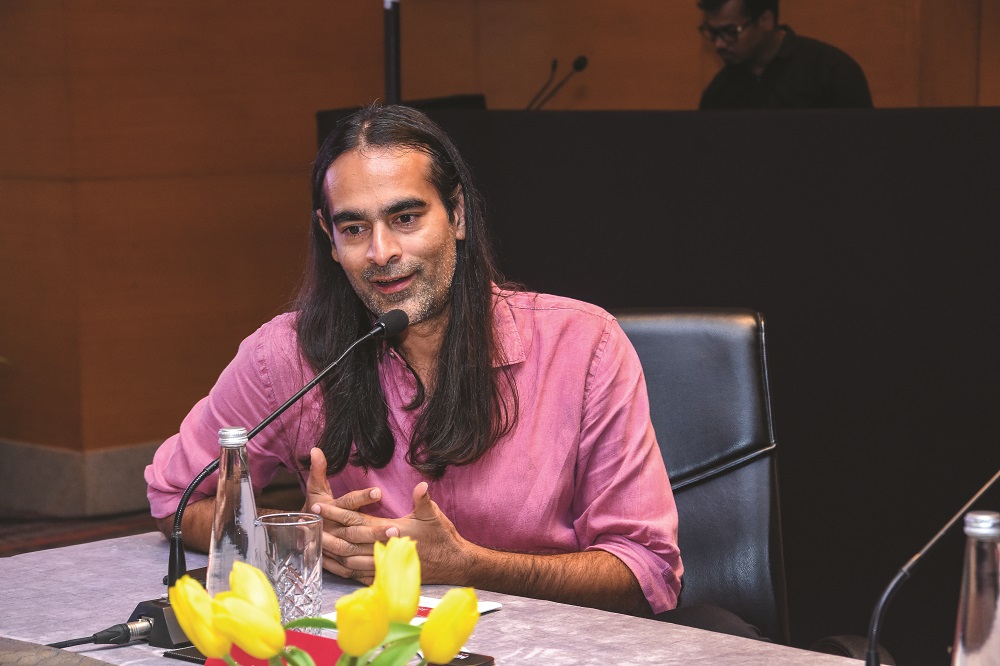
Definitions of sustainability have not really changed for architects with sustainability as their ethos. Arjun Malik, Principal Architect, Malik Architecture, agrees, “We have an open discussion with clients on sustainability, and it is a philosophy of looking at commercial and ethical choices. Redefining some of the paradigms that we hold true is what comes into play. The pressure of capital is higher in larger cities, and we need to look at the predictive life cycles of a product when we procure it. Wood harvesting in Canada, for instance, is so ethical that the only carbon footprint is the transport, and at times, it is even better than local wood, which has a higher carbon density.”
Land use
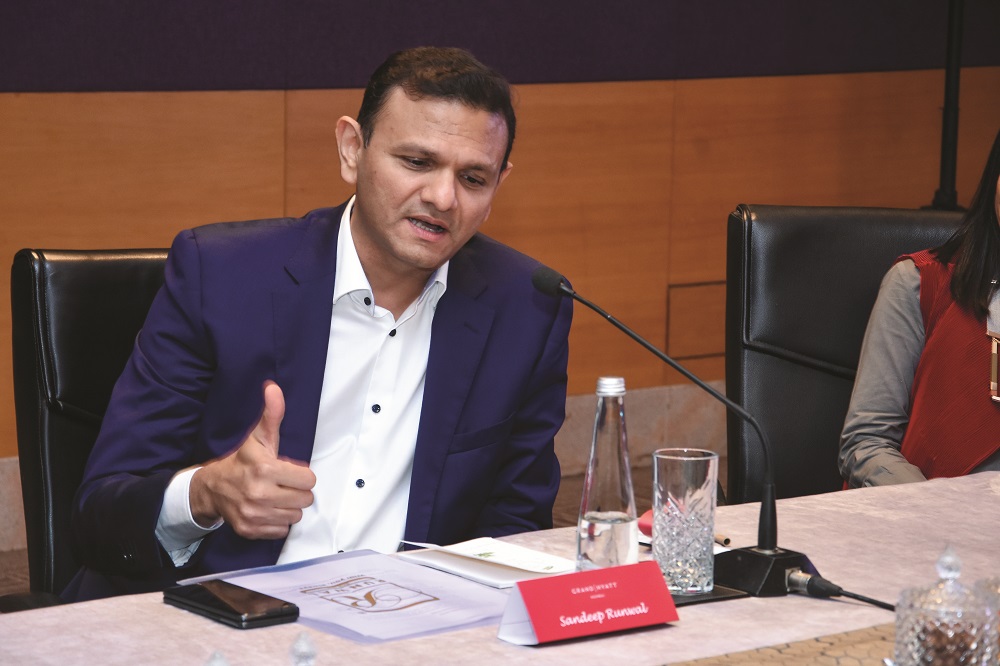
Continual development of cities and extension of residential space also have detrimental effects on the environment. As sustainable development can be encouraged by the Government, Sandeep Runwal, President of the National Real Estate Development Council (NAREDCO) Maharashtra and Managing Director, Runwal, says, “We need to define the zoning area for agricultural and residential spaces clearly. The cost of taking infrastructure to outside areas will hurt everyone in the long run. It is better if the Government increases the Floor Space Index (FSI) within the cities as infrastructure is already available.” Another aspect is that making a sustainable building is not about spending more. Sanjay Puri, Principal Architect, Sanjay Puri Architects, explains, “It is, in fact, cheaper to build a sustainable space. We designed an office space in Chennai, where the orientation is towards the North and energy efficiency has increased by 35% and needs more thought and planning.”

While resorts are showing interest in sustainability, luxury is also about space and making that green will mean it is sustainable Nandini Sampat, Principal Architect & Architectural Interior Designer, Somaya & Kalappa Consultants, agrees, “Technology helps us determine wind tunnel effects, and when we design tall buildings, we know what will be the impact of other tall buildings that may come around it. Passive design, incubation of technology and existing heritage buildings can be deconstructed to add luxury.” The software allows you to calculate the amount of heat and light entering the building.
Circular economy

We need to focus on the re-materialisation of the construction process where we can decide what products are required. With domestic business travel up three times from 2019, Sanjay Sethi, MD & CEO, Chalet Hotels, says, “Domestic travel relies on better quality hotels, and company budgets are stronger. All our hotels built after 2008 are Gold LEED certified, and we are looking at Platinum LEED certified, and payback is less than 24 months. In fact, people are conscious about sustainable luxury, and that will bring in more business as guests are also conscious.”

Creating green buildings needs to happen with dialogue and with a free hand from builders. Anuraag Bhatnagar, COO, The Leela Palaces, Hotels and Resorts, says, “Mindfulness of customers is here to stay. Customers are asking the right questions and are paying for the space. Conscious consumption of luxury, attention to detail and craftsmanship are questions that are being asked today. Guests are engaging more consciously with staff even in busy city hotels.” People are conscious about gross built-up area per key as the energy footprint is lesser, and returns are very strong if this is lesser.
In conclusion

Nations with a high focus on sustainability luxury include California, Singapore, South Africa, and Europe. David Cooper, Head of Global Projects, Hansgrohe Group, explains, “There is a stricter and stronger focus for sustainability. GenZ is also driving a lot of this. We cannot make sustainable products that are not necessarily more expensive but at a lower cost. Our showers, for instance, reduce water consumption by up to 60 per cent. In the hospitality industry, Wi-Fi, the bed and the shower are the most important things.” As the world evolves, the difference between knowledge and thought leadership will reduce to bring the concept of sustainable luxury to the forefront.